01
Why small parts are difficult
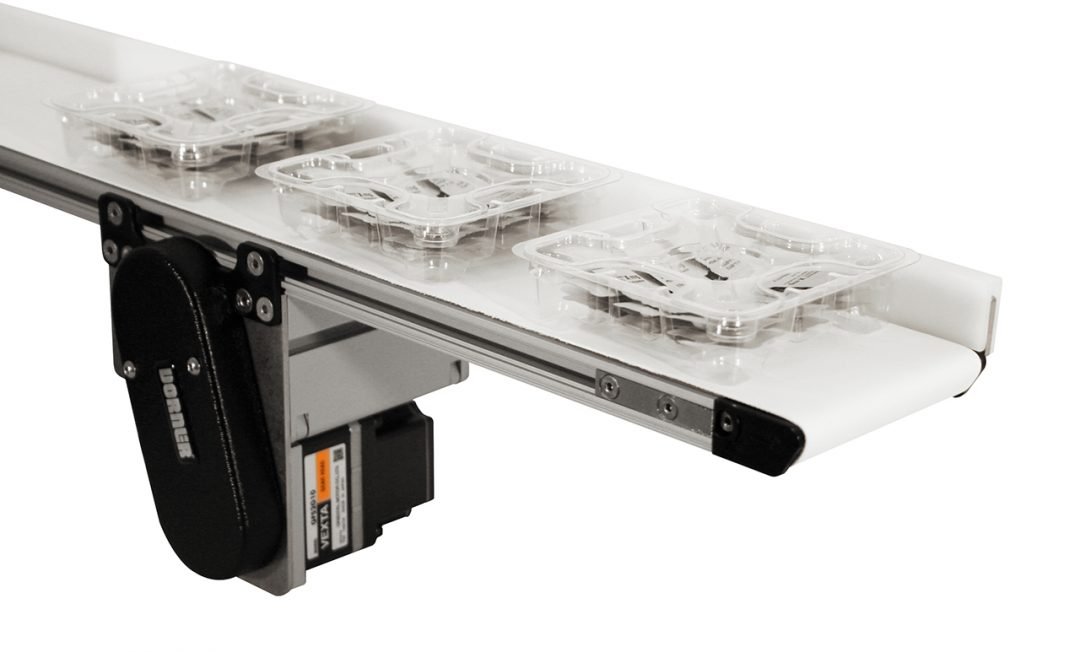
Vials, syringes, catheters and compact assemblies can be lighter than the belt forces acting on them. Large end rollers create transfer gaps, waterfall transfers disturb orientation, external bearing housings block close side transfers, and a thin belt can curl instead of supporting the product flat.
02
Design the transfer first
The source describes 5/8-inch end rollers transferring products as small as 7/8 inch, optional 5/16-inch dual rollers for products down to 5/8 inch, and a flush side arrangement with a 1/4-inch belt-edge gap for parts down to 1/2 inch. These are platform-specific reference figures; the real product should be tested before selection.
03
Keep the belt flat
A pinch drive presses the belt against the drive roller so traction does not depend on high belt tension. Lower tension permits smaller bearings and helps thin belting remain flat for vision inspection, filling and robotic pickup. The drive should also open logically for belt removal because the additional pinch rollers complicate the belt path.