01
Select around the product
Z-frame conveyors use one or two angled transitions and cleats or high-friction surfaces to move stable products over an obstacle. Belt-over-belt conveyors grip flexible pouches or irregular soft products between two belts, preserving spacing without relying on a product landing against a cleat.
02
Route around the plant
Flexible-chain helix and alpine layouts combine elevation with curves, accumulation or cooling in a compact footprint. Wedge elevators grip the sides of boxes, totes or bottles between two parallel chains, leaving space below for people, forklifts or machinery.
03
Handle sanitary bulk product
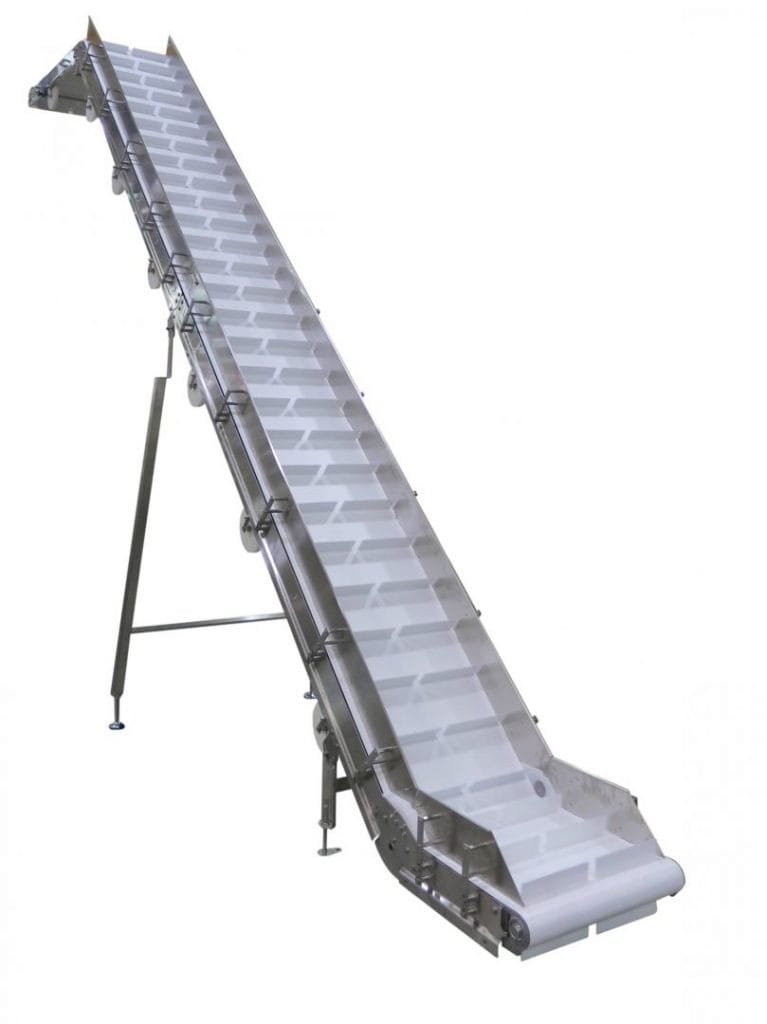
Vertical-belt designs use pockets or sidewalls to contain loose product through a steep rise. The archived design uses staggered self-releasing sidewalls and an open frame to improve discharge and cleaning. Confirm product release, carry-back, cleaning access and the required feed arrangement through testing.
Field checklist
Preserve control through the incline and discharge
Elevation equipment must control the product at entry, through the slope and at discharge. Cleats, sidewalls, friction surfaces or opposing belts can prevent rollback, but their pitch and geometry must suit the product. The receiving conveyor also needs enough speed and support to accept the product without collision or loss of orientation.
- Check centre of gravity and rollback risk
- Match cleat spacing to product length and feed timing
- Protect pedestrian and service access
- Test the upper and lower transfers at full rate