01
Why tensioning matters
Small-package conveyors often use 1–2 inch end rollers, thin frames and tight belt-to-frame clearances. The take-up must create enough belt pressure at the drive without overloading the belt or bearings. Poor adjustment can cause slip, tracking problems, premature wear and avoidable downtime.
02
Four common methods
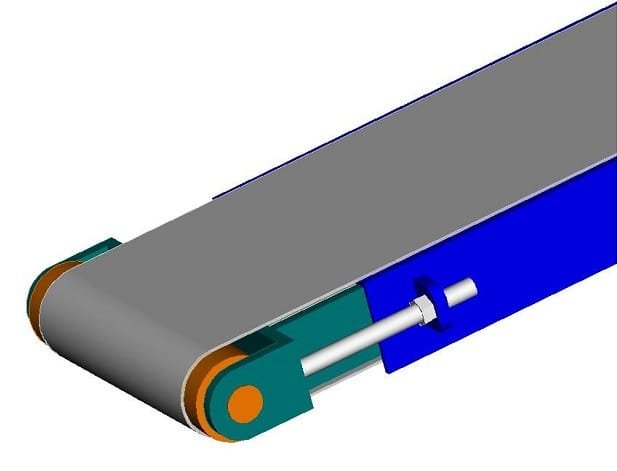
Jack-screws move the two tail bearing blocks independently. They are familiar and economical, but re-tensioning can disturb tracking and the high mechanical advantage makes over-tensioning easy.
Rack-and-pinion mechanisms move both bearing blocks together from one adjustment point. They preserve the tracking setting and fit compact frames, but depend on an accurately built, parallel frame.
A tip-up tail pivots the complete end roller, giving fast access for cleaning and returning both bearings together. It normally sets only the initial tension, so another adjustment is needed as the belt stretches.
Pneumatic or spring take-ups apply a more constant force and compensate for belt stretch. They suit longer or more heavily loaded conveyors, but add rollers, cost and belt-change complexity.
03
Choose around the application
Consider load, conveyor length, cleaning access, available adjustment space, belt-change frequency and the maintenance team's procedure. The best mechanism is the one that supplies controlled tension while making correct adjustment repeatable and accessible.
- Never use extra tension to mask a tracking or alignment fault
- Guard pinch points and isolate energy before maintenance
- Follow the belt and conveyor manufacturer's setting procedure
Field checklist
Check tension by evidence, not guesswork
A belt that slips under load, wanders after a known-good alignment or shows poor drive engagement may need tension correction. Excess tension can overload bearings and distort tracking, so adjustment should follow the conveyor and belt procedure. Marking the initial setting and moving both sides in controlled increments makes the result repeatable.
- Isolate energy before inspection or adjustment
- Correct contamination and alignment faults first
- Adjust in measured, even increments
- Run under normal load and recheck tracking