Wide or sheet parts
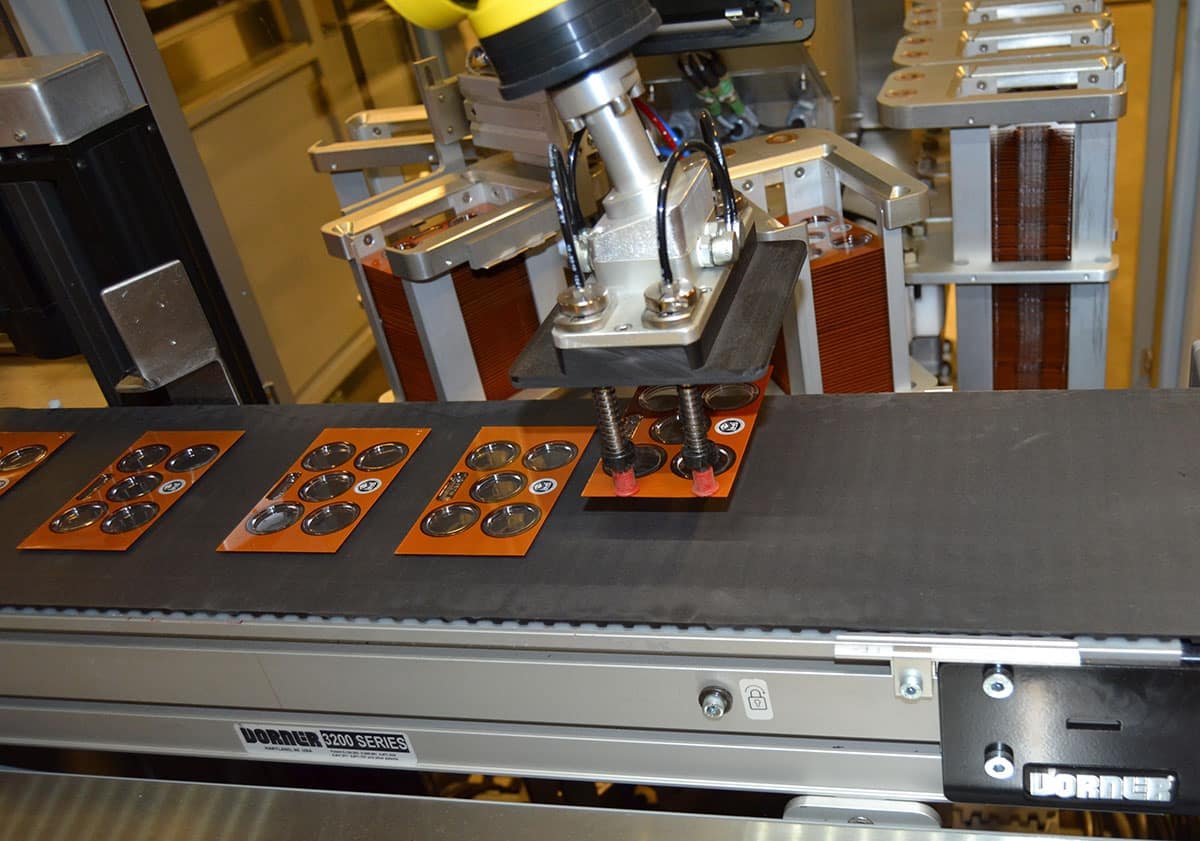
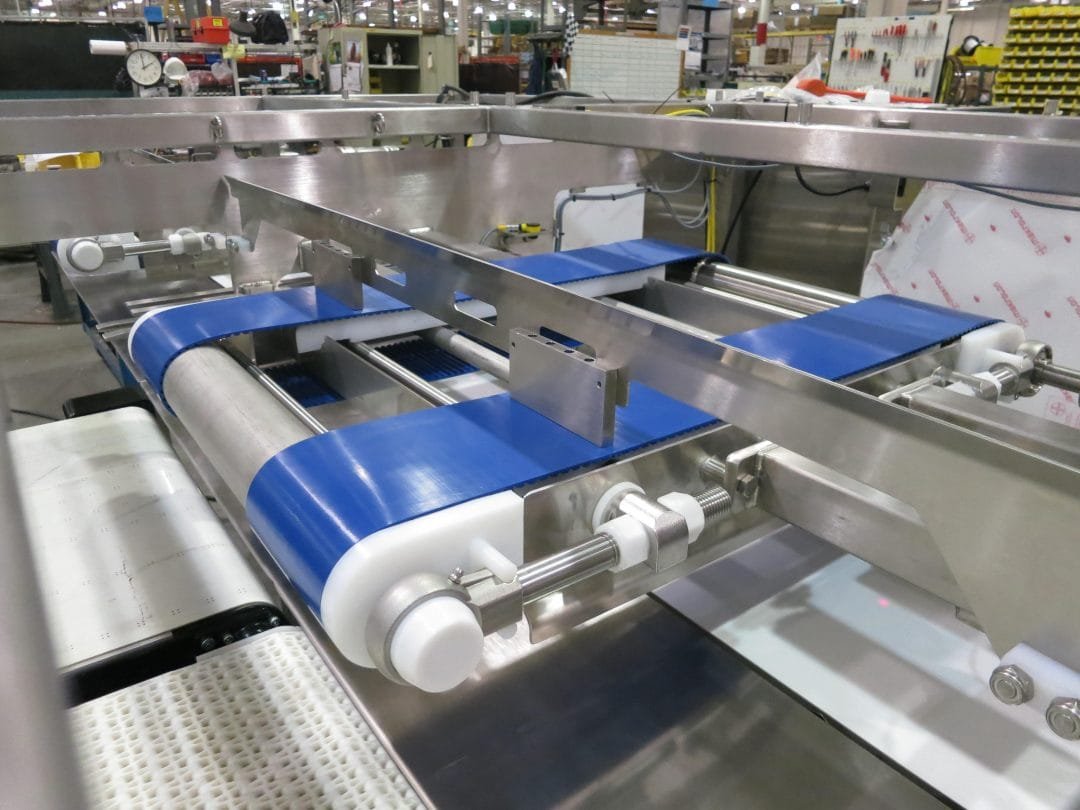
Control broad products and sheet material through defined movements along the production path.
04Application solution
Break production flow into defined, controlled steps. Precision indexing provides the speed, accuracy and repeatability needed to increase productivity while reducing positioning and counting errors.
05What are indexing conveyors?
For fast-paced production facilities, indexing conveyors are an instrumental part of manufacturing operations. They divide production lines into defined steps to provide the drive and control required by the process.
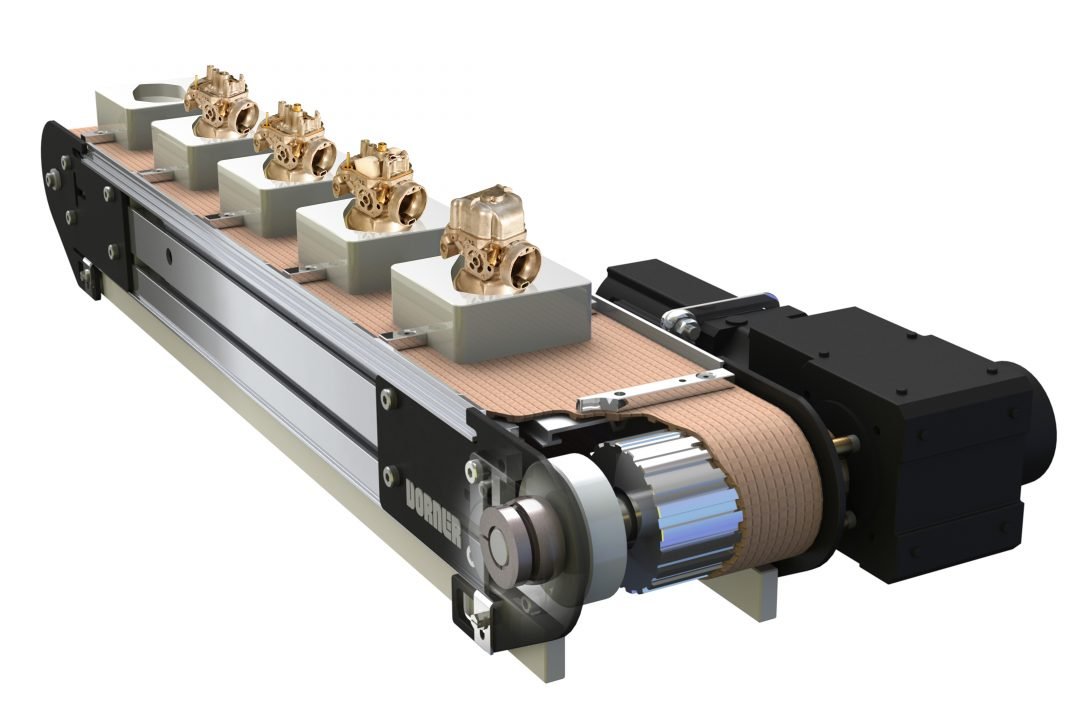
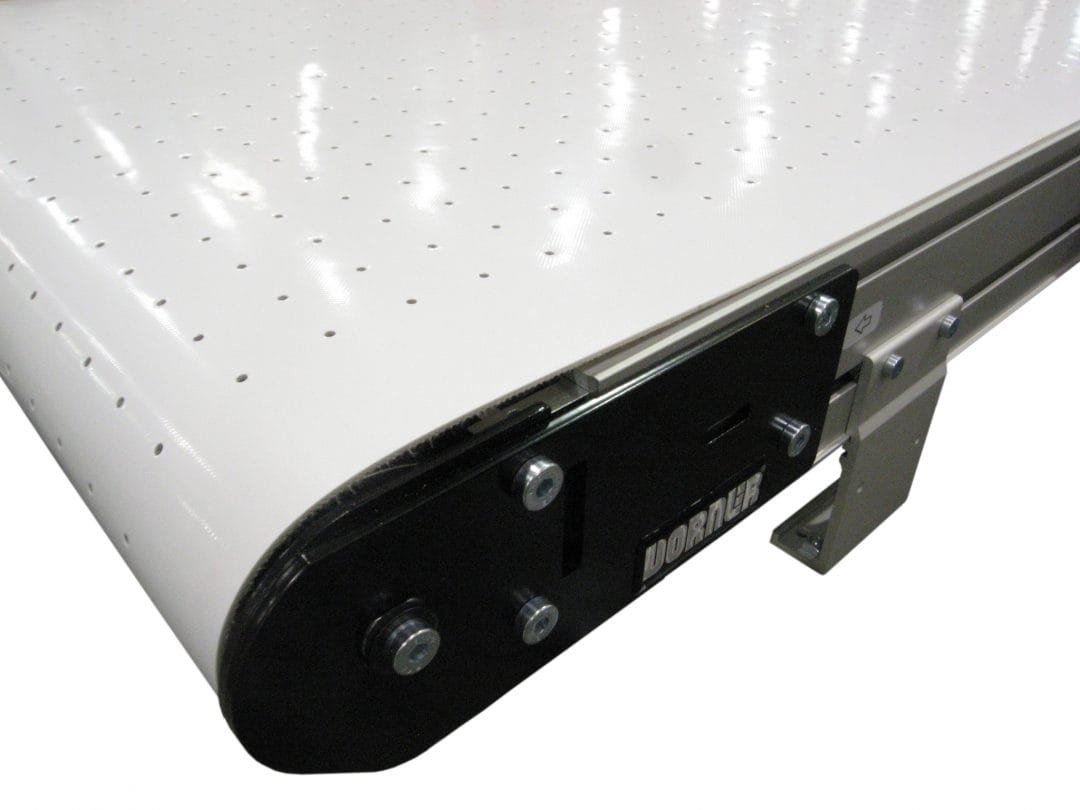
Precision conveyors are belt conveyors used where exact product placement is needed. The degree of precision depends on the manufacturing process. A positive-drive toothed conveyor belt locks the belt position to the end rollers, supporting highly automated movement with a lower margin of error.
06Industries
Indexing and positioning support processes ranging from food handling to automated assembly and industrial material movement.
07Manufacturing roles
Because production applications vary, indexing and positioning conveyors can perform different roles according to output volume and manufacturing context.
Control broad products and sheet material through defined movements along the production path.
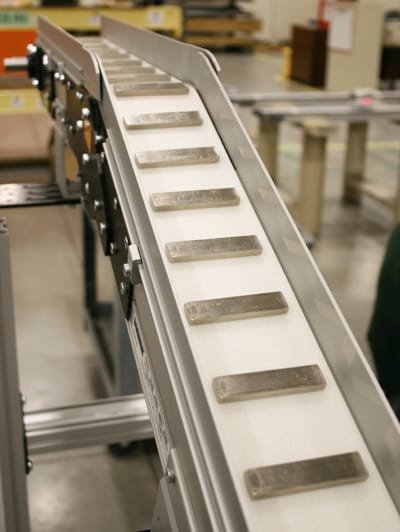
Index products into elevation changes while maintaining the sequence required by downstream operations.
Present products at repeatable positions so robotic systems can identify, pick and place them accurately.
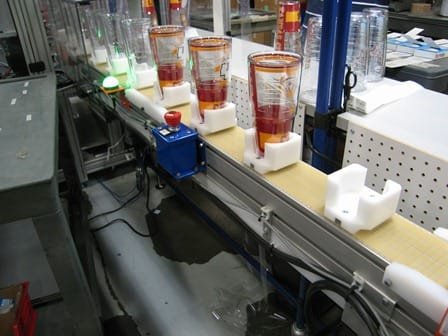
Meter and group products in specified quantities before they enter a box or case-packing operation.
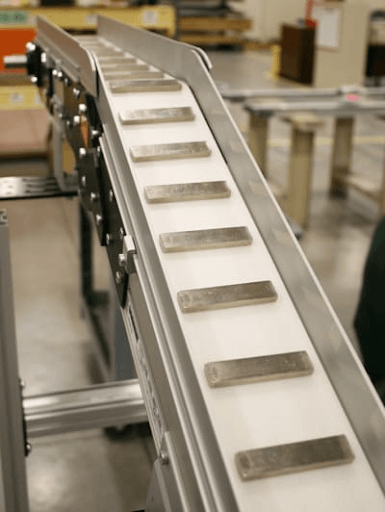
Move components through a defined sequence and stop them where each assembly operation is performed.
08Indexing conveyor design
Indexing conveyor design varies with the production environment. The equipment is configured for flexibility and ease of use while maintaining high production standards in sorting, counting and spacing processes.
Speed and accuracy remain central to the design, with each solution matched to the manufacturing requirements and desired output.
Solutions can be adjusted to the nature of the manufacturing operation and its production volume.
Controls and machinery are configured for practical use and adaptation to the production environment.
Custom precision automation supports consistent placement and helps reduce production errors.
09Indexing solutions
Automation can be adapted around the specific product, production sequence and next machine in the line.
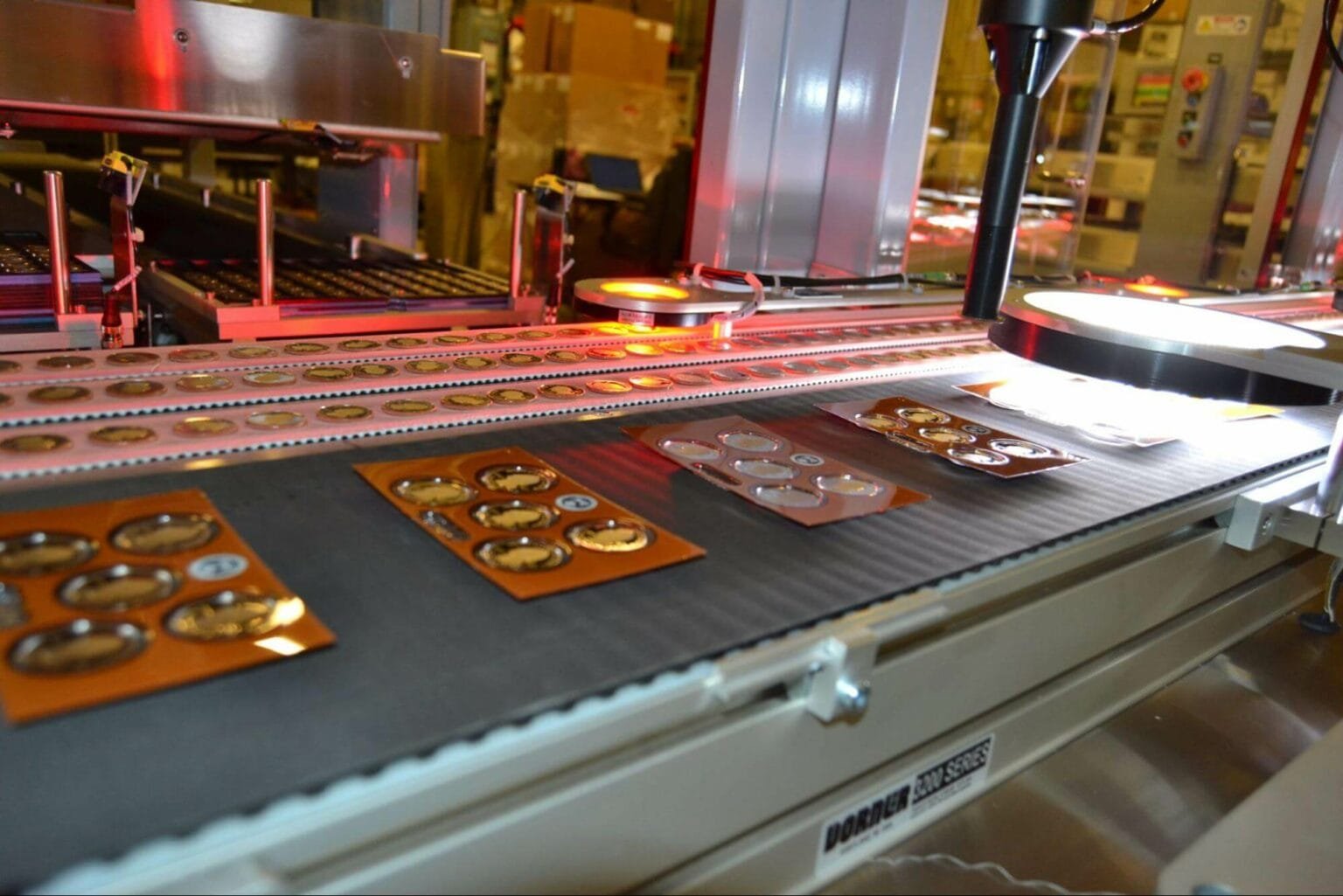
Move items through production so they arrive at the correct process point every time.
Maintain consistent inventory counts and group products by specified quantities.
Identify and reject groups with incorrect item counts to reduce the margin of error.
Produce specific, repeatable gaps between parts for downstream equipment and processes.
Place products accurately for robotics, other machines or manual case packers.
Control product release into the next operation when the process requires it.
10Production volume
Custom sizing and integration allow indexing to support compact, low-volume cells as well as high-throughput automated lines.
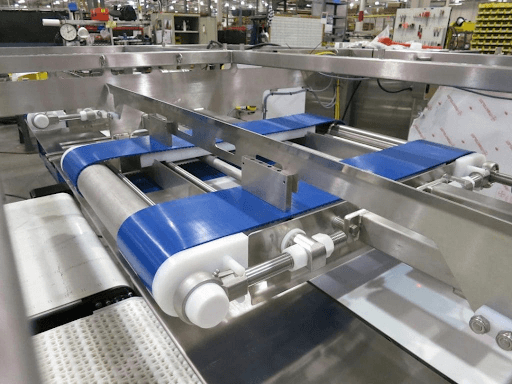
Custom sizing allows a small footprint while maintaining quality. Precision automation minimizes error and shortens indexing time so operations can maintain optimum output.
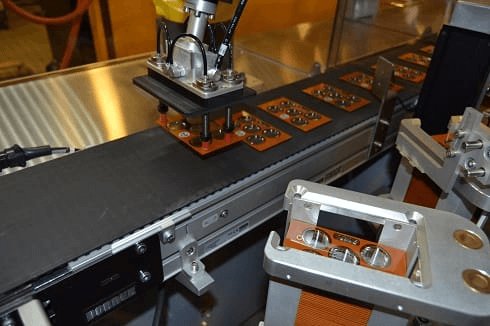
Customized sizing supports integration with other technologies. Indexing helps organize inventory, reduce manual-labor costs and increase productivity and output.
11Indexing benefits
Both high- and low-volume facilities can use controlled indexing to improve movement, organization and repeatability.
Reduce the manual labor needed to meter, count and position products.
Custom precision automation helps reduce errors and supports productivity.
Operate in a compact area while still increasing production efficiency.
Move production lines through defined steps in less time to increase output.
Customize sizing to match the facility and the product-handling requirement.
Integrate smoothly with other equipment used in the manufacturing process.
Simplify inventory movement by bringing order and consistency to product flow.
12Frequently asked questions
Core configuration choices for belt type, frame profile and conveyor size.
Yes. Indexing and positioning conveyors can be configured with either fabric belts or modular belts according to the product and process.
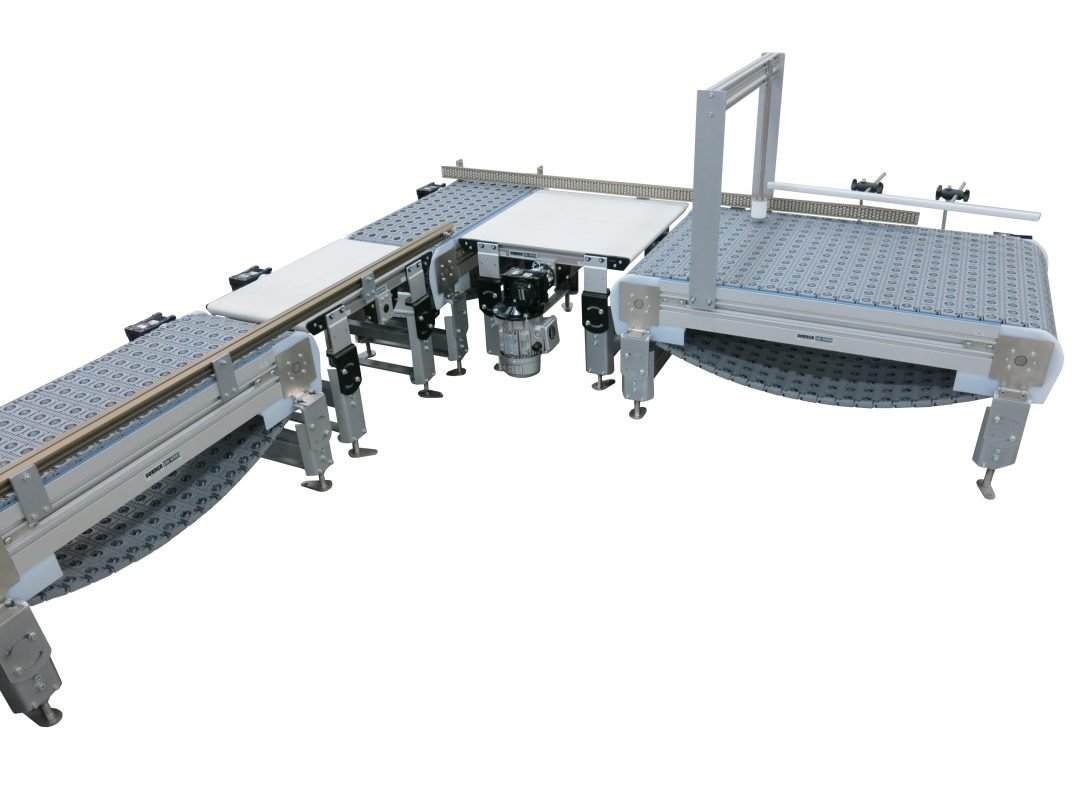
Available configurations include horizontal-to-incline, nose-over and Z-frame layouts.
Solutions can be sized for miniature products, small-to-medium part handling, and medium-to-large part handling.
Warranty terms depend on the selected Roarer-supplied configuration and project agreement. Confirm the applicable coverage with the Roarer team when requesting a proposal.
13Application gallery
Examples of magnetic, vacuum, spacing and automated positioning arrangements retained from the source application page.
Share your product dimensions, desired rate, accuracy requirement and downstream process. Roarer can help define the right conveyor layout.
Discuss your application