90° change
Product arrives on one conveyor and leaves on another at right angles to it, without a curve or a pusher acting on the side of the product.
01Engineered solution
Two conveyors crossing at right angles cannot both be the top surface. A pop-up transfer lifts one through the other to take the product, which turns the flow 90° in the space the junction already occupies.
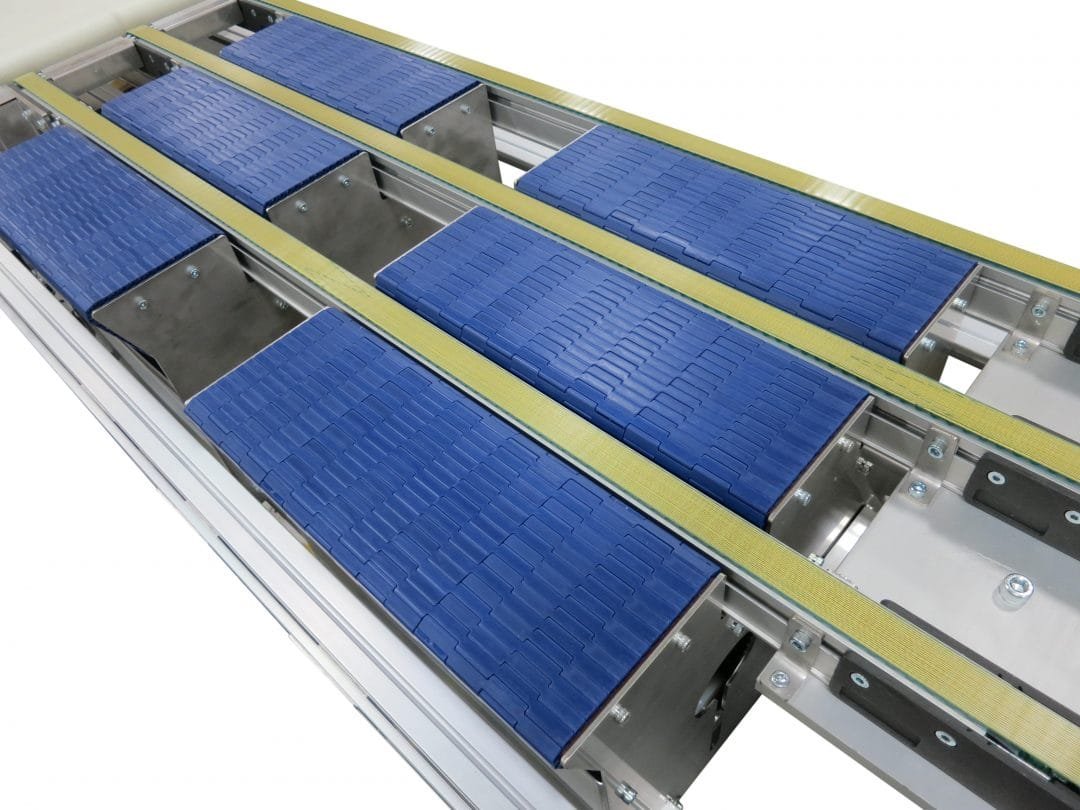
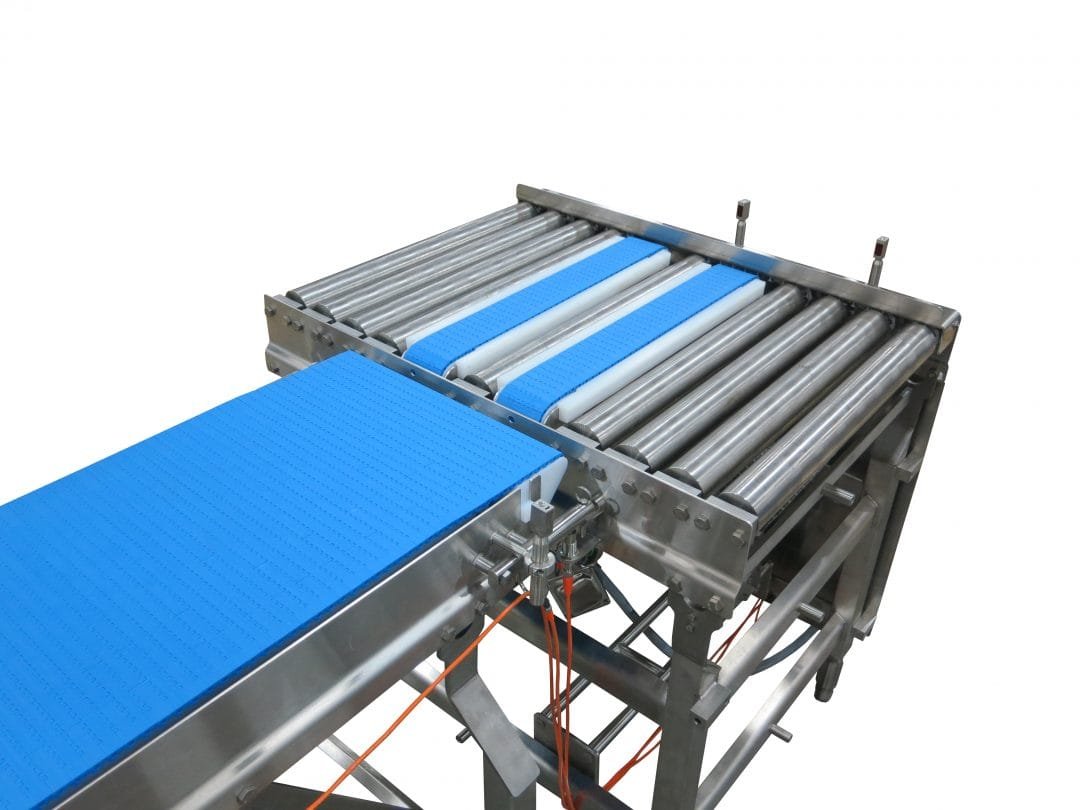 Transfer mechanism
02Principle
A 90-degree pop-up transfer uses multiple conveyors running perpendicular to each other to change a product's direction. One set lifts through the other to pick the product up, carries it across, and lowers again.
The lift does more than change direction. It also accommodates the two different heights of the adjacent equipment, so machines that do not share a discharge height can still be connected directly.
The conveyors involved have a small footprint, so a pop-up transfer addresses space constraints that a curve or a long transfer run could not. The direction change happens within the junction rather than needing a radius around it.
03Specification
A pop-up transfer is specified when a junction has to do two jobs at once: turn the product and bridge a height difference.
Product arrives on one conveyor and leaves on another at right angles to it, without a curve or a pusher acting on the side of the product.
The lift accommodates adjacent equipment running at different heights, so the transfer bridges the step rather than requiring the machines to be re-levelled.
Pop-up transfer conveyors can be designed on both the industrial and sanitary conveyor lines, so the environment does not rule the method out.
04Gallery
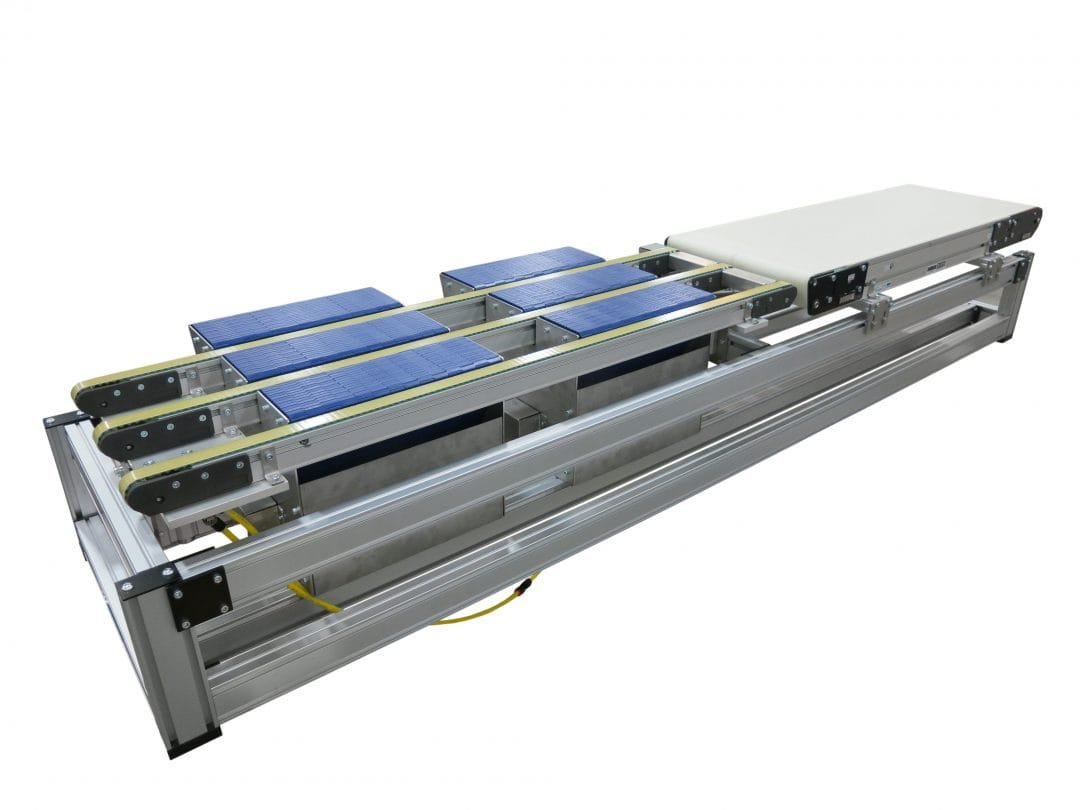
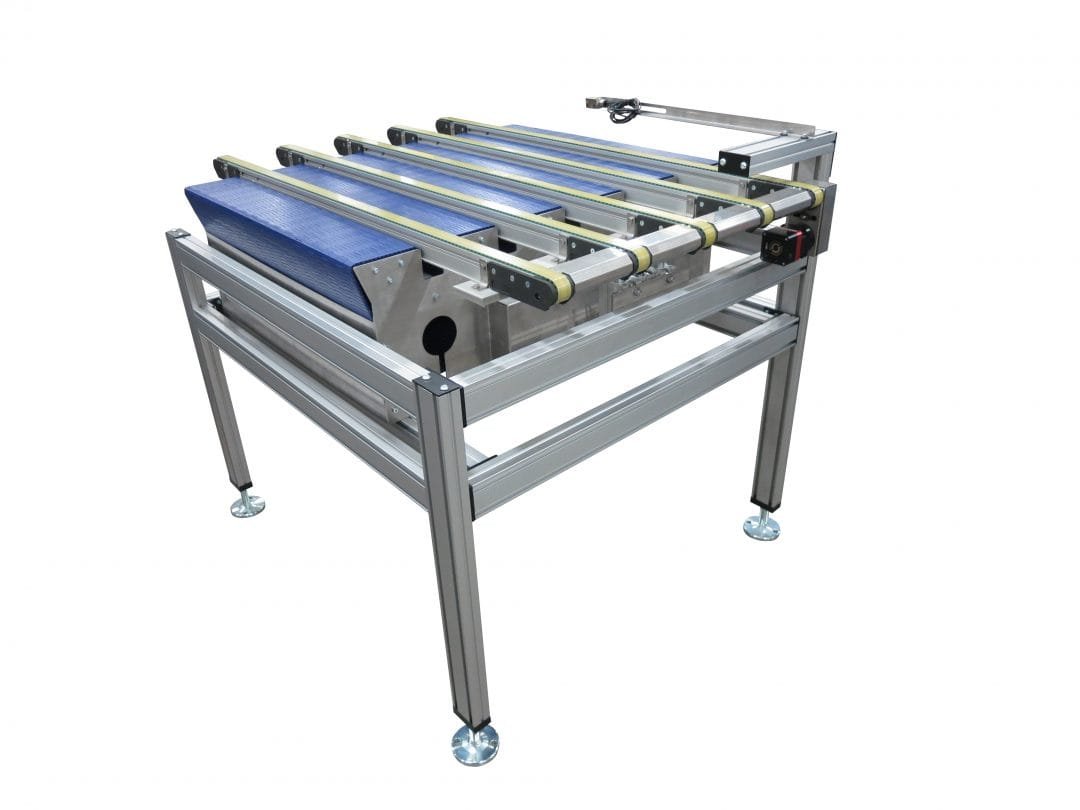
Raised and lowered positions, and the junction in a line.
05Related solutions
Turning product is one of several ways to route it.
Give us the two conveyor heights, the product and the rate through the junction, and Roarer can specify the transfer.
Discuss your application