90–360°
01Flipping
Turn or flip products to expose another face for processing, sealing, labeling, inspection or preparation.
03Application solution
Reorient products and pallets without interrupting production flow. Rotating conveyors improve positioning, protect handling accuracy and can reduce the floor space needed for multi-stage processes.
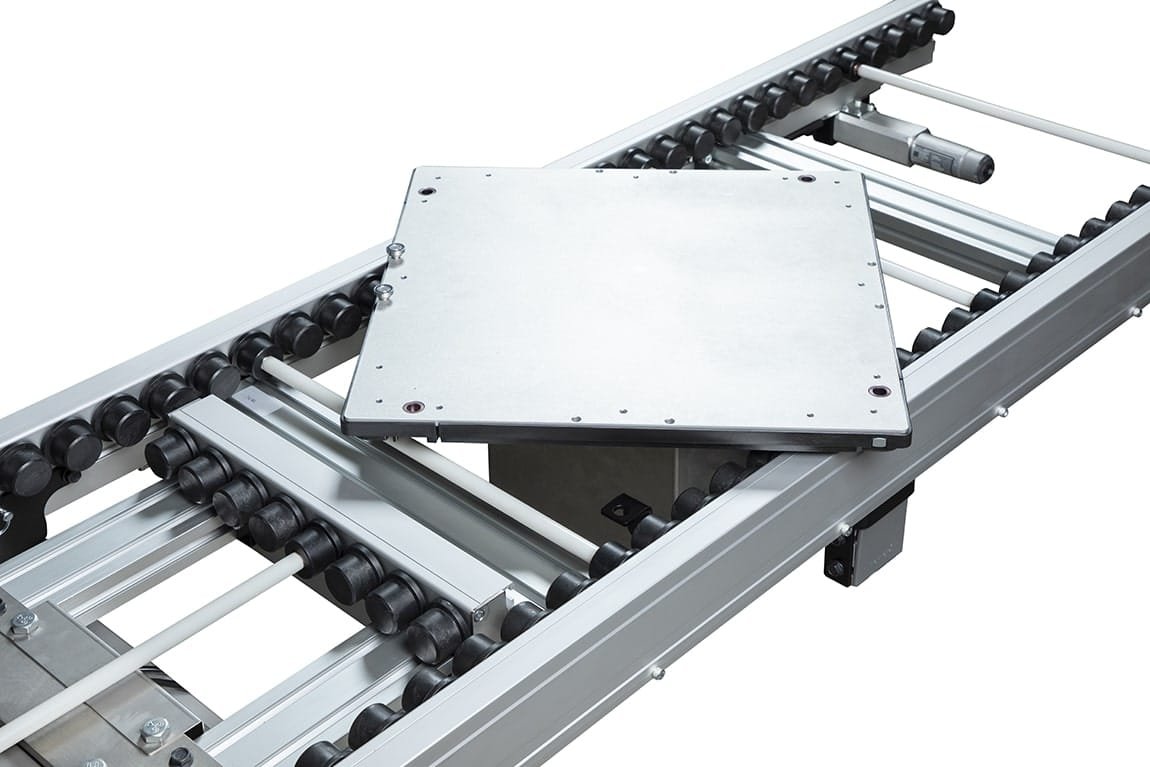
Lift + rotateControlled pallet orientation
 Product reorientation
04Why rotate in-line?
Reorienting products within the conveyor path can expedite manufacturing without compromising care or accuracy. A correctly selected system presents each product to the next machine, inspection point, labeler, assembly station or packaging operation in a repeatable orientation.
05Rotation types
Products can be rotated through 90, 180, 270 or 360 degrees. The handling method depends on product geometry, surface access, line direction and the next operation.
Turn or flip products to expose another face for processing, sealing, labeling, inspection or preparation.
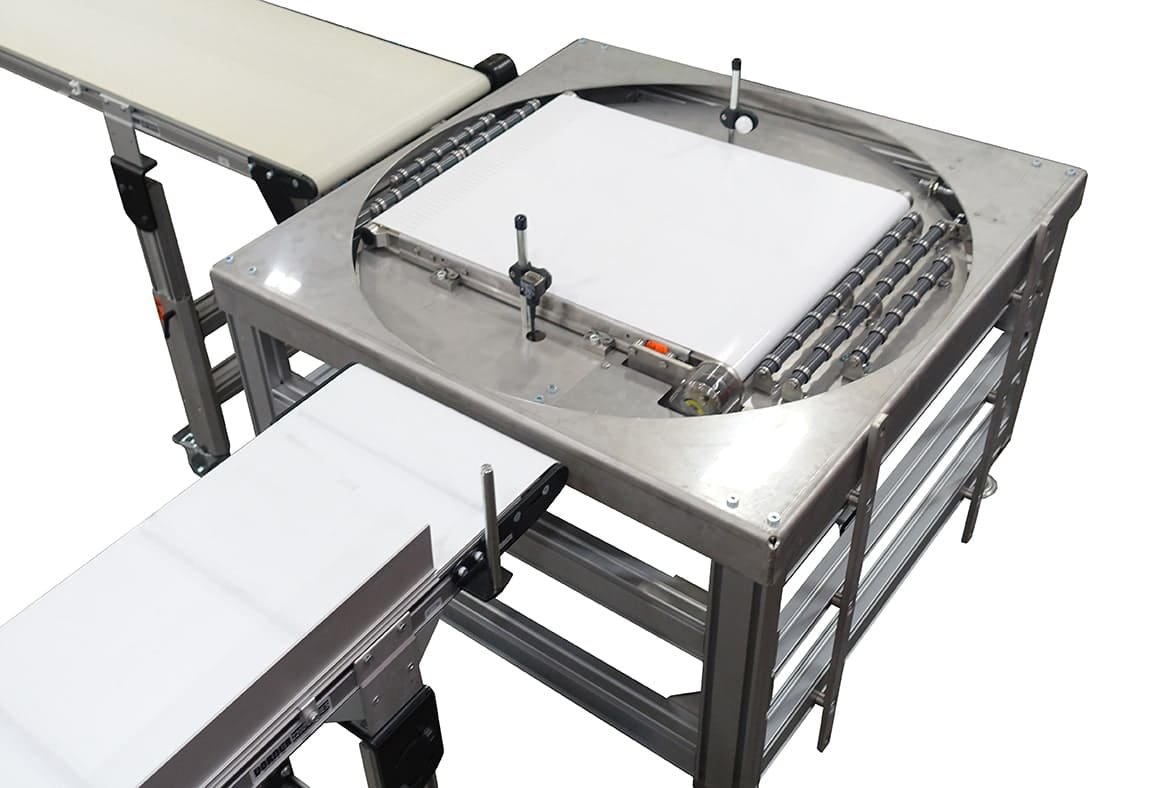
Lift the product or pallet above the belt, then rotate the supporting surface to the required orientation without disrupting the surrounding process.
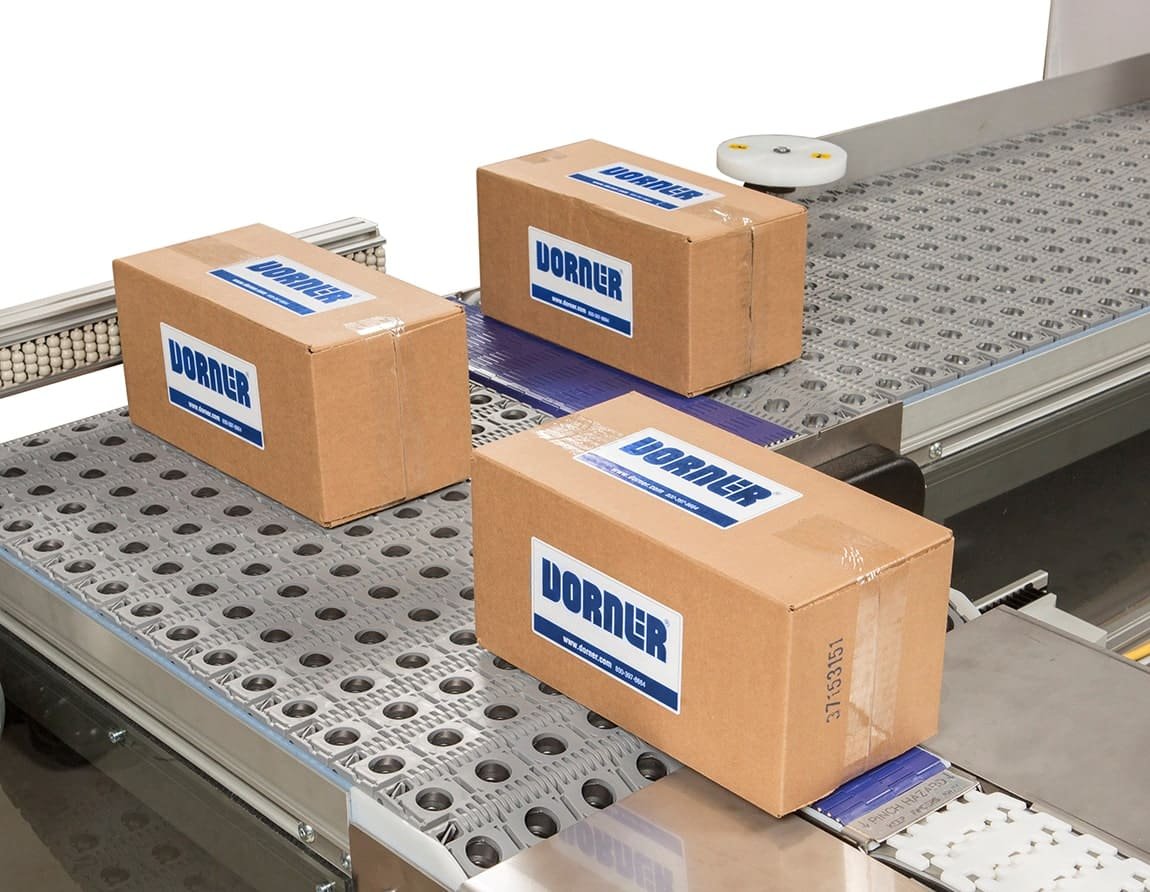
Move and rotate products between systems using 90-degree, side, inline or nose-bar transfers, or powered transfer modules.
Use accumulation tables to organize products, verify assembly and orient each item for the next step while conserving floor space.
06Operational benefits
Automated turning removes a manual intervention point while keeping product presentation consistent.
Automated rotation improves accuracy and efficiency, reduces handling cost and can limit reliance on lift trucks or other equipment around the production line.
Products can be positioned automatically at any stage, improving production rate and consistency without depending on manual reorientation.
Controlled rotation prepares products accurately for labeling, assembly, inspection, packaging and other downstream operations.
07Rotation mechanisms
Product rigidity, dimensions, weight, required surface access, transfer direction and available space determine the best solution.
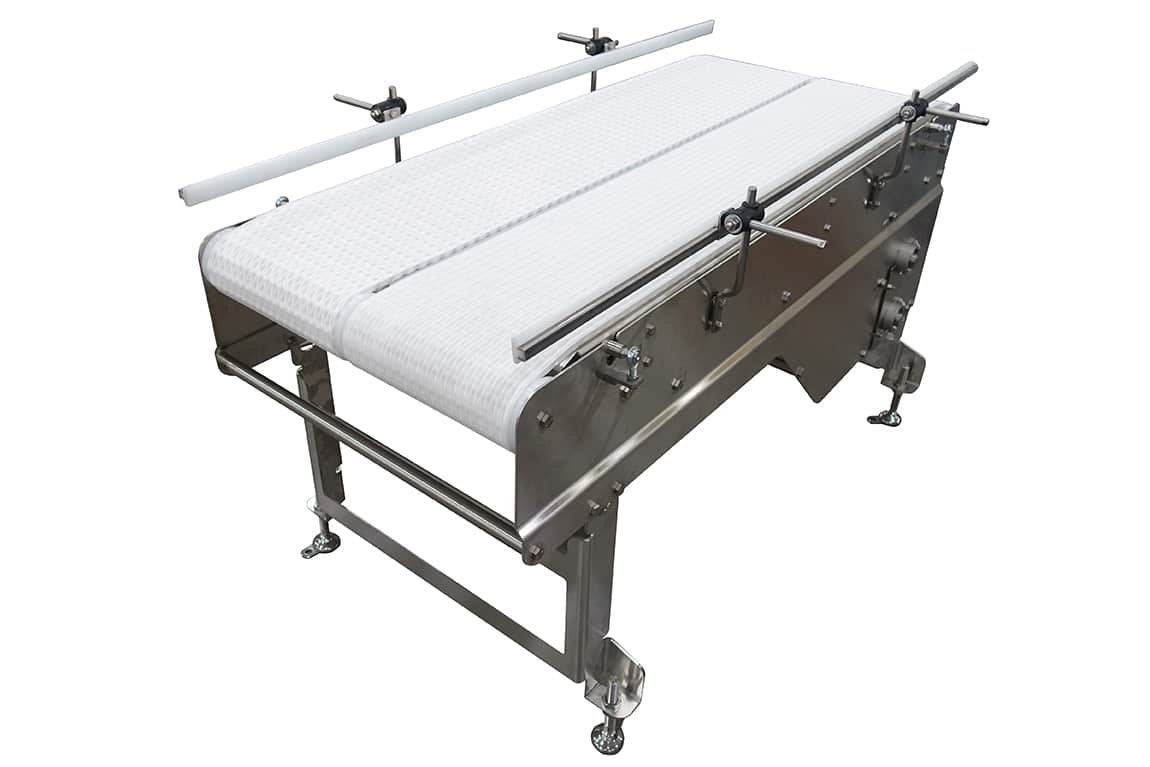
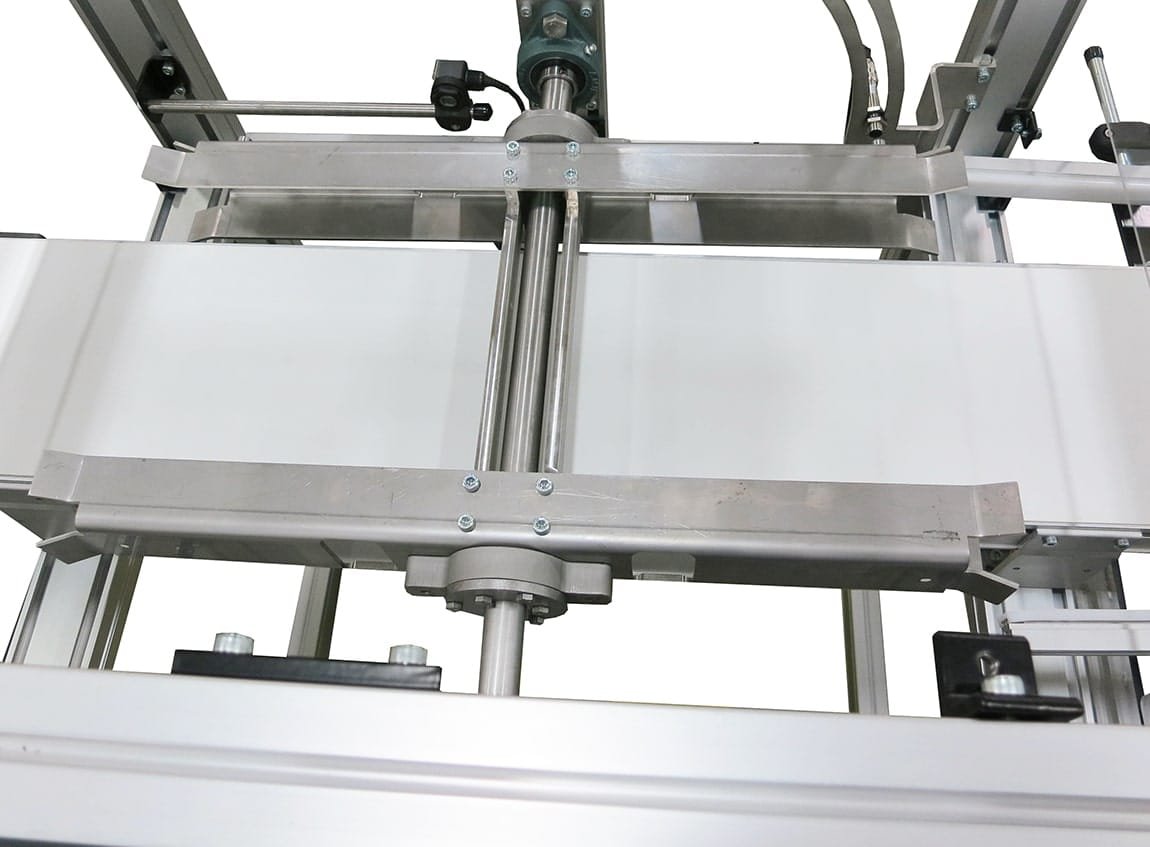
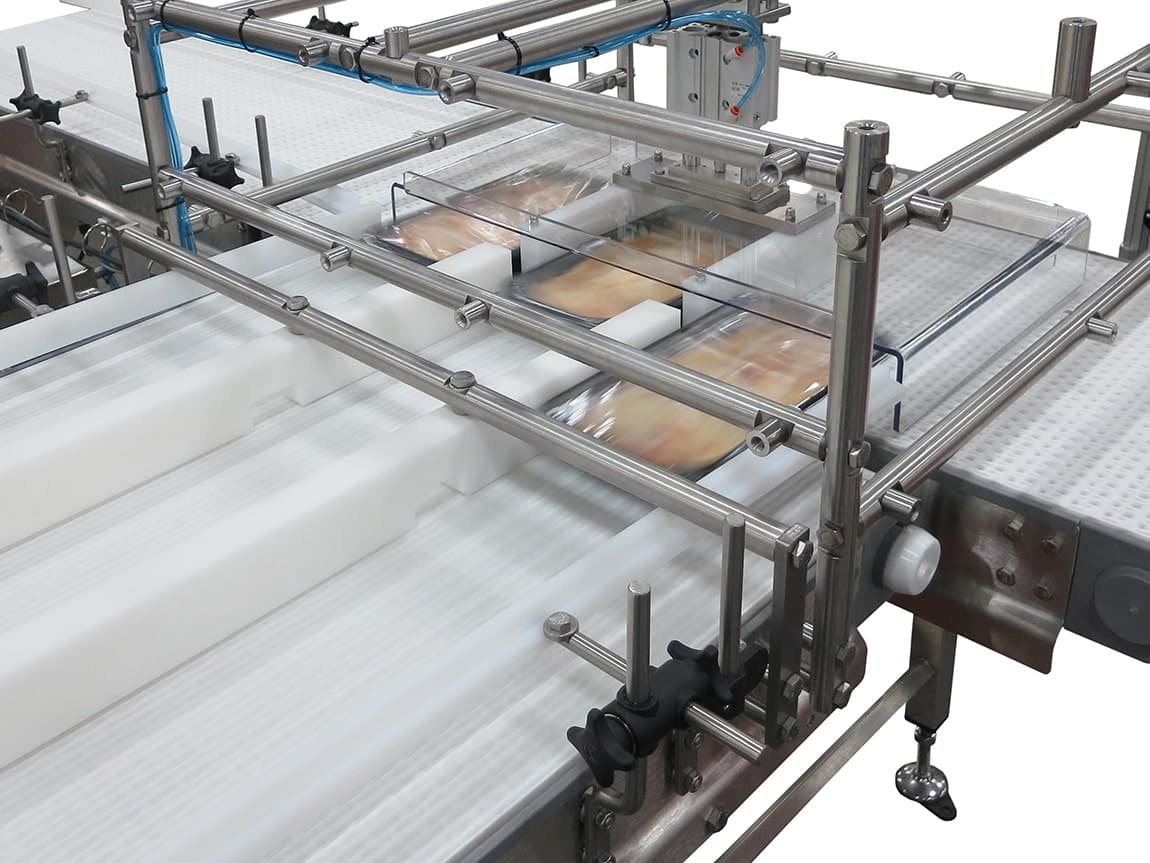
Two conveyors share one frame and run at different speeds to rotate rigid or flexible products. Product size and belt-speed difference determine the distance required for rotation.
Flexible-chain platforms support rotation within assembly, transfer, accumulation and packaging processes.
Flexible chain rotates products with enhanced control and surface access while automating product management.
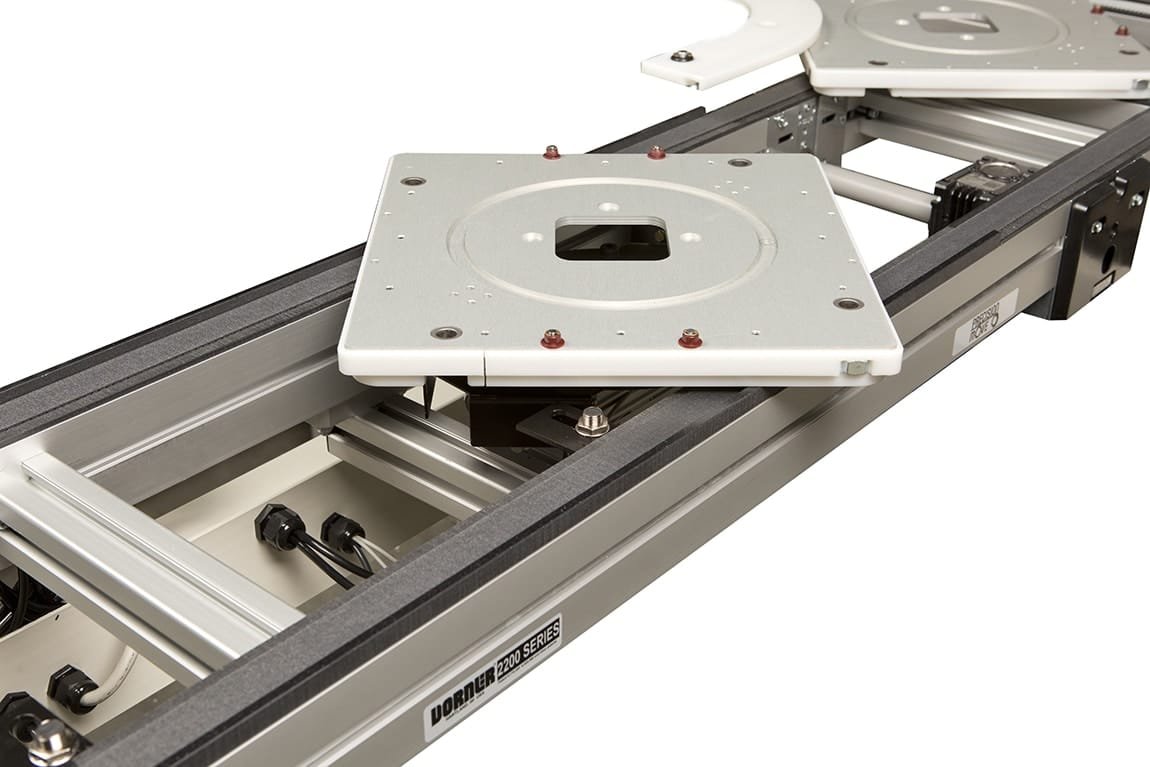
Lift products above the conveyor surface for controlled rotation during inspection, assembly or packaging.
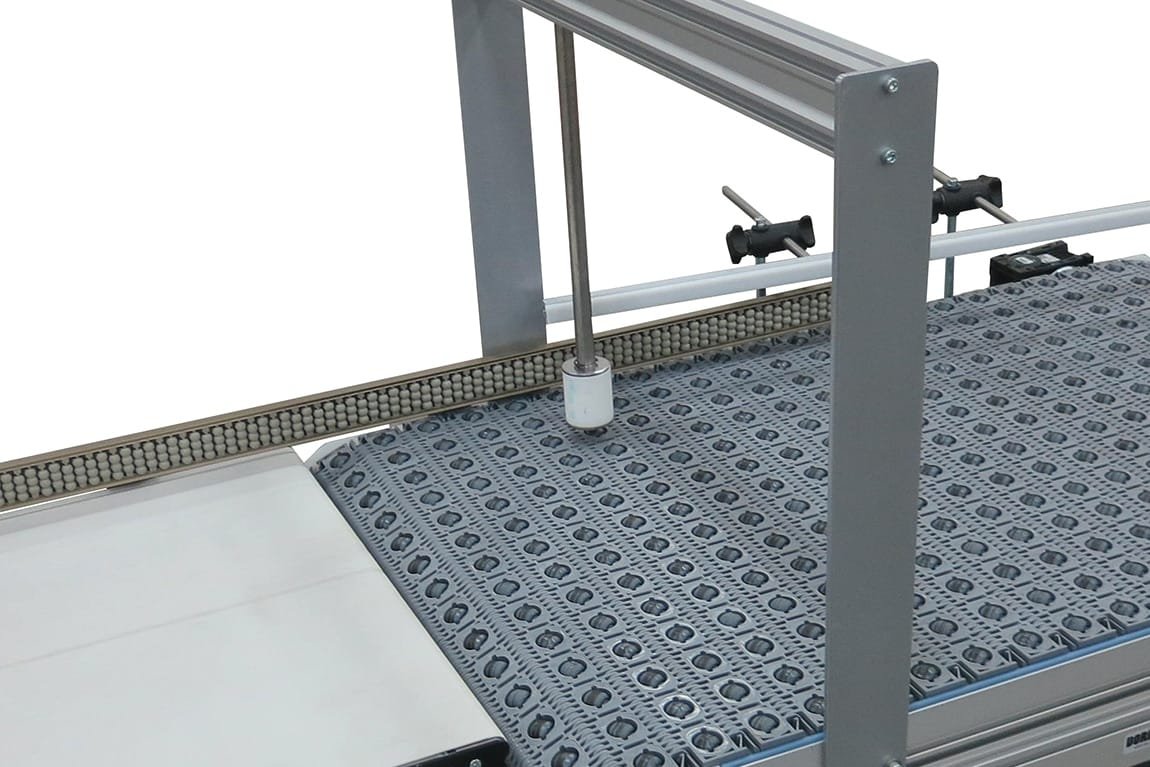
A simple, economical method for rotating boxes and crates 90 degrees. Additional bumps extend the rotation; installations may be fixed or adjustable.
Transfer products safely to another conveyor or a different machine while orienting them for the next process.
Expose product undersides for sealing, labeling and preparation without manual lifting or interruption to manufacturing and packaging flow.
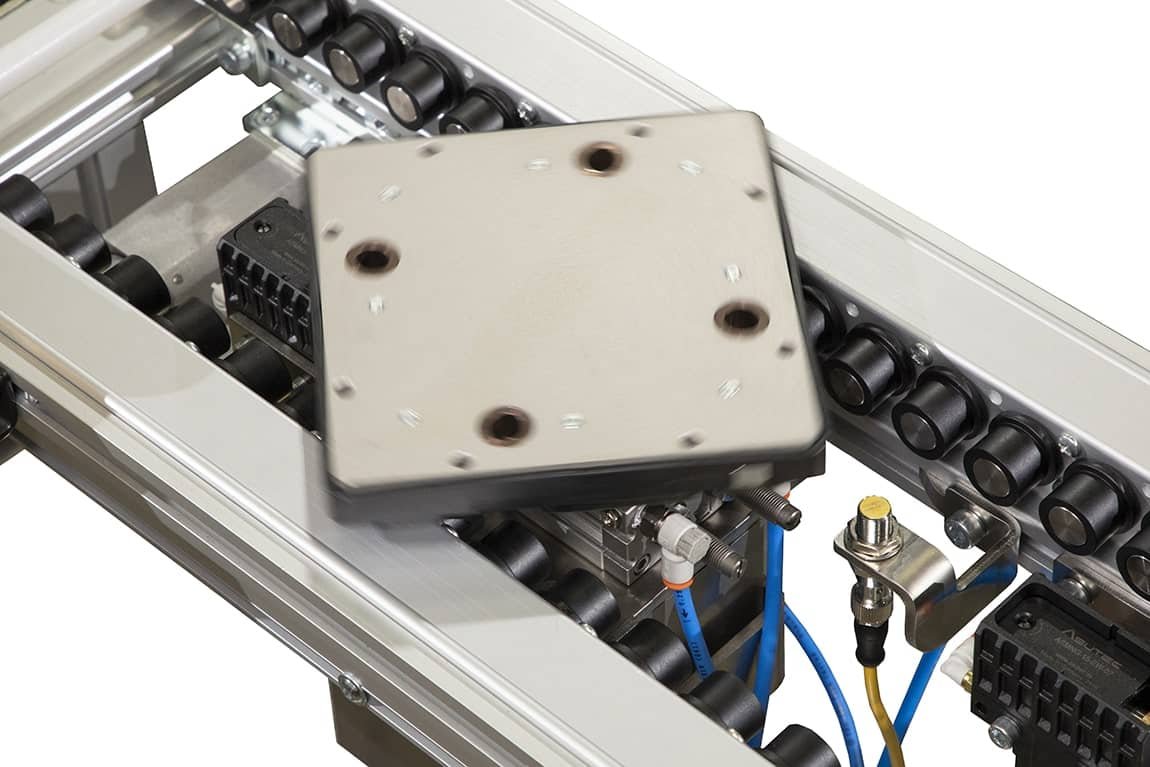
Frictionless pallet handling for small and light-load assembly automation, with traffic control and non-contact zones.
08Module specification
The pallet-system module lifts heavy or bulky products above the belt and rotates them for multi-side access during production, assembly or packaging.
09Industrial applications
Rotating conveyors support product flow wherever downstream processes require a consistent face, corner, underside or pallet position.
Support rotation, merging, accumulation, sorting and general product handling as fulfillment operations respond to high product variety and demand.
Present products in an identical orientation so automated or manual inspections can assess the same surfaces consistently and accurately.
Improve the availability, performance and quality factors behind overall equipment effectiveness through flexible, precise and space-conscious product orientation.
10Application gallery
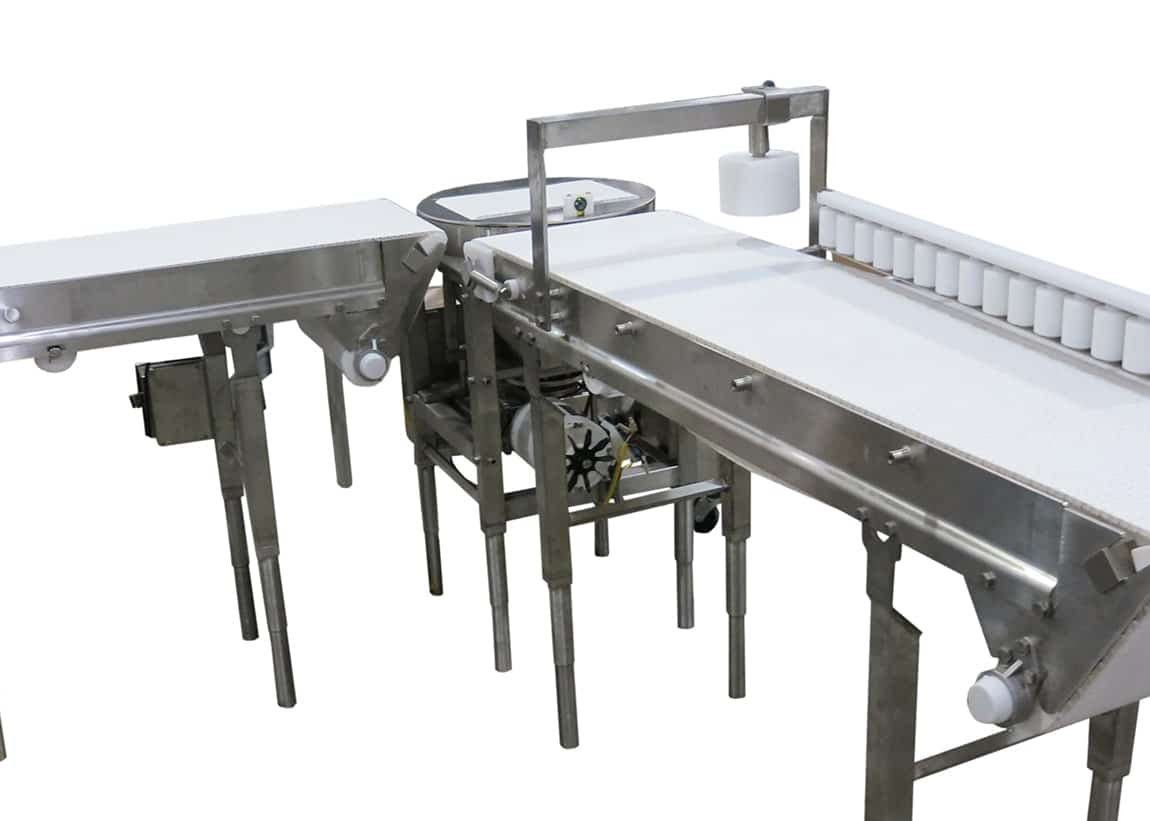
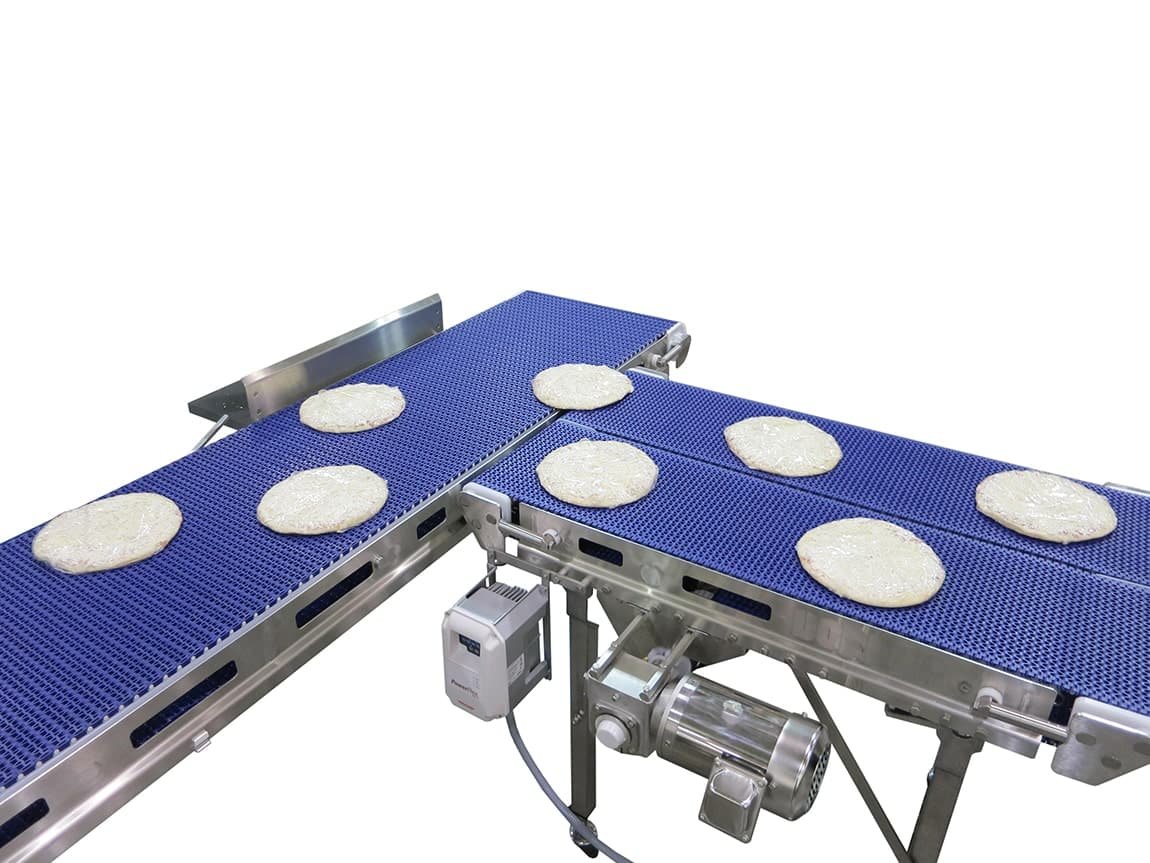
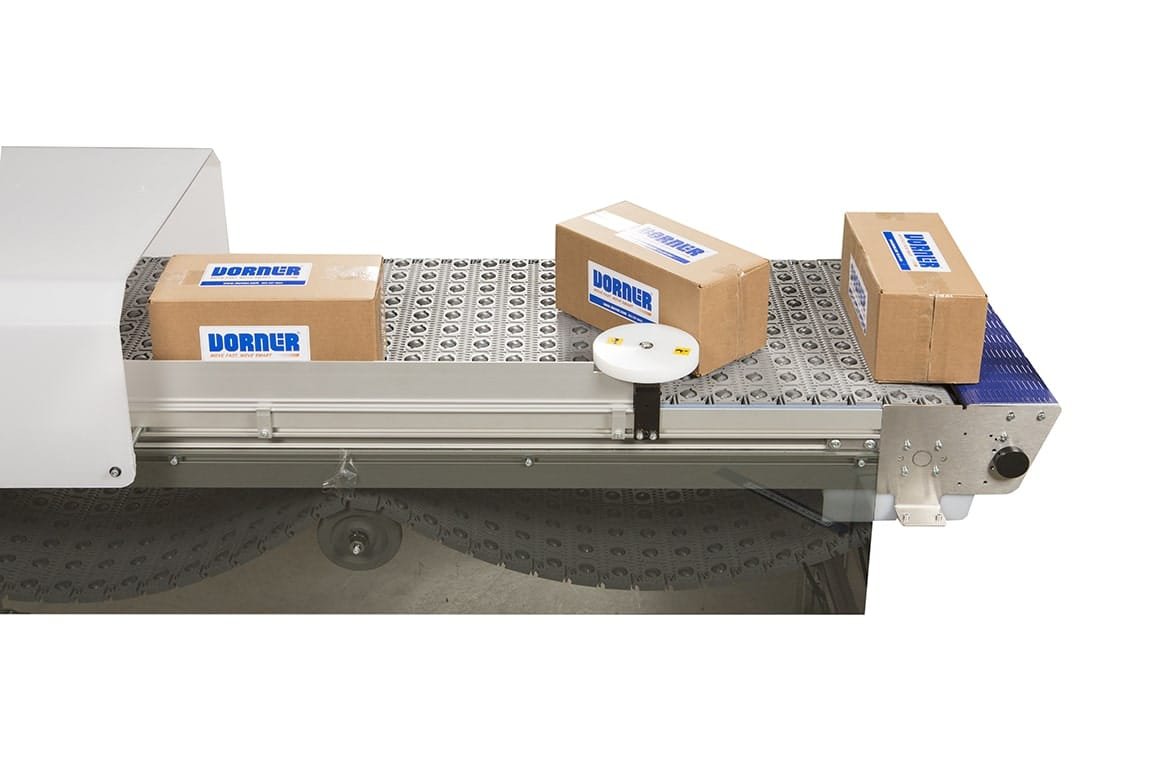
Lift-and-rotate, bump-turn, dual-belt, wheel-turn, sanitary and custom platforms from the original application gallery.
11Application support
Share the product dimensions, weight, required rotation, rate, transfer direction and available footprint with the Roarer team.
Discuss your application