01
Remove sources of slip
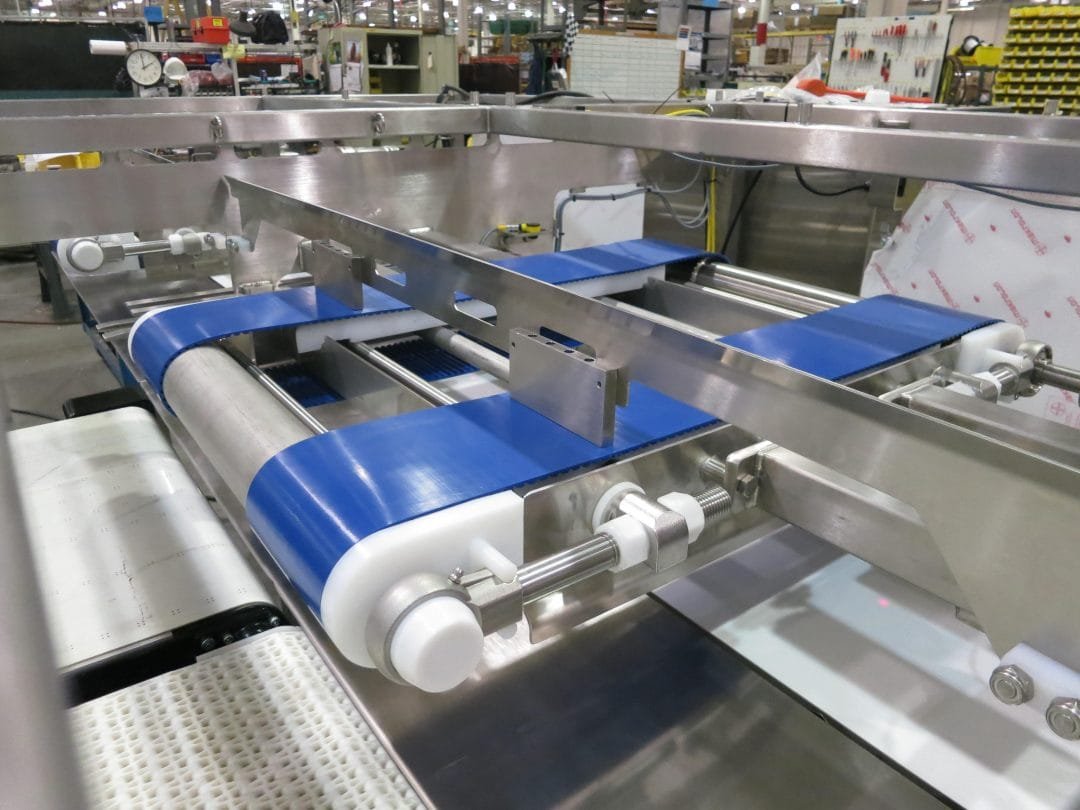
A conventional belt conveyor relies on friction between the drive roller and belt, and between the belt and product. Positive-drive toothed belting locks belt travel to the end sprockets. Fixtures or pockets can then remove the second slip interface by physically locating the product.
02
Reference performance
The archived paper reports typical placement of ±0.020 inch for a base positive-drive precision conveyor and ±0.010 inch for a fixture version. It also describes a complete fixtured system achieving ±0.020 inch at 100 indexes per minute. These are source-specific examples, not guarantees for every layout.
03
Common applications
A common drive can keep parallel belts in time for wide parts, bottom labelling or centre access. Timed cleats can elevate or buffer products while remaining level. Series-driven conveyors can run at different ratios to create precise gaps. Fixtured belts support synchronous assembly steps such as loading, fastening, labelling, welding and testing.
Field checklist
Plan precision conveyance as an integration platform
A precision platform should expose predictable mechanical and control interfaces for the equipment around it. Establish datum points, sensor locations, stop logic and cable routing early. Modular sections can simplify later changes, but repeatability still depends on consistent installation and a commissioning test with the real workpiece.
- Define mechanical and controls ownership
- Document station datums and tolerances
- Leave access for sensors and adjustments
- Verify restart behaviour after a stopped cycle