01
Start with the real constraint
Growing production usually puts pressure on two scarce resources: people and floor space. Conveyors can move work consistently between processes, allowing operators to focus on higher-value tasks while reducing manual travel and handling.
- Required throughput and peak demand
- Available floor area and overhead clearance
- Where operators, machines and inspection points must remain accessible
02
Use the third dimension
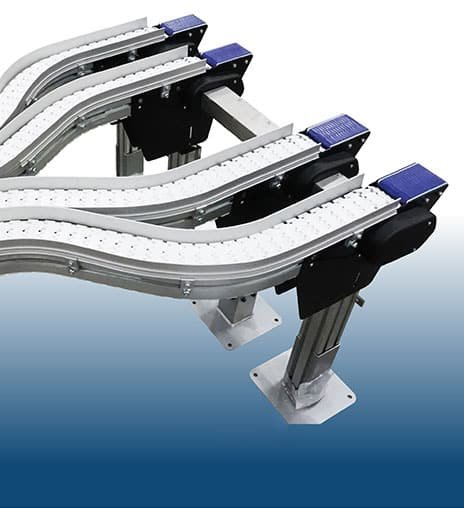
A flexible-chain route can turn around equipment, climb or descend, and connect processes without requiring a straight line. Helix, alpine and wedge arrangements can also create accumulation or preserve access below an elevated section.
- Keep transfers and curves suitable for the product
- Protect service access and pedestrian routes
- Allow for future process or pack-format changes
03
Measure the whole flow
A smaller conveyor footprint is useful only when the complete line remains balanced. Review upstream and downstream rates, accumulation needs, changeovers and the points where products can lose orientation before committing to a layout.
Field checklist
Use space-saving layouts deliberately
Curves, elevation, overhead routes and compact conveyors can recover floor area, but the layout must still protect product transfers, maintenance access and safe movement through the plant. Compare the saved footprint with added control, guarding and cleaning requirements before selecting the route.
- Map people and vehicle paths
- Reserve removal space for belts and drives
- Keep inspection points visible and accessible
- Allow the line to expand without rebuilding every transfer