01
Material is only the beginning
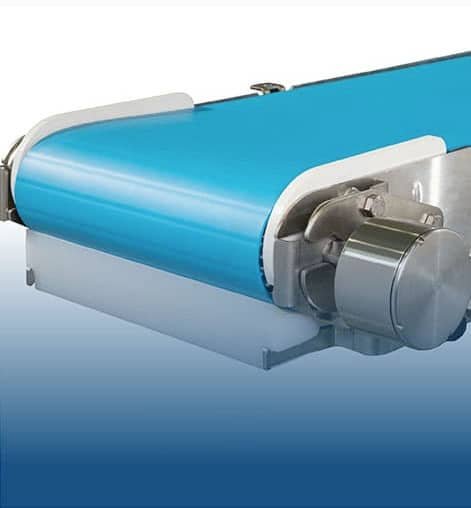
Stainless steel resists corrosion and repeated cleaning, but a hygienic conveyor also needs geometry that exposes the food zone and avoids places where moisture and residue can collect. Bolted plate-on-plate joints and inaccessible crevices can remain harbour points even when every part is stainless.
02
Design for cleaning
Look for open frame members, smooth welds, minimal fasteners in the food zone, accessible belt supports and components that one person can release without special tools where the risk assessment permits. Cleaning must reach the surfaces beneath the belt as well as the obvious top surface.
03
Match the hygiene level
Raw or exposed food normally requires a more rigorous platform than sealed packages downstream. Ask where the conveyor sits, what soil is present, how it will be disassembled, whether every product-contact area can be inspected, and how cleaning chemicals and water pressure affect the components.
Field checklist
Control harborage and allergen cross-contact
Hygienic performance depends on whether soil, moisture and allergens can be seen and removed. Open members, smooth welds, accessible belt supports and tool-free release points can shorten cleaning while making verification more reliable. The cleaning method must reach the return path, transfer points and any hollow or overlapping construction near the food zone.
- Identify product-contact and splash zones
- Eliminate inaccessible overlaps and hollow catch points
- Provide access beneath and around the belt
- Verify cleaning between allergen or ready-to-eat changeovers