Reject
Product that fails inspection, by sight for irregularities and deformities, or by a safety test such as metal detection, drops onto another conveyor or into a bin when the tail pulls back.
01Engineered solution
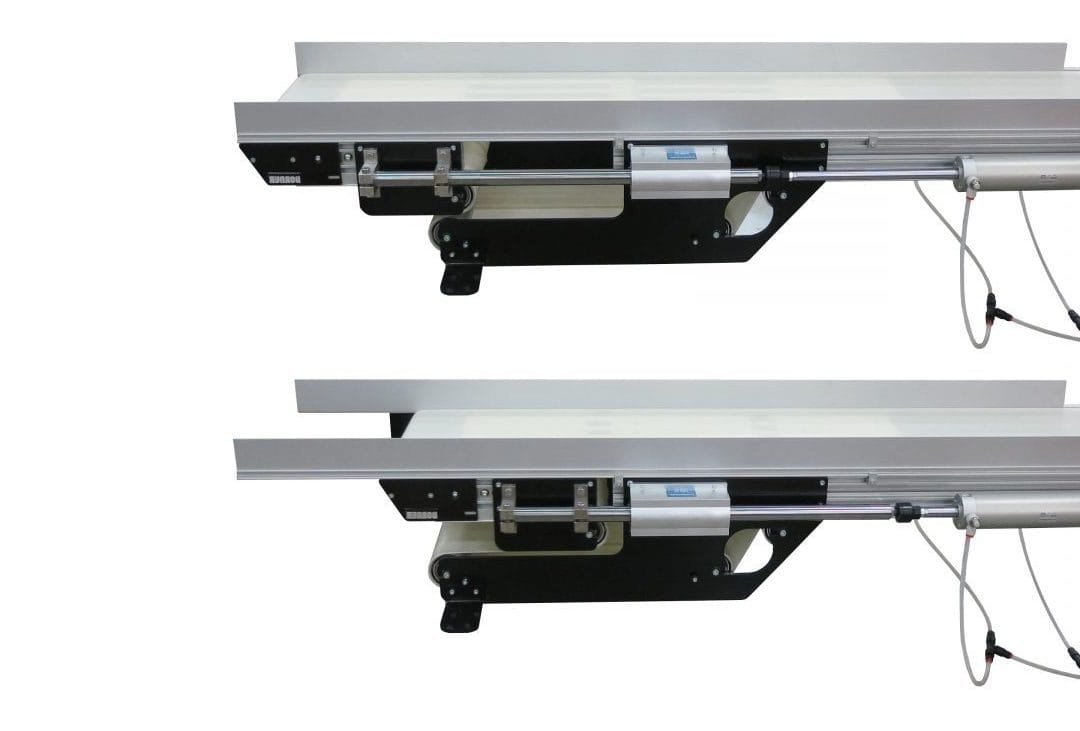
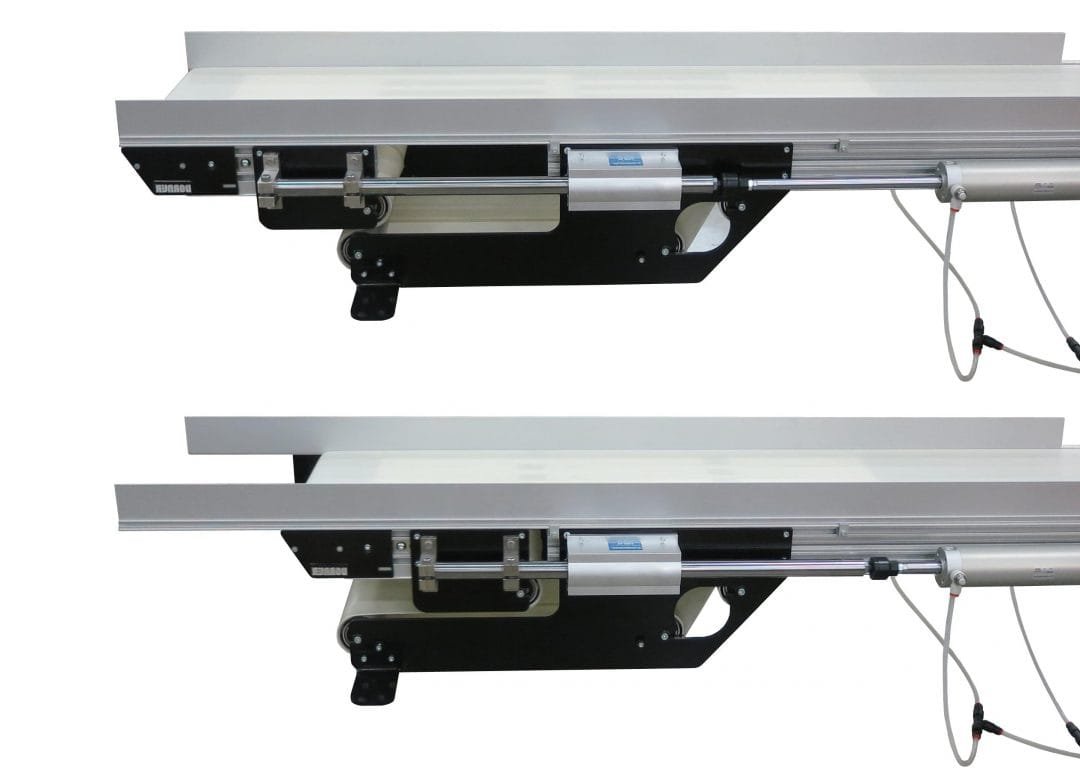
A conveyor frame that extends and withdraws on slides or rails. Pull the tail back and the discharge point moves, which lets the same line drop product in different places, or stop carrying it at all.
 Retracting tail
02Definition
A retractable conveyor is a frame that can retract or extend, manually or pneumatically, typically running on slides or rails. Moving the frame moves the point at which product leaves the belt.
That movement can be occasional and approximate, or it can repeat every few seconds with precision. Which of those you need changes the whole specification, because an occasional manual retract and a sensor-triggered retract cycling every three seconds are different machines.
Retractable tails, retracting conveyors, retractable conveyors and retracting nosebar conveyors are used interchangeably for this arrangement.
03Uses
All five come from the same mechanism. What differs is the trigger, the accuracy and what is waiting underneath.
Product that fails inspection, by sight for irregularities and deformities, or by a safety test such as metal detection, drops onto another conveyor or into a bin when the tail pulls back.
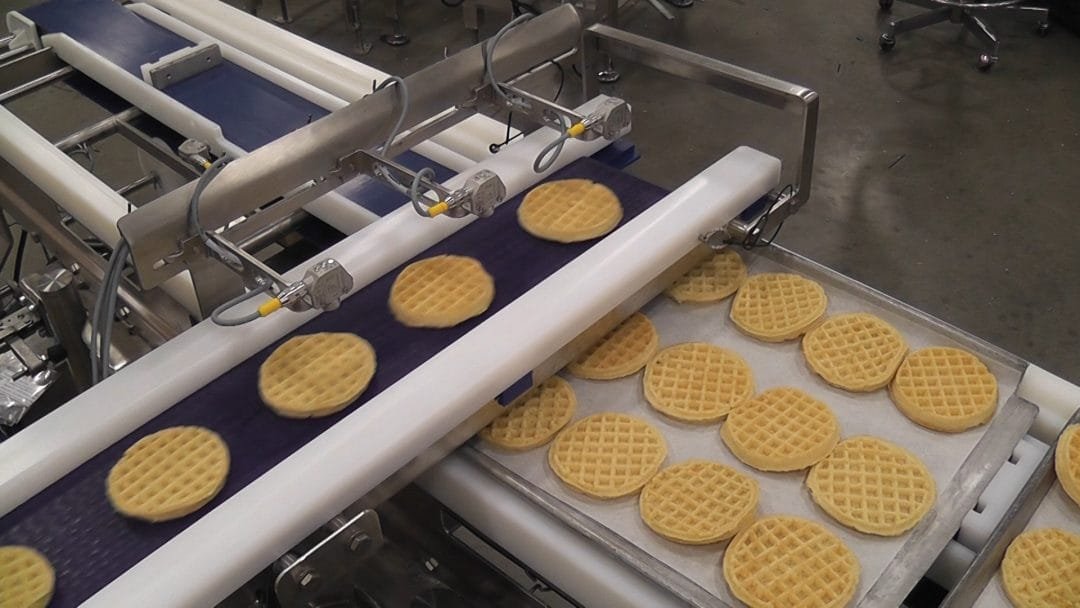
Product is placed onto another conveyor or a tray, either in a precise layout of rows and columns or simply dropped.
How far the conveyor is extended decides which line the product lands on, so one conveyor can feed several.
The tail withdraws so product falls onto what is already below it, building a stack rather than passing product along.
Withdrawing the tail opens a gap to reach the other side of a line where machinery blocks access, instead of climbing over or under equipment.
Because the line no longer has to be designed around traffic routes, the production footprint can be smaller as well as safer.
04Source case records
These are records from the archived source application set, kept because the figures show what the mechanism can do. They are not Roarer project references.
A sensor triggers the tail to retract 36 inches in 0.6 seconds so thin extruded sheet falls onto a car beneath. A robot then places a plastic sheet to separate the layers, the tail extends again in 0.6 seconds, and the cycle repeats every 3 seconds. The process had previously been done by hand.
A conveyor built so that product is carried along and then dropped onto one of three lines, selected by how far the conveyor was extended.
Product had been lifted off a conveyor and placed onto trays by two people, with two more bringing empty trays. A retractable tail placed product directly onto the trays instead. A sanitary conveyor with three sensors detected product on the belt, and a second conveyor carried the baking trays, using sensors to identify the belt cleat.
A retractable tail used to separate saleable goods from goods discarded for cosmetic, weight or other reasons, including sorting metal.
05Activation
The trigger follows the accuracy the application needs, and it is the main thing that separates a simple retract from an engineered one.
A sensor detects product at the discharge and triggers the retract. This is what makes sub-second, repeating cycles possible.
An operator calls the retract when it is needed, for access or for an occasional drop, without the line deciding for itself.
The frame is retracted by hand where the movement is infrequent and does not need to be accurate or fast.
A retract can have multiple drop zones rather than a single extended and withdrawn position, which is what allows routing to several lines.
06Industries
Most often where product has to leave the belt somewhere other than the end of it.
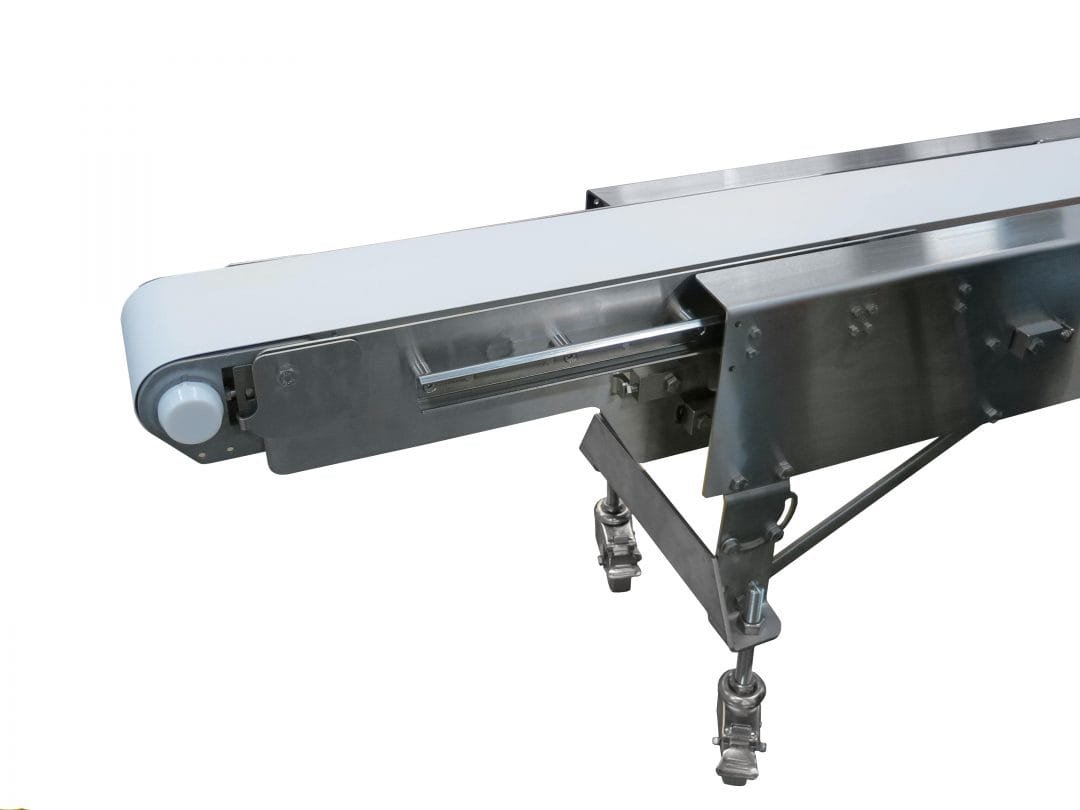
Depositing product onto trays, into bins or onto a following line, on frames that can be stripped for cleaning quickly.
Separating saleable goods from goods discarded for cosmetic, weight or other reasons, including metal sorting.
Acting on a reject decision taken upstream, by dropping the flagged item rather than pushing it sideways.
Building stacks and layers by releasing product onto what is already below the discharge.
07Gallery
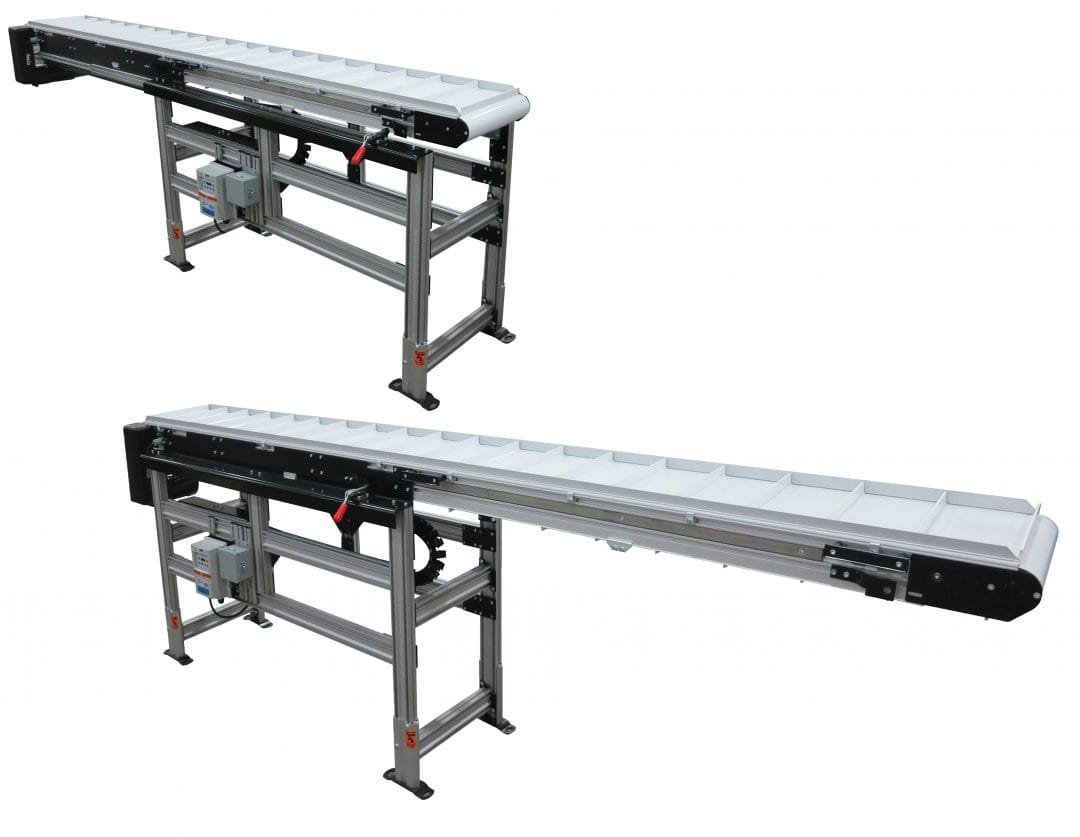
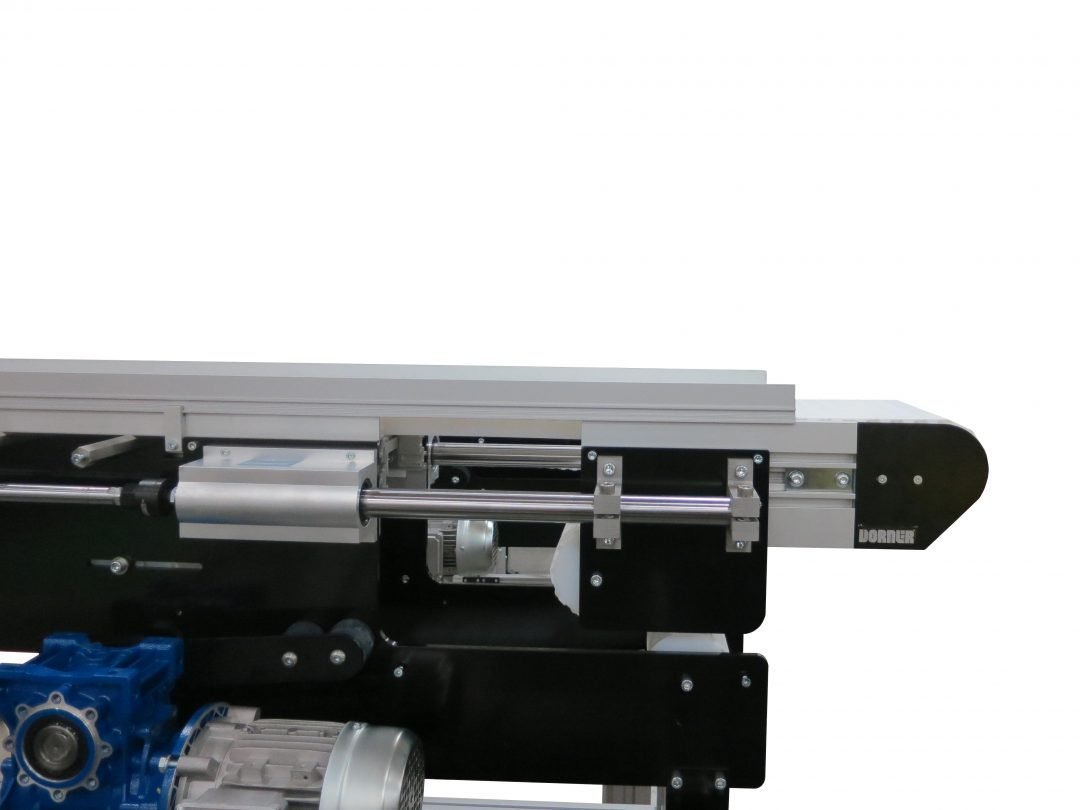
Manual and powered tails, and the drop zone beneath them.
08Frequently asked questions
Terminology, speed and how they compare with the alternatives.
None. Retractable tails, retracting conveyors, retractable conveyors and retracting nosebar conveyors all describe the same arrangement.
Fast enough to be part of a repeating process. One retained source case retracts 36 inches in 0.6 seconds, extends again in 0.6 seconds, and repeats the whole cycle every 3 seconds. Your achievable rate depends on stroke, mass and the product.
No. Activation can be by sensor, by push button or by hand. Infrequent, low-accuracy movement does not need powered activation.
Yes. A retract can have multiple drop zones, and how far the frame extends decides which line the product lands on.
A retract opens a gap by withdrawing the end of the line; a lift gate opens one by raising a section in the middle of it. Use the retract when the access point is at the end of a run or where machinery blocks the side.
09Related solutions
A moving discharge usually serves a decision made somewhere else on the line.
Give us the product, the stroke you need, how often it has to cycle and what is waiting below, and Roarer can specify the retract.
Discuss your application