Visual defects
Irregularities, deformation or other visible quality issues.
07Application solution
Remove failed products safely, route accepted output consistently and place products exactly where the next process needs them.
08Why is rejecting necessary?
Rejecting is a necessary production step because not every item is suitable for sale. The archived source cites estimates placing rejected parts at approximately 2% of output, although the actual rate varies by product and process.
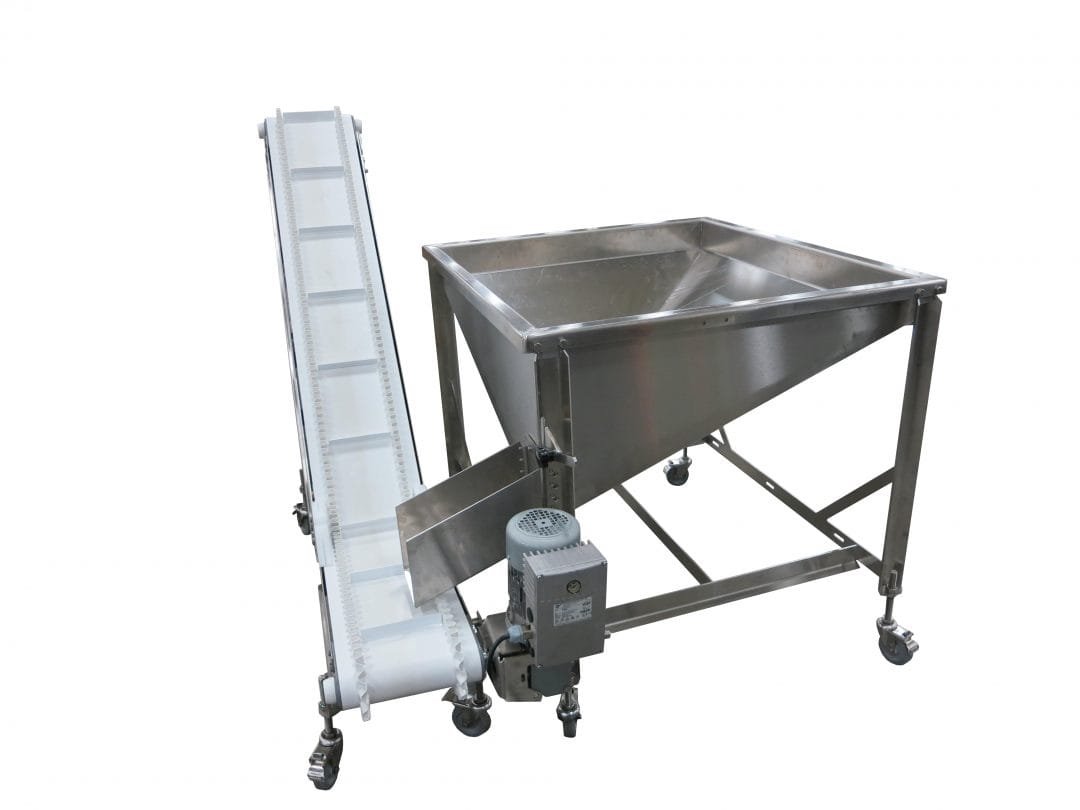
Products falling short of specification must be removed before they reach suppliers or the marketplace. A reject conveyor can direct them onto another conveyor or into a reject bin or accumulator for removal.
Irregularities, deformation or other visible quality issues.
Products outside the specified weight tolerance.
Absent caps, flaps, labels or required product elements.
Incorrect, missing or unreadable barcodes and labels.
Failed metal-detection, X-ray or other inspection results.
Diverters, pushers and gates can redirect affected products.
09Reject mechanisms
Product size, weight, stability, speed, required movement and available space determine the appropriate mechanism.
A controlled burst of air moves suitable lightweight products away from the accepted flow.
A linear pusher moves a detected product off the main conveyor path.
An overhead device sweeps products laterally without occupying space beside the line.
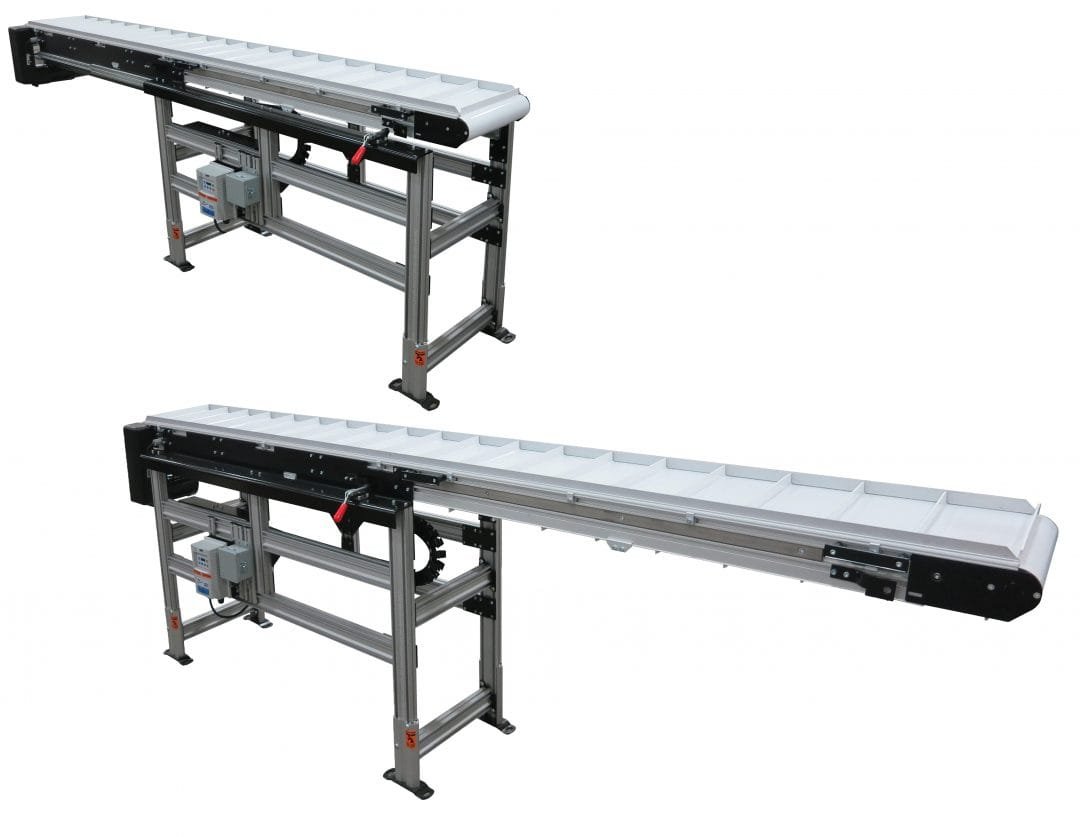
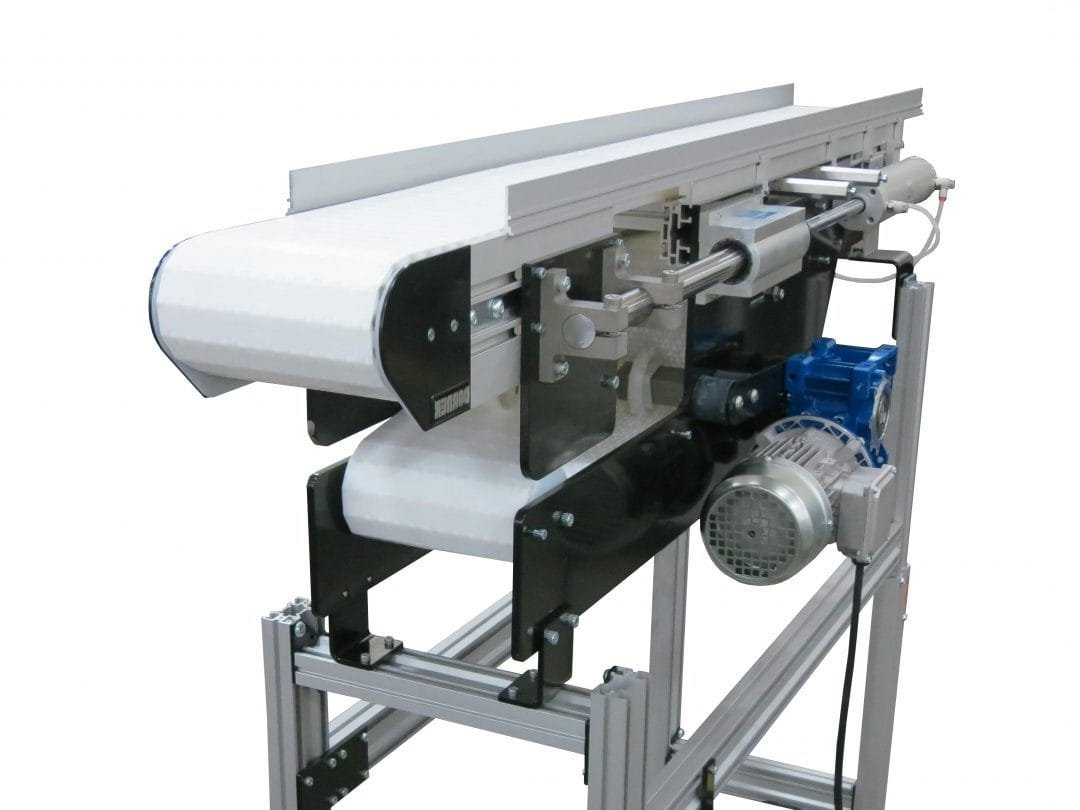
A conveyor section retracts when triggered so the rejected product drops through the opening.
A pivoting conveyor section changes position to send the product to an alternate route.
An electrically or pneumatically actuated mechanism performs the required reject movement.
10Custom reject design
Individual product characteristics and weight influence the retract type, reject distance, required motion and movement speed. Customization ensures the mechanism removes the failed item without disrupting accepted production.
Consistent delivery raises process quality and throughput while allowing products to follow different routes, such as individual packing or bulk filling.
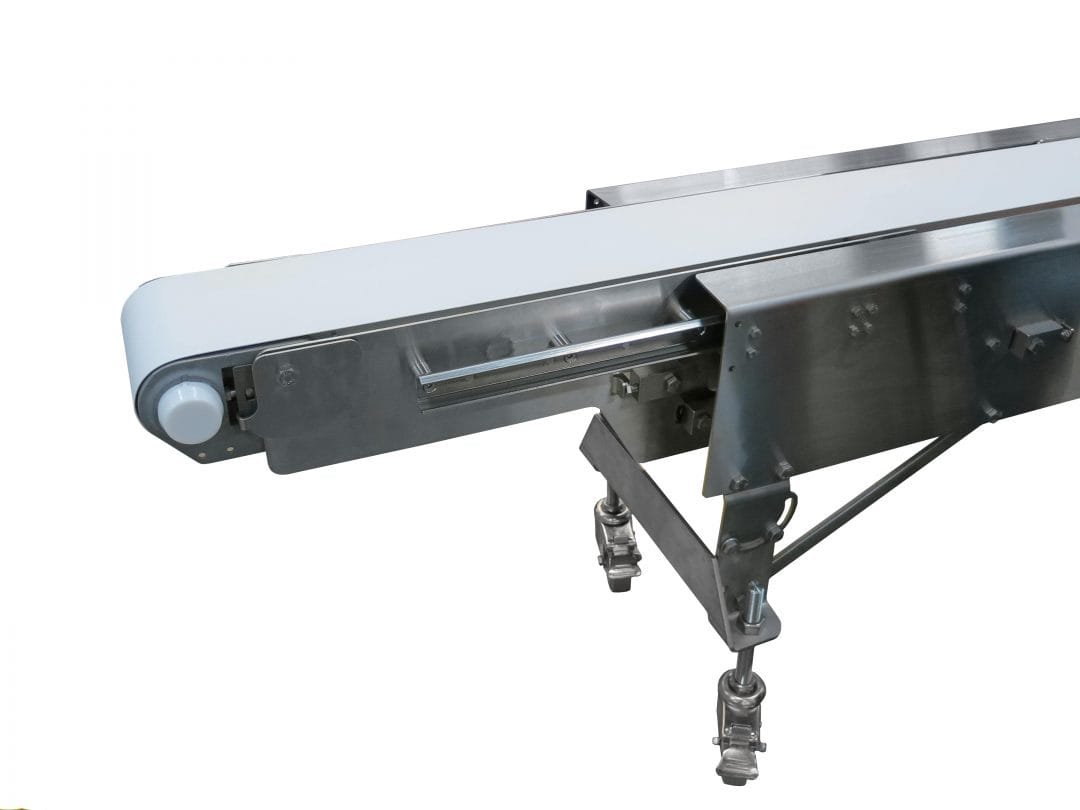
A retracting tail receives an inspection signal and opens the conveyor path so the identified product can fall into a bin, accumulator or alternate conveyor.
11Safe, efficient removal
A simple system may stop for manual removal. Automated systems can act immediately when inspection equipment identifies a questionable product.
The line stops so an operator can remove the failed item. A manual divert arm and powered transfer can guide products where the application permits.
A metal detector, X-ray system or other inspection device sends a signal; the tail retracts and drops the product into a reject bin or accumulator.
Automatic rejection is especially valuable in tight areas where employees cannot easily reach the line or respond to every alarm.
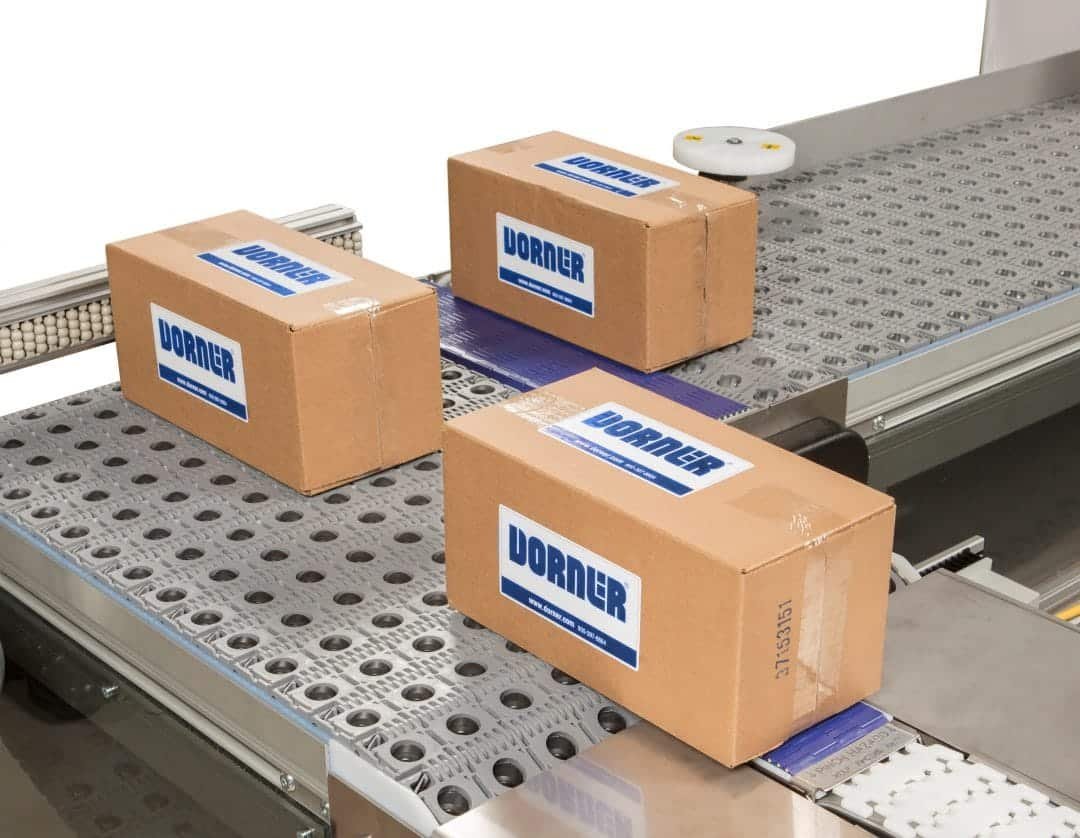
A six-conveyor arrangement moved different-sized cartons through two inkjet printers. Cartons were justified, transferred 90 degrees and routed with roller-belt technology; improperly taped cartons moved onto a curved skate-wheel reject route.
A cleanroom system dropped rejected parts into a custom chute. A later quality inspection used a pneumatic divert gate to push additional failed parts down another chute.
12Depositing conveyor systems
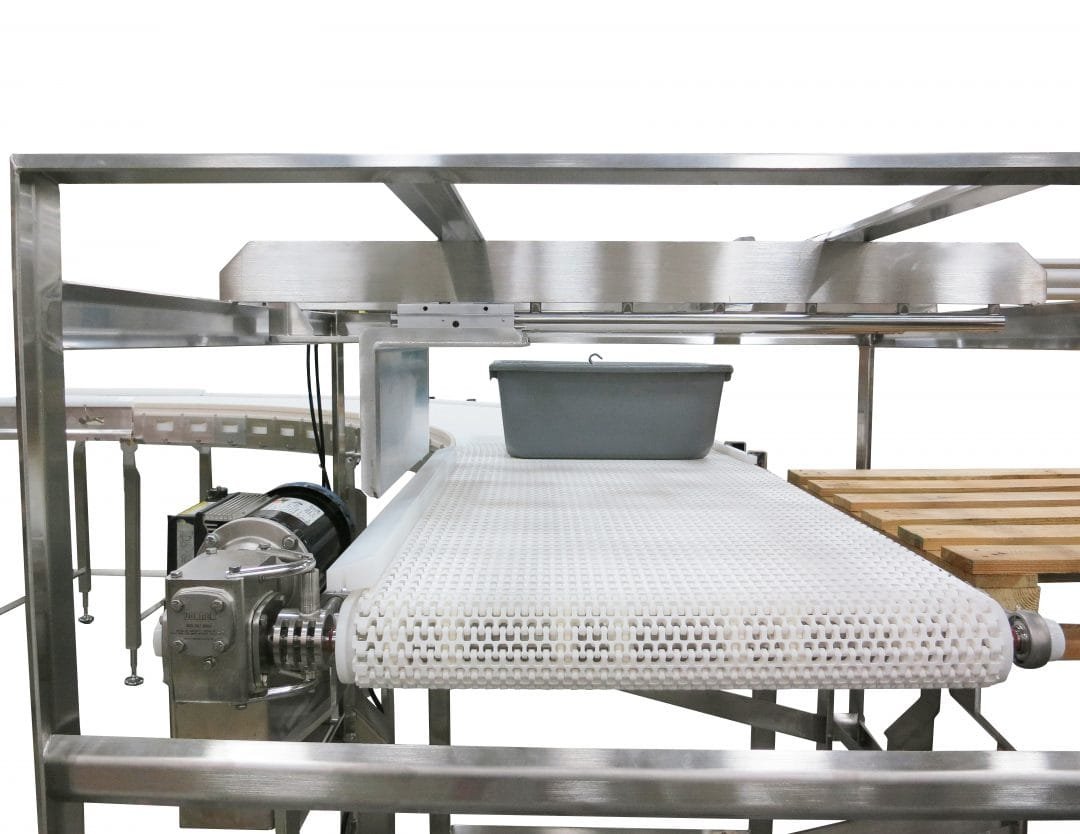
Products may need to be deposited onto another conveyor, a tray, a pallet or into a box. A retract conveyor equipped with sensors can place each item where the next process expects it.
Accurate depositing increases throughput and repeatability. Correctly located products reduce the movement and time required by downstream processes.
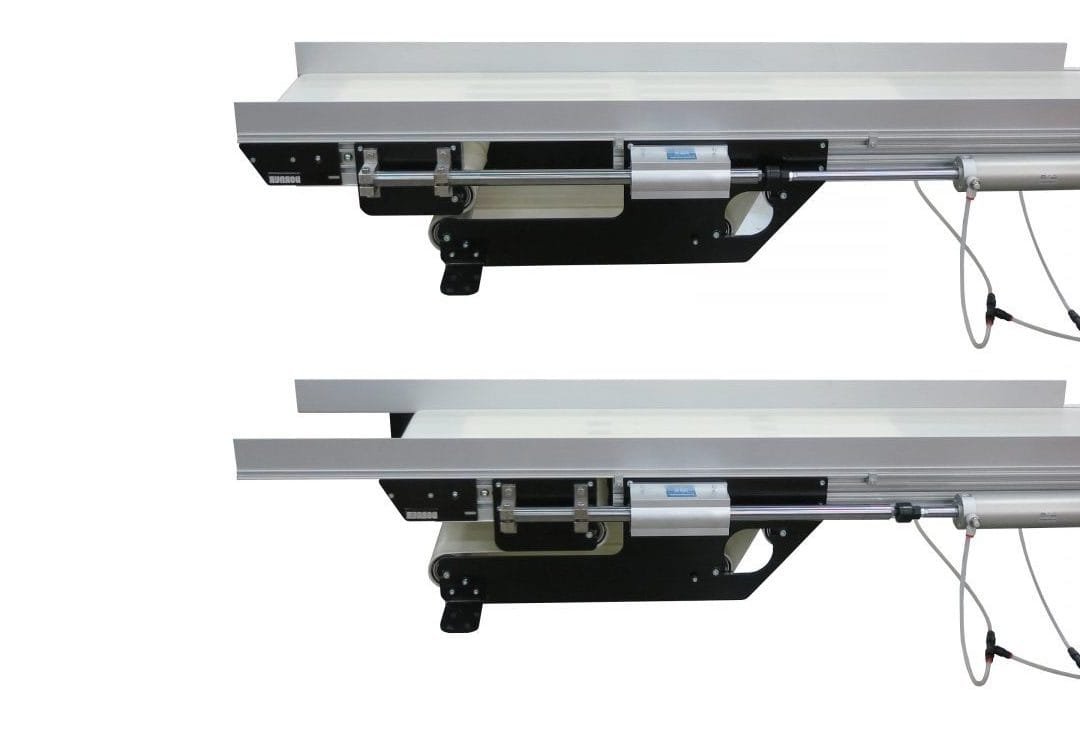
A high-speed retractable conveyor stacked sheets of thin extruded food product. At the conveyor end, a sensor triggered the tail to retract three feet in 0.6 seconds, allowing the product to fall onto a cart below.
Retracts may use several drop zones and operate infrequently, on demand or every few seconds with precision.13Industries
Rejecting and depositing occur across industries. Food and sanitary production and general manufacturing illustrate two of the most common environments.
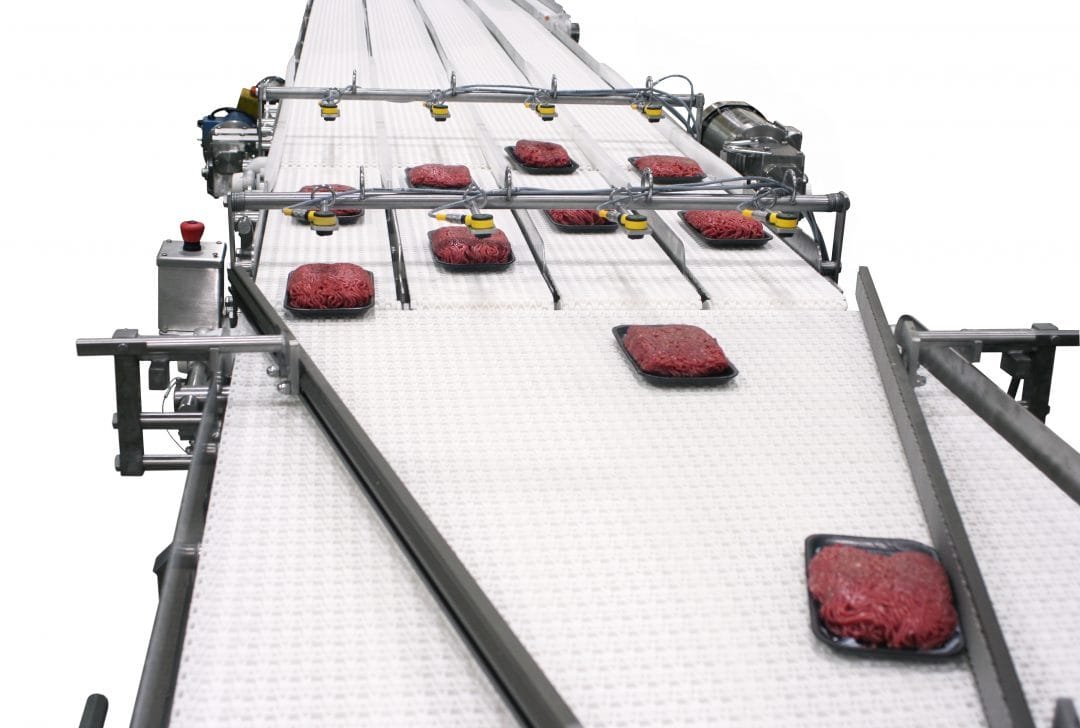
Applications include meat and poultry, dairy and cheese, baking and confectionery, and ready-to-eat foods. Conveyor construction, belting and sanitary level must be selected for the facility’s product, cleaning method and applicable requirements.
Material handling, industrial production and packaging lines use depositing and reject conveyors so only products meeting specification proceed to assembly or shipment.
14Source food-production case
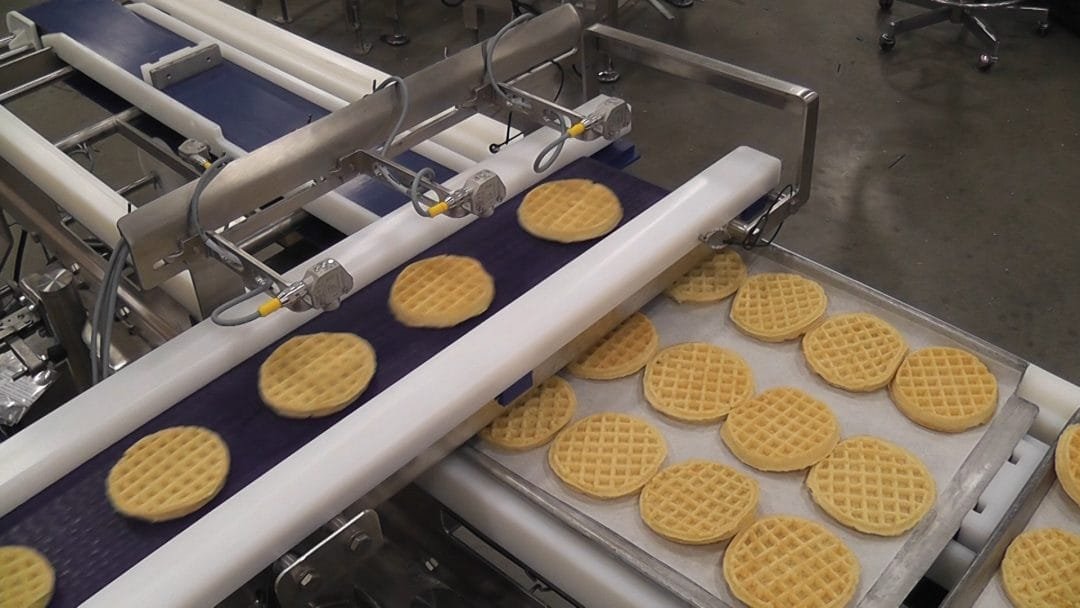
Products previously required two employees to lift them from a conveyor onto baking trays, while two more employees supplied and filled empty trays. A retractable-tail arrangement deposited products directly onto trays. Sensors detected products on the belt and identified tray-conveyor cleats, while cleanable conveyors supported the food process.
15Application gallery
All five photographs from the archived page gallery are retained locally and organized around the two core operations.
16Related solutions
Combine rejection and depositing with roller-belt routing, gates, chutes or retractable conveyor functions.
Share your inspection signal, product dimensions, line rate, reject movement and deposit pattern. Roarer can help define the system.
Discuss your application