Product flow
Product often has to be stored in one area and processed in another. Letting staff reach their work areas directly reduces the bottlenecks that routing around the line creates, and helps where product is accumulating.
01Engineered solution
A conveyor running down the middle of a floor forces everyone to walk around it, or to climb over it. A lift gate raises a section like a drawbridge so people and trucks cross the line where they actually need to.
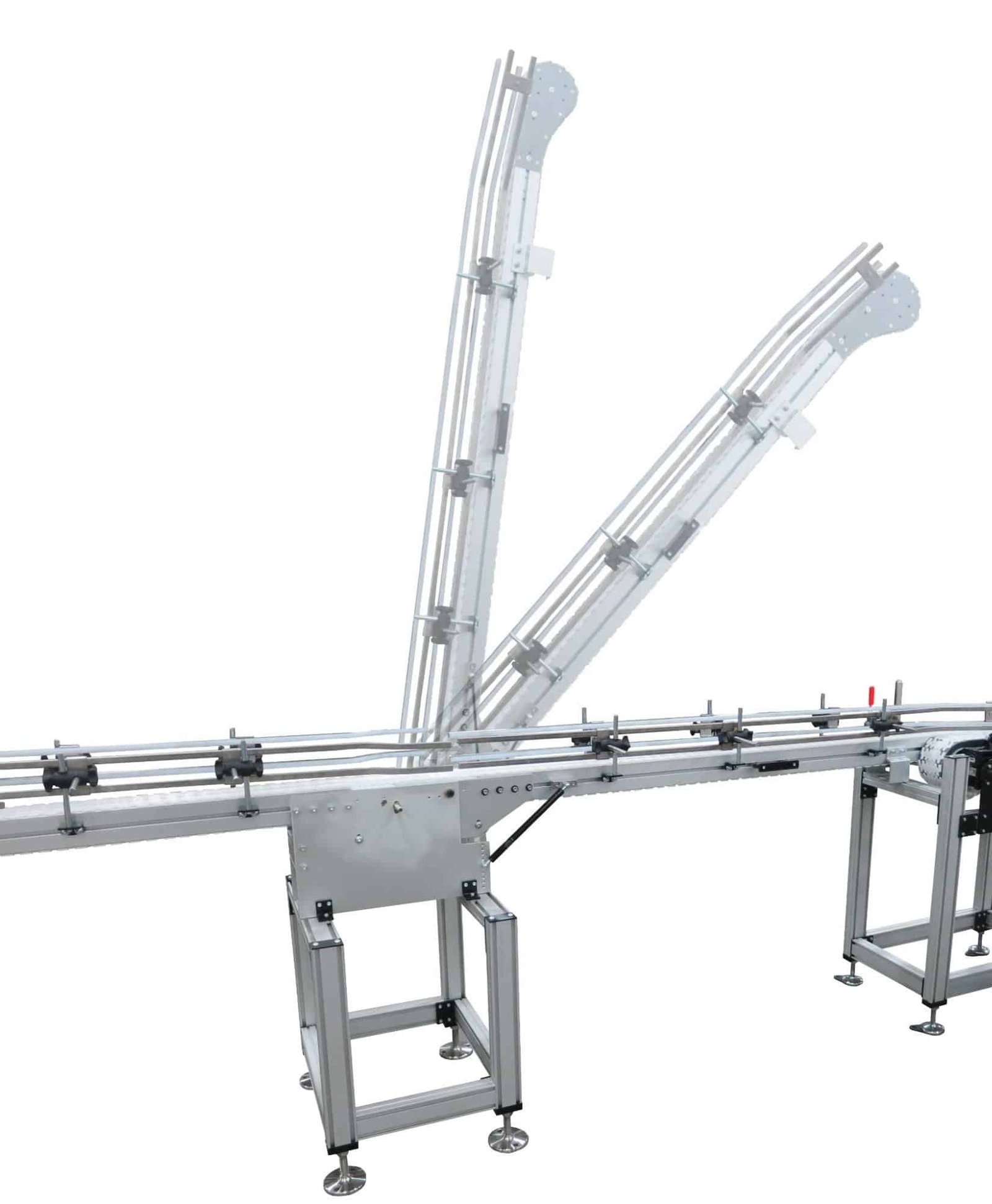
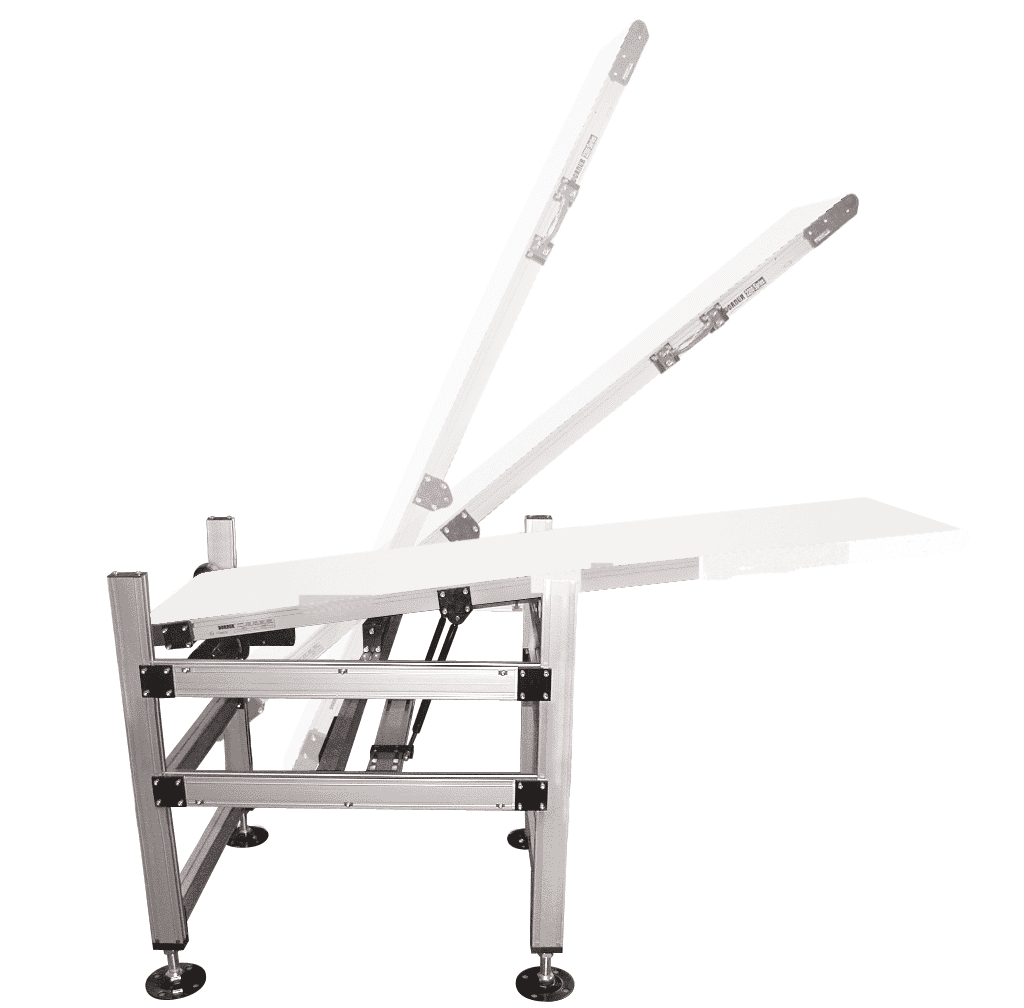 Range of motion
02What it is
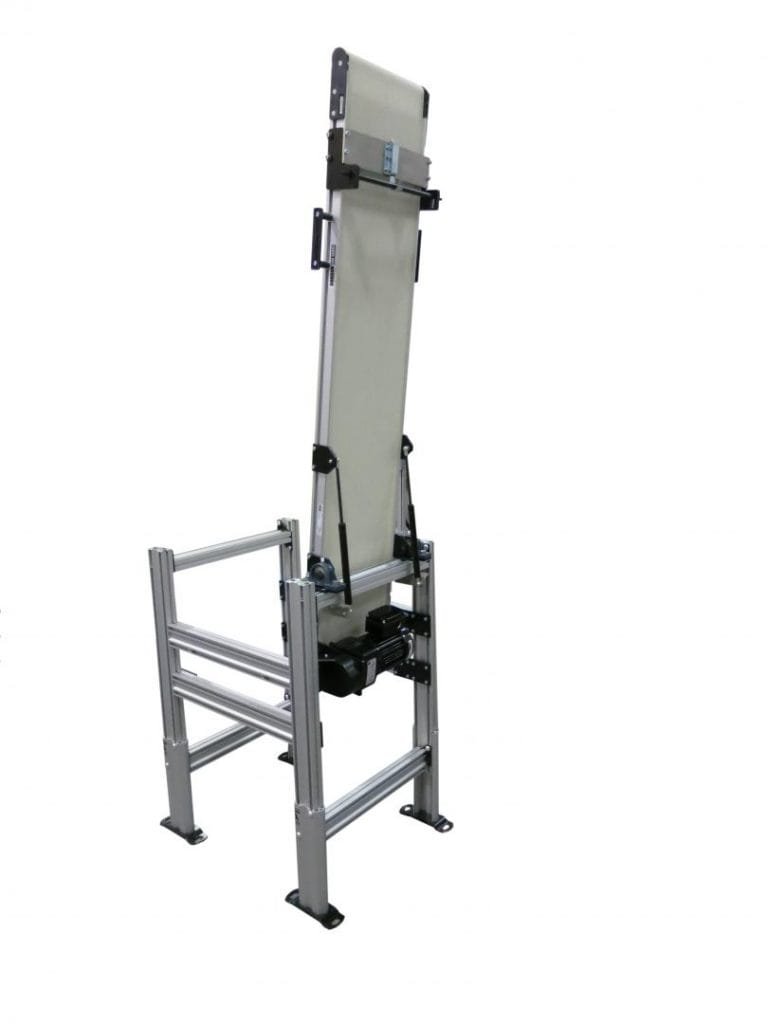
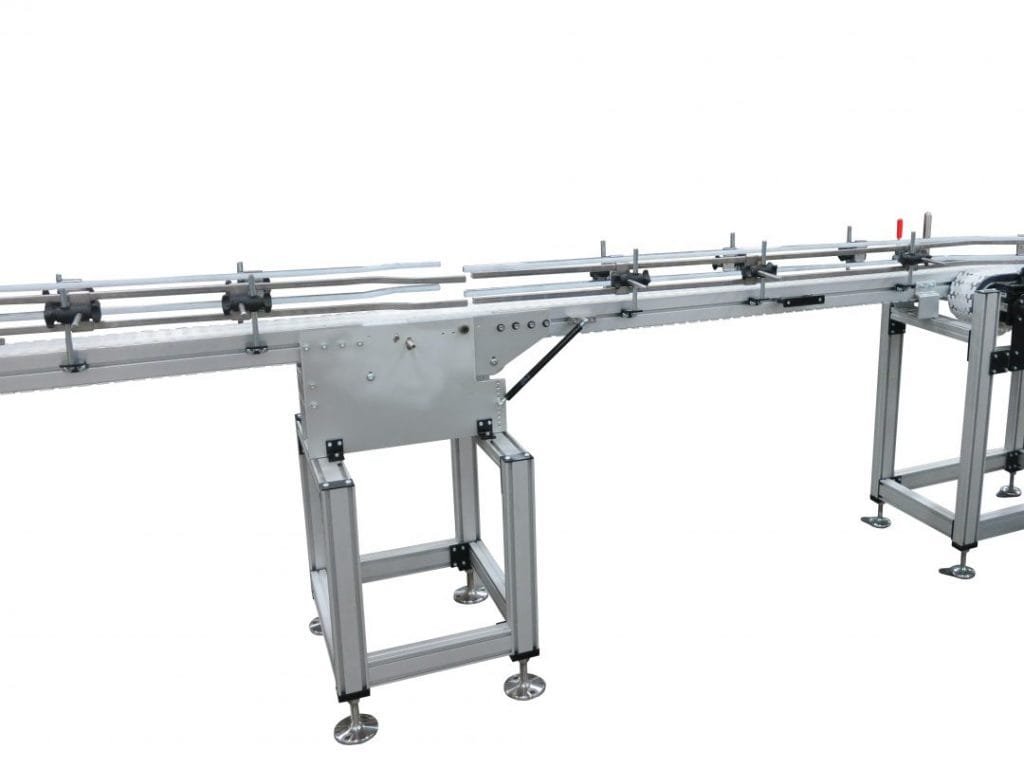
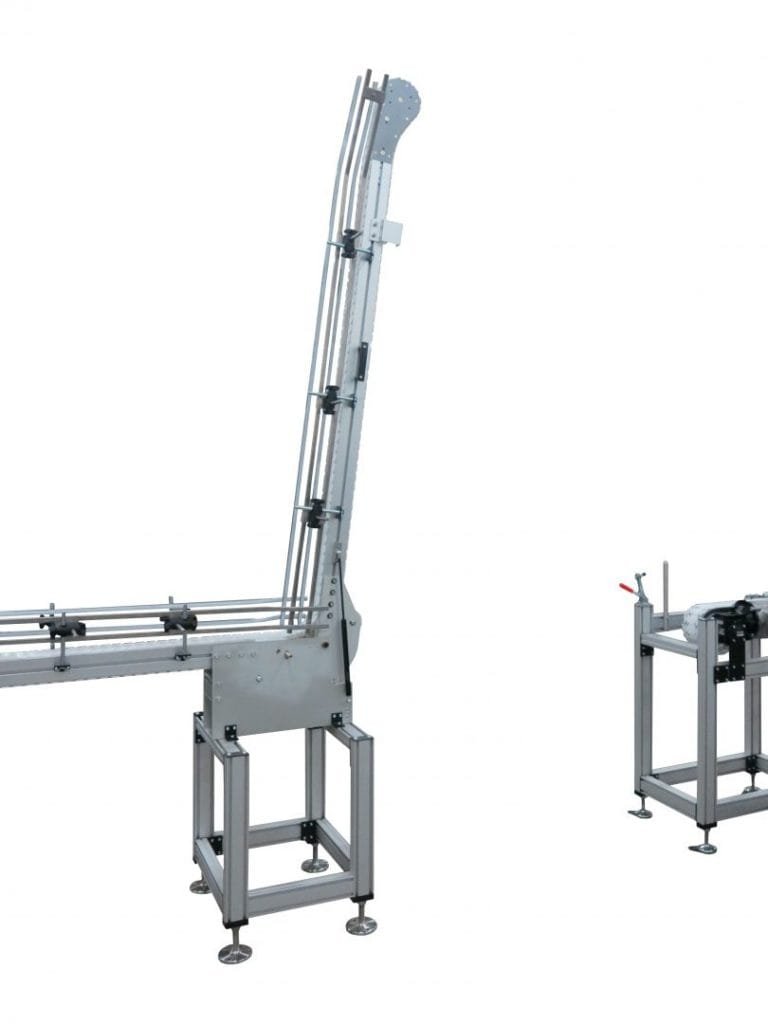
A lift gate is a conveyor section that can be raised or lowered to open access through a line that would otherwise have to be walked around. It operates much like a drawbridge.
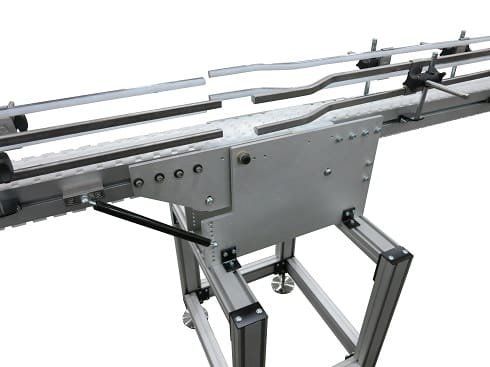
Gas-spring assistance carries the weight of the section, and the gearmotor acts as a counterweight, so the gate can be raised by hand without force. The springs are balanced so the gate moves consistently rather than dropping, which is what protects both the operator and the conveyor. When the gate is lowered the conveyor returns to normal operation.
Crossovers and catwalks solve the same problem by making people climb. A lift gate removes the climb entirely, which shortens the route, removes the fall risk and gives back the floor space the stairs occupied.
03What it changes
Aisles down the middle of a floor exist because the line cannot be crossed. Make it crossable and the layout opens up.
Product often has to be stored in one area and processed in another. Letting staff reach their work areas directly reduces the bottlenecks that routing around the line creates, and helps where product is accumulating.
Staff and forklifts can move between lines instead of queueing at the ends of them, which removes congestion. It also removes the need for crossovers and catwalks.
The injury risk on a mid-floor conveyor comes from people reaching over a running line rather than walking the long way round. A gate removes the reason to reach.
Equipment on the far side of a line stays reachable for operation, cleaning and maintenance without taking the conveyor out of service.
04Platforms
Lift gates are a standard special on the industrial platforms and can be engineered into the sanitary and flexible-chain ranges.
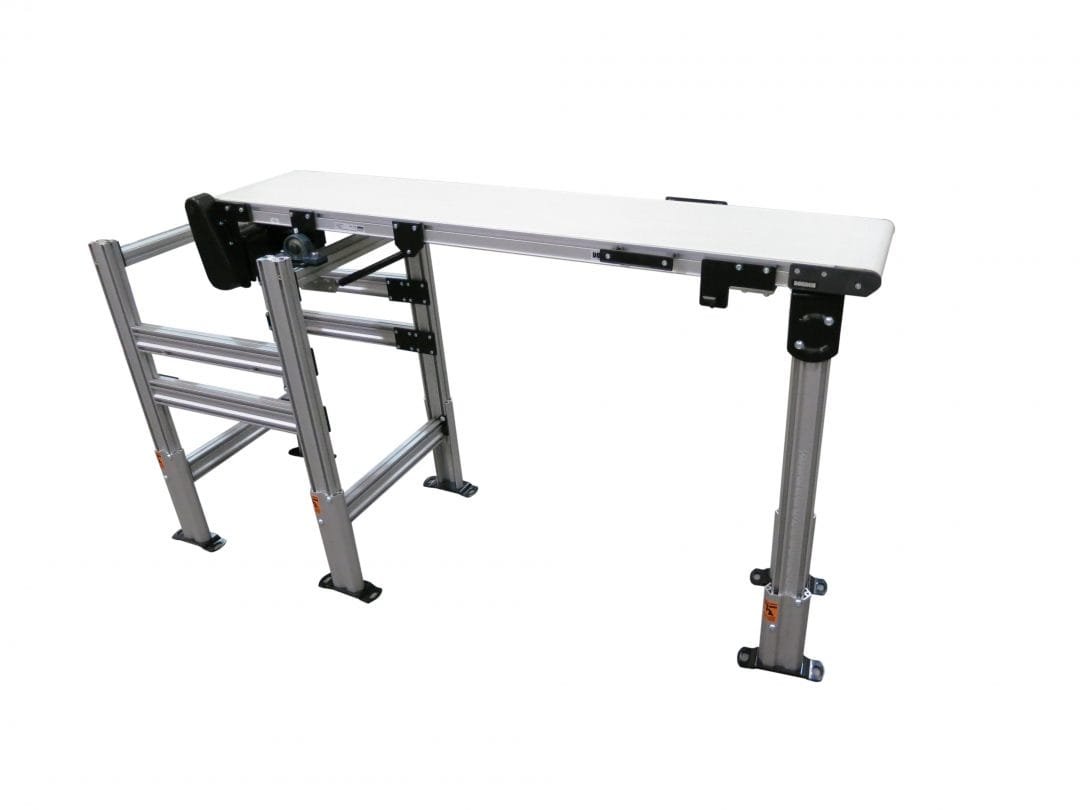
Lift gates are standard specials on both platforms. Access is gained without catwalks, crossovers or stopping production.
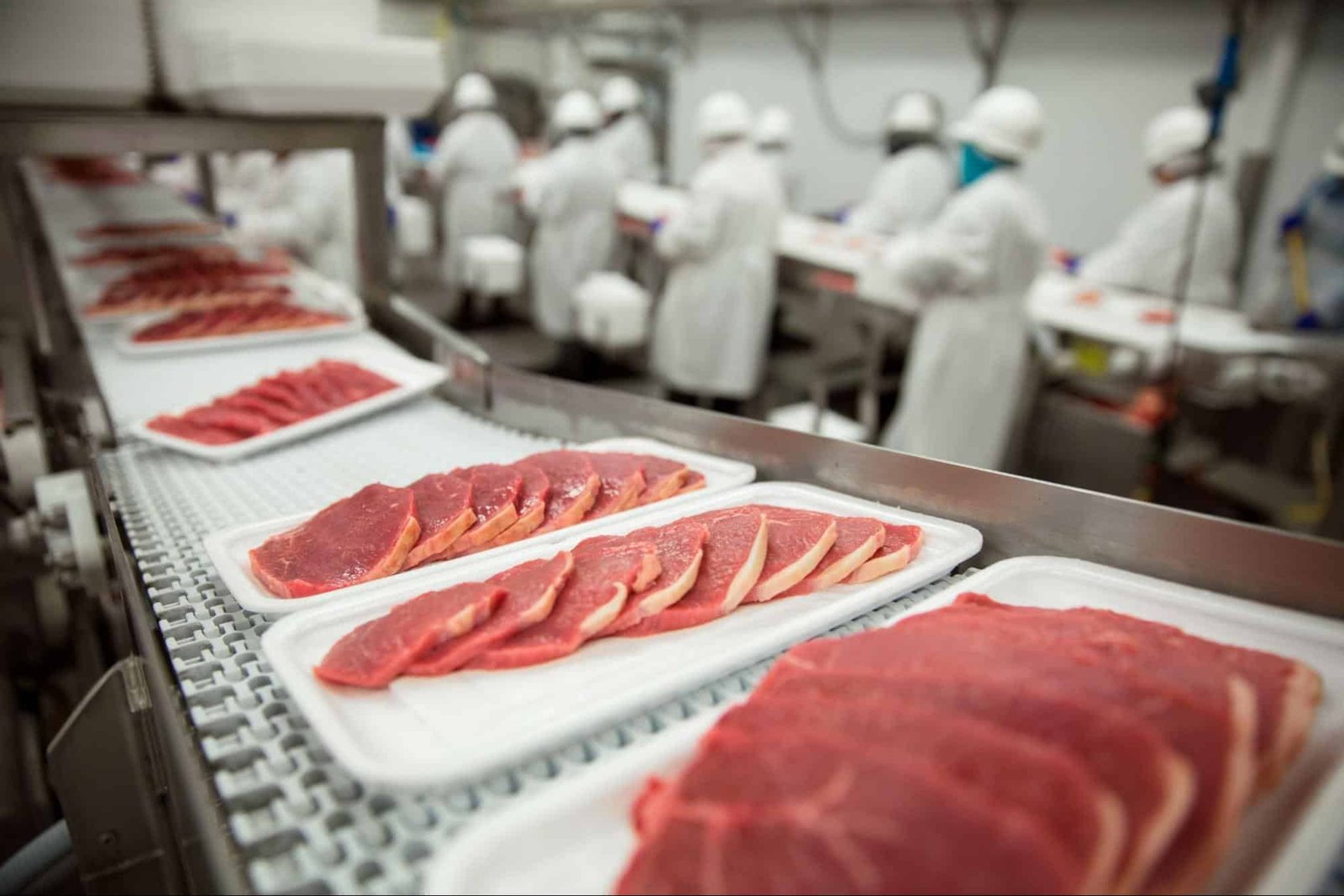
Sanitary conveyors are built to be cleaned quickly. A gate reduces the downtime that happens when staff need to reach the other side during cleaning.
Flexible-chain layouts are compact and change as the line changes. Gates are engineered to order into those routes.
The gate mechanism does not constrain the belt choice.
05Specification
These features are part of the lift gate itself rather than options, because they are what make it safe to operate by hand.
06Optional controls
Without controls the belt keeps running with a gap in the line. These options tie the gate position to the motor.
A switch that reports whether the gate is in the conveyor-down position, so the rest of the control system can act on the gate's state rather than assume it.
Stops the lift gate conveyor motor when the gate is lifted and restarts it when the gate returns to the conveyor-down position, without manual intervention.
A push button signals a timer to clear the conveyor contents before the motor stops, so the gate is not raised onto product still sitting on the section. The motor restarts when the gate is lowered.
The interlock reports state, the automatic control acts on it, and the clearing timer decides what happens to product already on the gate when someone wants to cross.
07Where they are used
Gates matter most where people and product cross the same floor repeatedly.
Order fulfilment needs flexibility without dropping the rate. Gates give the access that keeps throughput and quality consistent as volumes change.
Sanitary lines are designed to be cleaned quickly. A gate cuts the downtime caused by staff having to reach other areas mid-clean.
Staff can cross the floor safely while production rate and quality checks continue either side of the gate.
Product moves to storage or shipment without staff walking the length of a line or climbing over it.
08Gallery
Engineered gates on flexible-chain and industrial layouts.
09Frequently asked questions
Safety, benefits and what has to be true of the installation.
It removes the reason to reach across a running conveyor, and it removes the crossovers and catwalks that would otherwise have to be climbed. The gate itself is counterbalanced so it can be raised and lowered by hand in a controlled way.
Increased line efficiency, improved safety and more flexibility in how the floor is laid out, because the line no longer has to be walked around.
Not necessarily. With no controls fitted the belt keeps running, which is why the optional interlock and automatic stop/start controls exist. Which you need depends on whether product can safely be on the section when the gate lifts.
Lift gates are compatible with both V-guided and non-V-guided belts.
Yes. The gate structure must be bolted to the floor, because the support carries the gate through its whole range of motion.
10Related solutions
Access is usually one requirement among several on the same line.
Give us the layout, the traffic that has to pass and whether product can be on the section when the gate lifts, and Roarer can specify the gate and its controls.
Discuss your application