Two strengths
Permanent ceramic magnets come in standard and strong. Strong magnets are typically used only in centering and inverted applications, where the part has to be held against gravity or pulled into line.
01Engineered solution
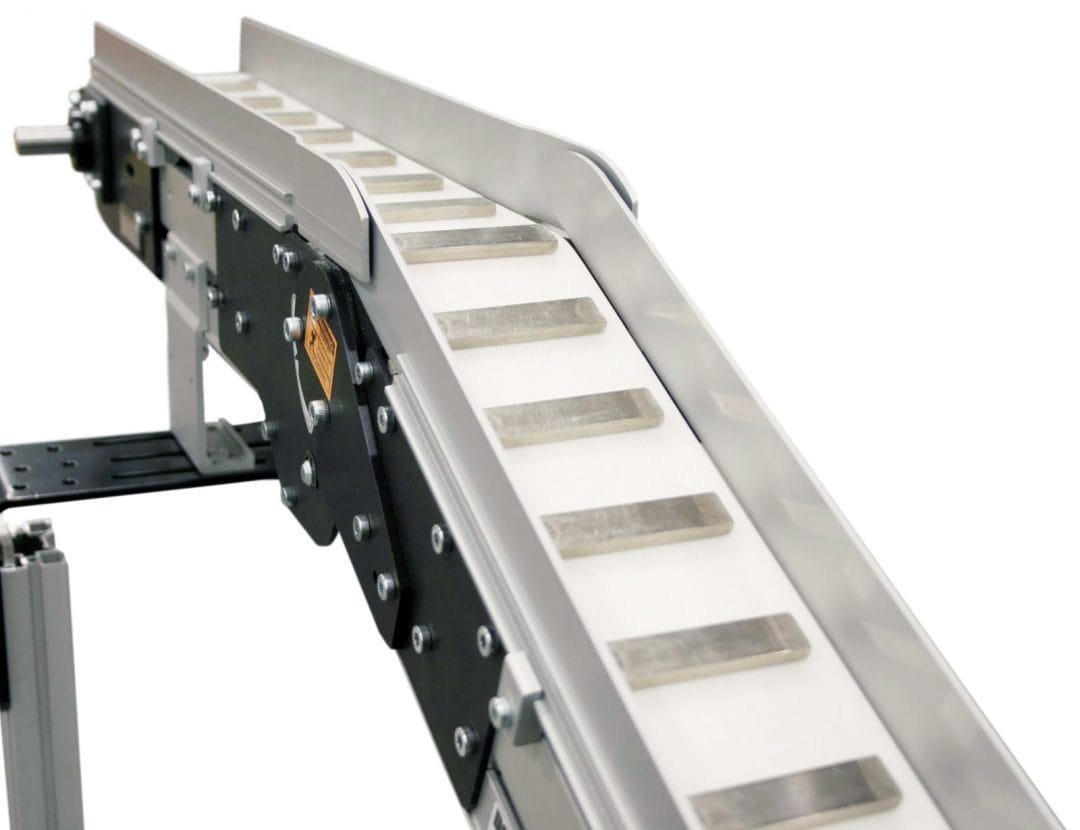
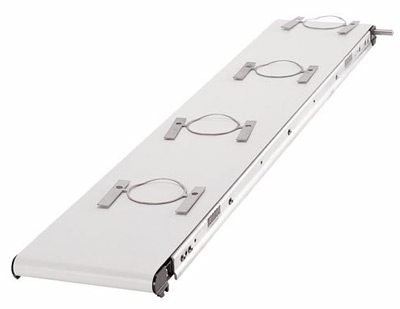
Permanent magnets set into the conveyor bed hold ferrous parts against the belt. Once the part cannot fall off, the line is free to climb, descend or run upside down.
 Magnets in the bed
02Principle
A magnetic belt conveyor is a standard conveyor with permanent ceramic magnets placed in its bed. The magnets run along the underside of a stainless-steel slide bed and attract ferrous parts through the belt, so the belt itself is ordinary and the holding force comes from underneath it.
That clamping force is what lets the conveyor do things a plain belt cannot: hold parts through elevation changes, keep them positioned for a process, and stop small parts shifting, tumbling or jamming along the run.
Magnetic belt conveyors are also called material conveyors and belt magnetic conveyors. Material conveyors are more usually described as material handling conveyors, which covers a wider set of equipment than magnetic holding alone.
03Magnet arrangement
A conveyor moving nails and screws does not need the same magnetisation as one moving large, heavy components, so the field is designed per application.
Permanent ceramic magnets come in standard and strong. Strong magnets are typically used only in centering and inverted applications, where the part has to be held against gravity or pulled into line.
Most applications use two rows of magnets, one oriented north and the other south. Large products use more rows to add holding strength.
Magnet rows are usually spaced at half the width of the product, so every part is held at more than one point rather than pivoting on a single row.
Both the strength and the size of the magnetic field are designed for the specific part, which is why no two magnetic conveyors are configured the same way.
04Letting go
Holding a part is straightforward. Releasing it cleanly, at the right place and without it snatching, is the part that needs designing.
Parts are released at discharge points, where the magnets leave the slider bed path. Up to that point the part is held; past it, it is free.
A decreasing zone reduces magnet strength gradually so product transfers smoothly off the magnet or off the end of the conveyor instead of releasing all at once.
Decreasing zones are used where belt speed is below 7.62 m/min (25 ft/min), or where product length in the direction of flow is under 76 mm (3 in).
05Platforms
Magnetic holding is an arrangement of a standard conveyor, so it inherits that platform's frame, tensioning and belt options.
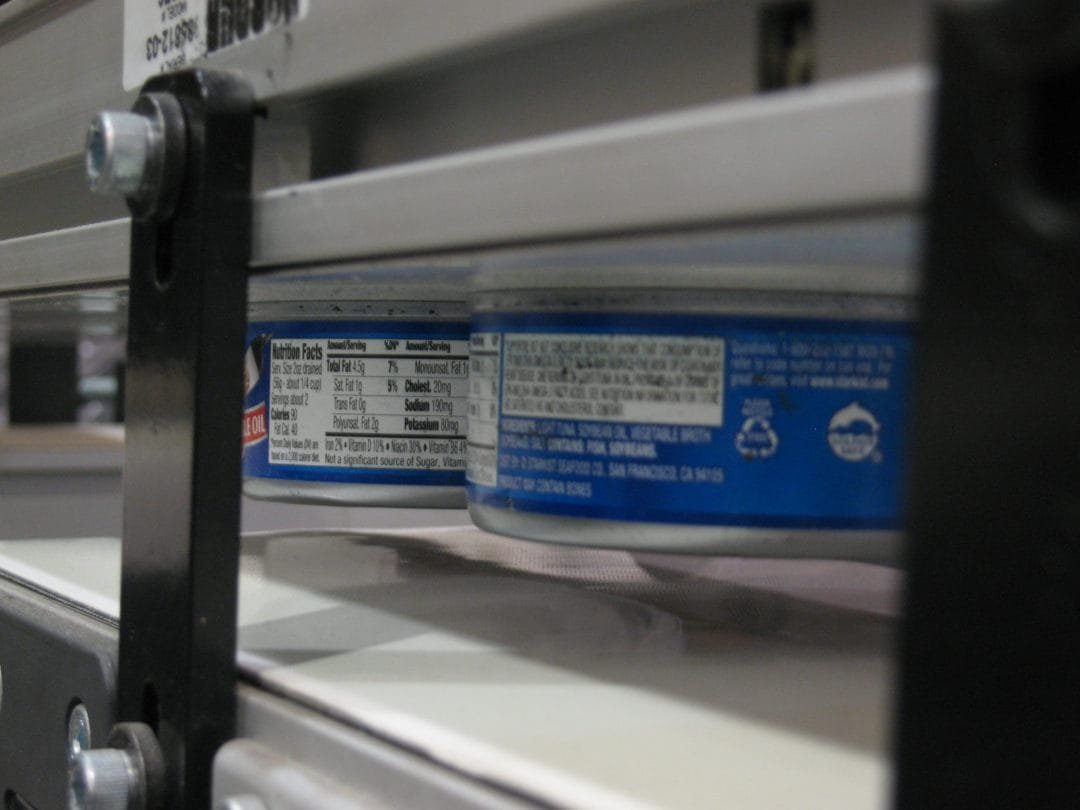
Aluminium extruded frames with T-slot construction, sealed ball bearings, rack and pinion belt tensioning, and V-guided or non-V-guided belt options.
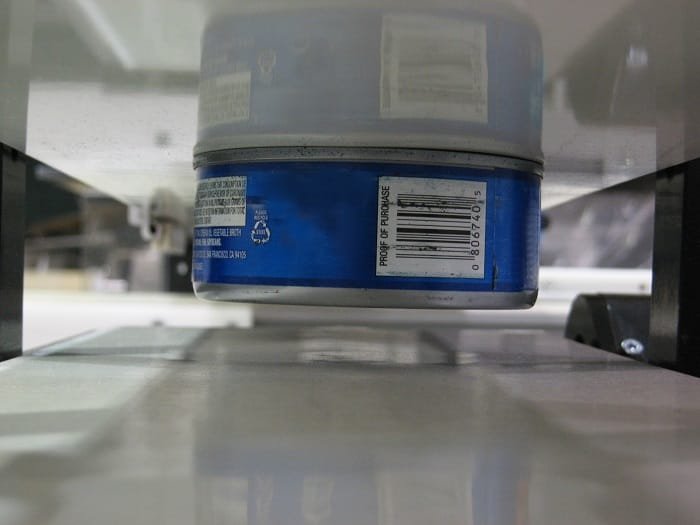
Magnetic belt arrangements can also be incorporated into the sanitary conveyor platforms where the environment requires it.
The usual platform accessories apply, since the frame is a standard one.
06Source case record
A retained record from the archived source application set, kept because it shows an inverted magnetic run doing work that would otherwise need handling. It is not a Roarer project reference.
Hand tools are placed on a magnetic conveyor between centering guides. A magnetic bedplate holds each tool in place while a buffing wheel works one face, lightly cleaning the laser marks.
Tools transfer to a second magnetic conveyor mounted upside down, so the opposite face can be buffed without anyone turning the part over.
At the end of the second conveyor the tools drop onto a UHMW plastic-lined chute. A third, non-magnetic conveyor returns them to the operator.
Nothing else holds a loose tool against the belt while it is inverted and a wheel is pressing on it. The magnetic field is what makes the second pass possible at all.
07Industries
The requirement is the material, not the sector, so magnetic holding turns up across very different lines.
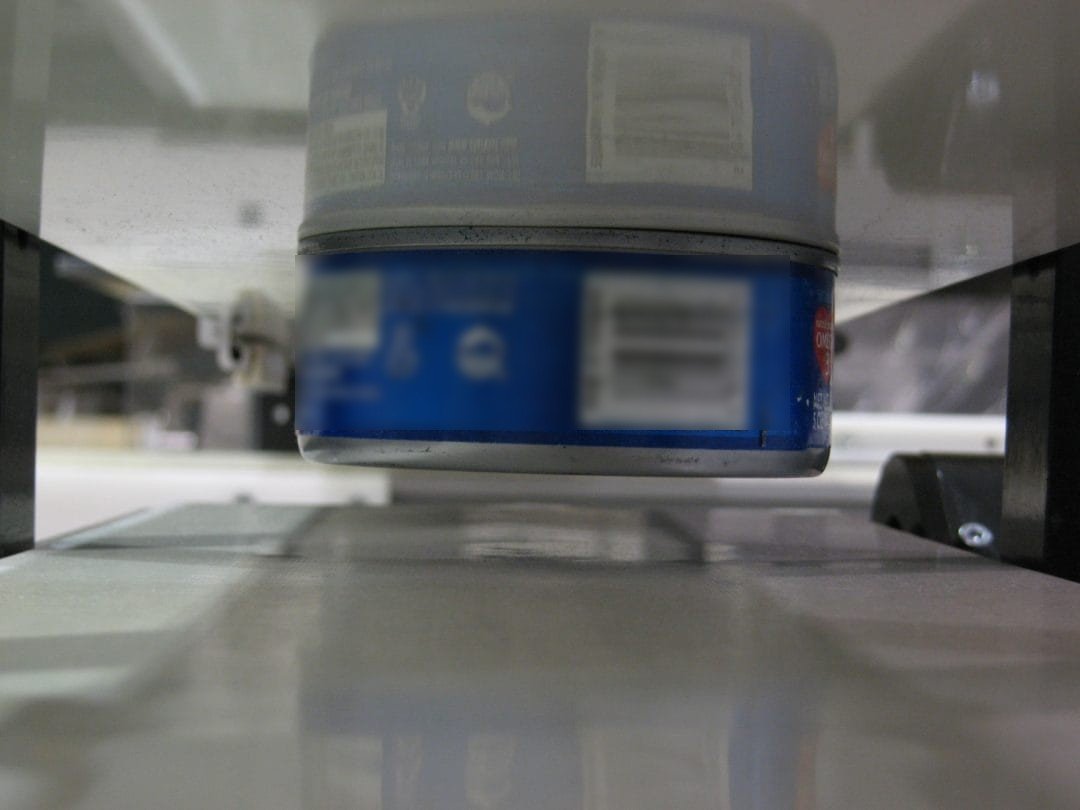
Holding parts in a known position so the next machine can act on them without re-locating.
Moving ferrous components between operations without the part shifting on the belt.
Supplying the holding element of a larger line built from several machines.
Carrying parts through elevation changes that a plain belt could not manage.
Precise placement of small ferrous components where a dropped or jammed part is costly.
Transporting offcuts, blanks and finished parts away from presses and machines.
08Frequently asked questions
What they hold, how hard, and when they release.
Ferrous, iron-containing parts. The magnets attract the part through the belt, so a non-ferrous product will not be held regardless of magnet strength.
Yes. Inverted running is one of the main reasons to use magnetic holding, and it is one of the two cases where strong rather than standard magnets are typically specified. The other is centering.
By the part. Both strength and field size are designed for the specific product, and row spacing is usually set at about half the product width so each part is held at more than one point.
At a discharge point where the magnets leave the slider bed path. If the belt is slow or the product is short, a decreasing zone eases the magnet strength down so the transfer is smooth rather than abrupt.
No. Magnetic holding is built into a standard frame, so the platform's frame construction, bearings, tensioning and belt options are unchanged.
09Related solutions
Holding a part is usually in service of moving or positioning it.
Give us the part material, size and weight, the elevation change and whether it has to run inverted, and Roarer can specify the magnet arrangement.
Discuss your application