Less floor space to elevate
Because the product is gripped, the climb can be steeper than a cleated belt would allow, so the elevation takes less floor length.
01Engineered solution
A cleat is a hard edge. On a flexible pouch landing badly, it is a tear. Gripping the product between two belts instead carries it up the incline without anything to catch on.
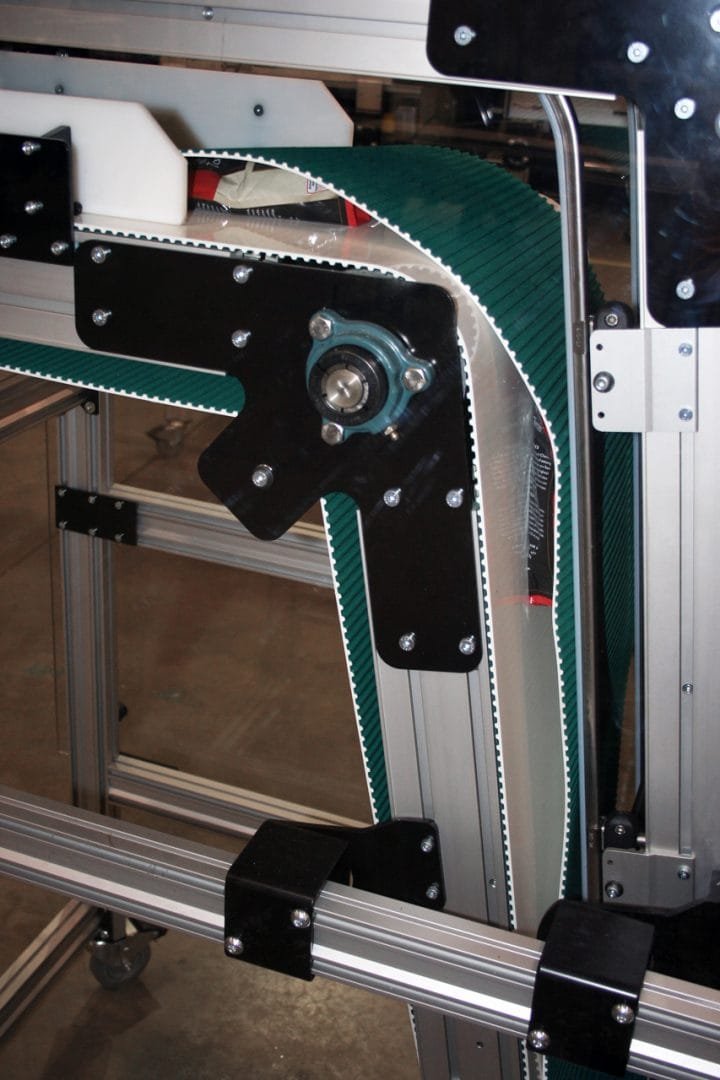
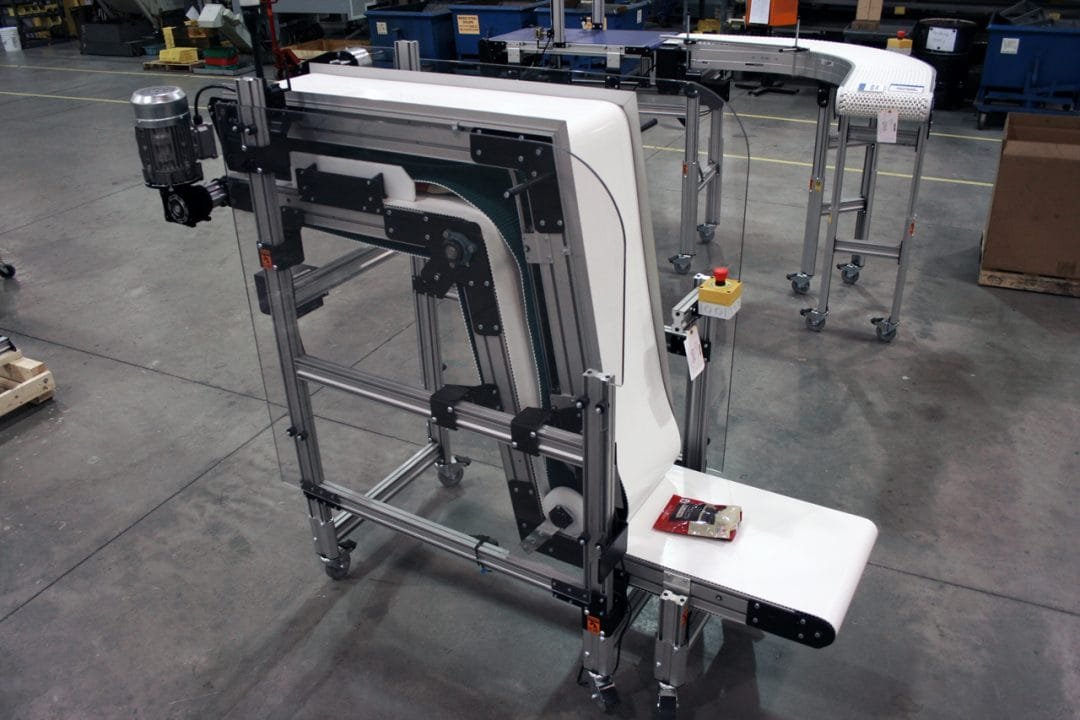 Twin-belt pocket
02The problem
Cleated conveyors are the usual way to move product up an incline, but they do not suit everything. Flexible pouches are delicate, and if a pouch lands wrongly on a cleat the bag can rip. That means product loss and the downtime to clean the conveyor.
The same applies to unevenly shaped, softer products that a cleat can damage simply by pressing on the wrong part of them.
Two flexible polyurethane belts are oriented one over the other. As product moves into position it is gripped between the twin belts, creating a pocket that carries it securely up or down. Nothing has to land on an edge, because there is no edge.
03What it gains
Beyond avoiding damage, holding the product rather than carrying it changes what the conveyor can do with the line.
Because the product is gripped, the climb can be steeper than a cleated belt would allow, so the elevation takes less floor length.
Product arrives at the top the same way up and the same way round as it went in, so no re-orienting step is needed afterwards.
The gaps between products are preserved through the climb, which matters when the next machine expects a known pitch.
04Related solutions
Elevating delicate product usually sits between a filling step and a packing step.
Give us the pouch or product, the elevation change and the spacing you need to keep, and Roarer can specify the belt-over-belt arrangement.
Discuss your application