01
Width needs real tolerance
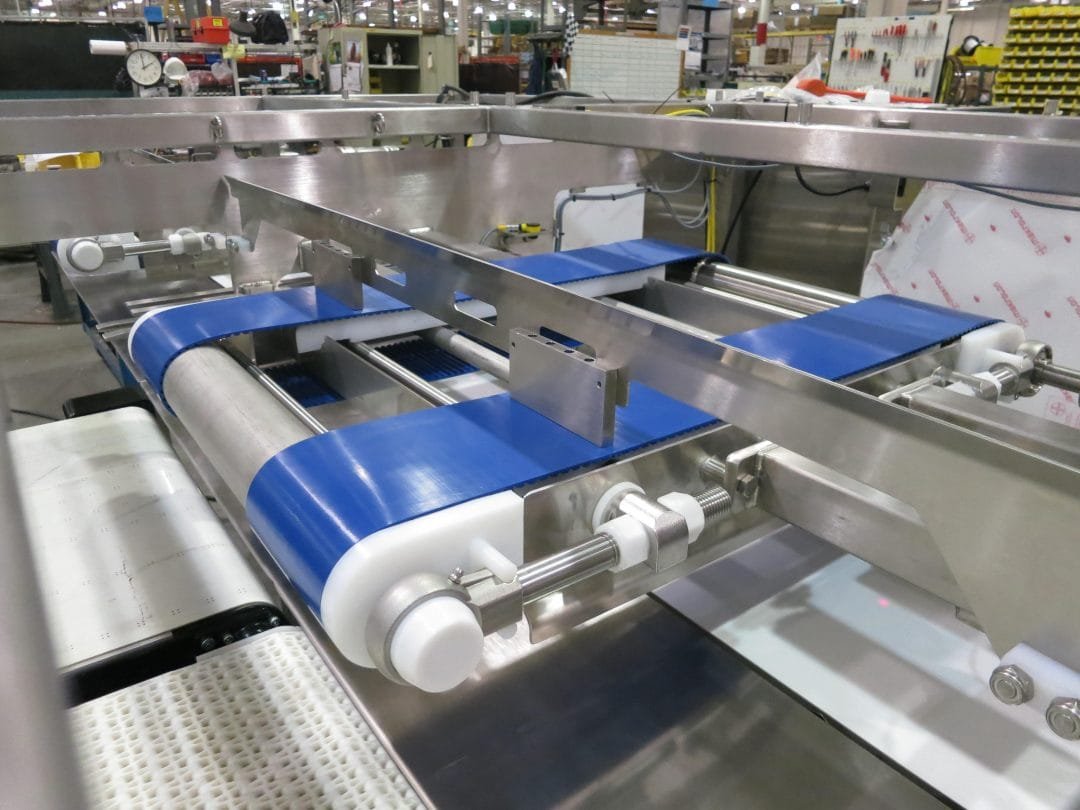
Precision conveyors run with much smaller side clearance than general case-handling conveyors. The source gives an example in which a nominal 12-inch conveyor uses an 11.930-inch belt. A belt that is too wide can climb the frame, load the motor, fray and trap product or debris.
02
Length includes the pulley path
Belt length is not simply twice the conveyor bed length; the wrap around both end rollers must be included. The archived example gives a 6.109-foot belt for one three-foot conveyor. Use the exact platform specification rather than calculating a replacement from nominal frame length.
03
Tension completes the fit
Too little tension allows slip; too much can shorten belt and bearing life and change tracking behaviour. Precision applications also depend on consistent splice geometry and tooth or guide placement. Source the replacement from verified dimensions and follow the platform's installation procedure.
Field checklist
Choose belt construction around product and environment
Fabric belts offer a continuous support surface and a wide choice of covers. Modular plastic or flexible chain can improve drainage, curve routing, repairability or positive engagement. The decision should account for the product base, transfer size, incline, sanitation, temperature, abrasion and whether a raised mechanical splice is acceptable.
- Match surface friction to starts, stops and inclines
- Check the smallest pulley permitted by the belt
- Consider drainage and cleanability
- Specify the splice with the belt and product-contact requirements