Elevations & inclines
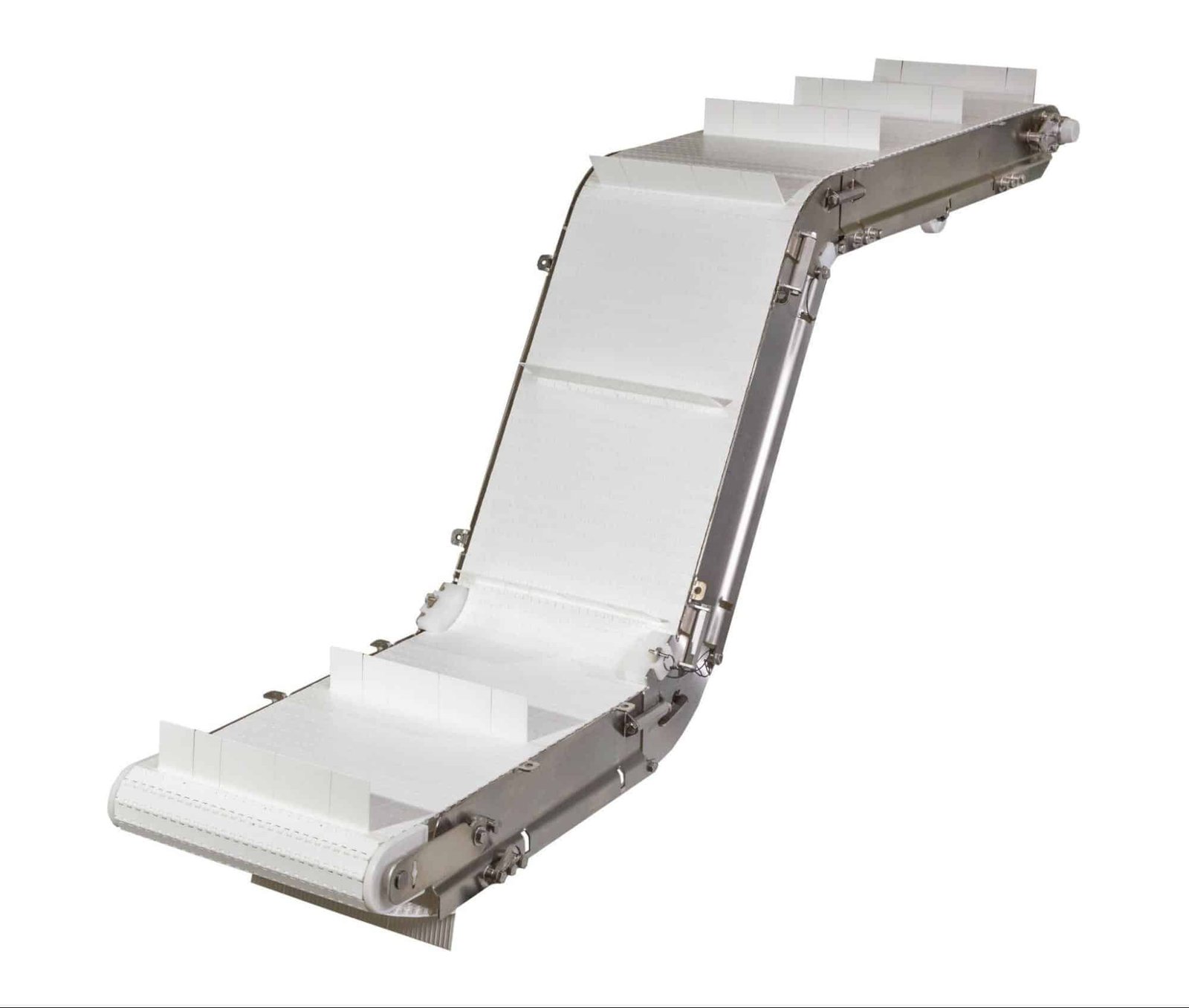
A cleated belt allows incline and decline angles up to 60 degrees, compared to under 20 degrees for a traditional flat belt — saving floor space while keeping products in position without sacrificing speed or precision.
17Application solution
Cleated conveyors operate as all other conveyors do, moving items from one place to another. With evenly-spaced or strategically-placed cleats, they can space products along the conveyor, improve grip and facilitate movement up and down inclines, while preventing large or loose products from falling out of place.
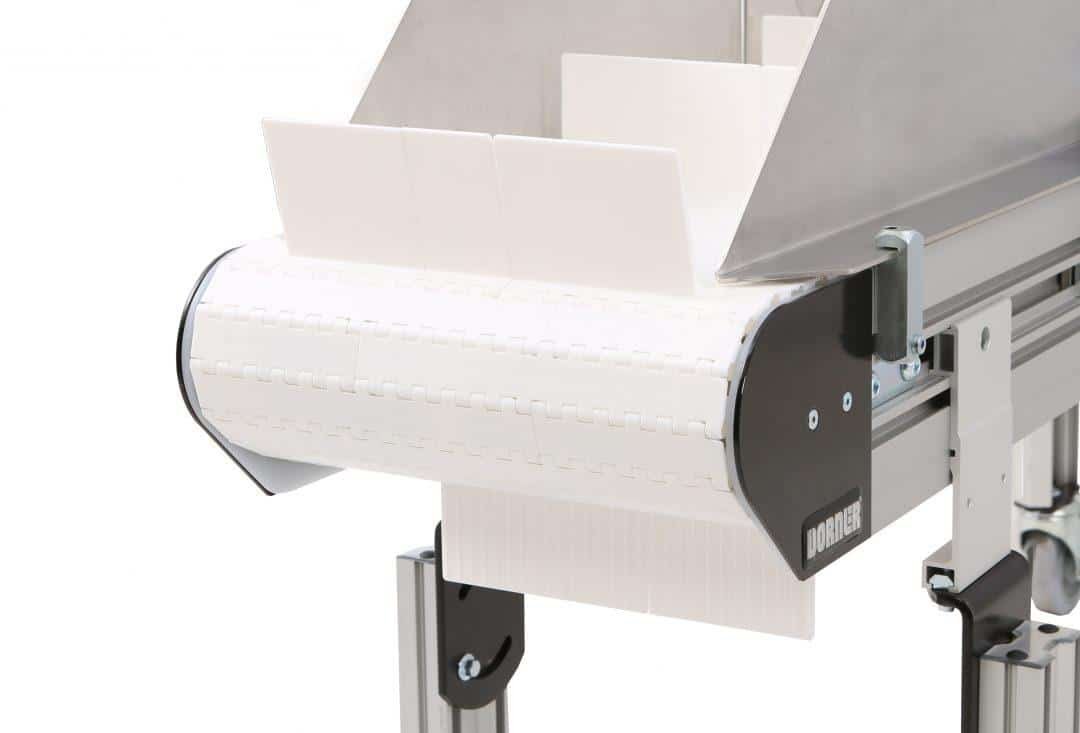
18Features of a cleated conveyor belt
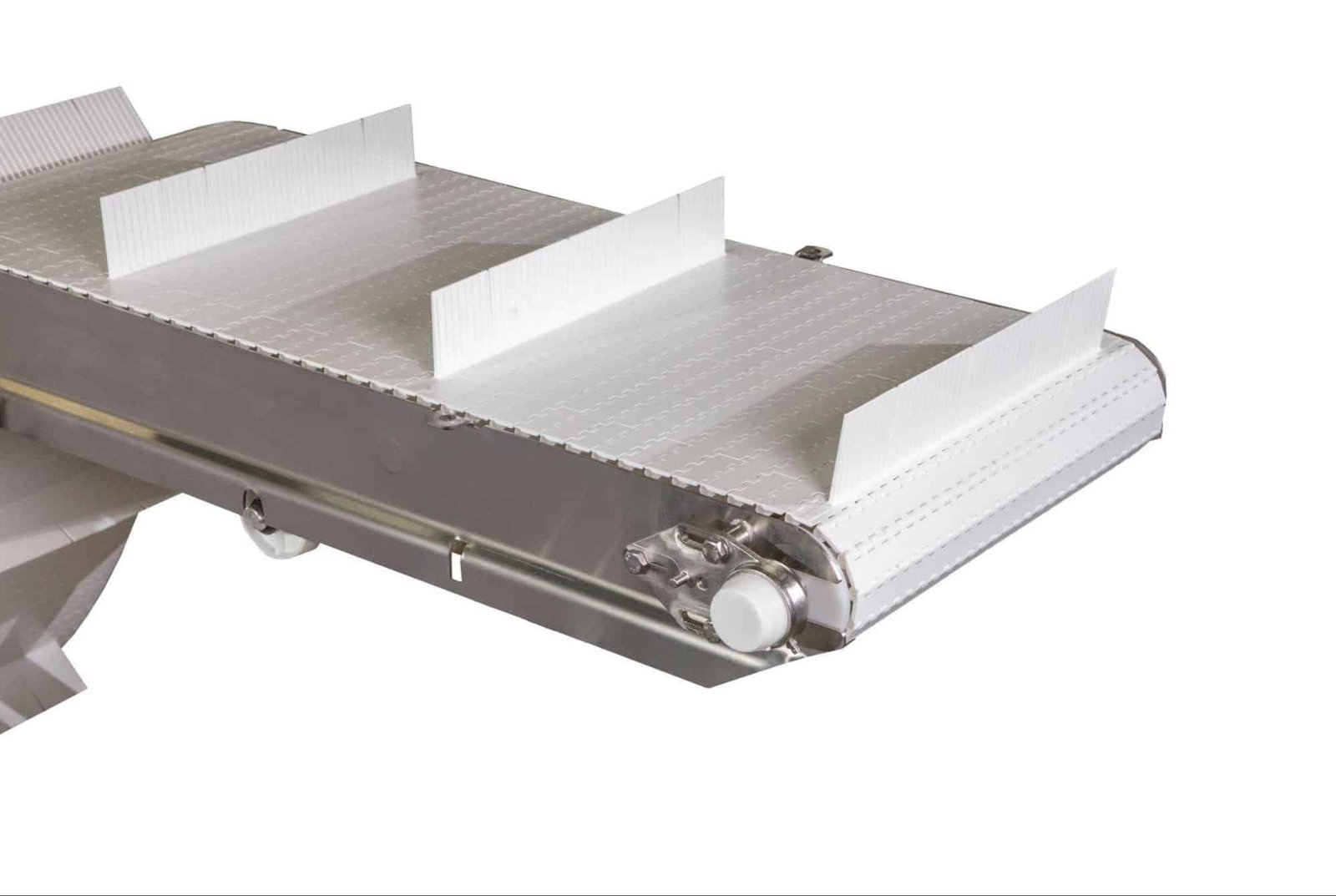
A number of conveyor belts can be modified to feature cleats, making better use of floor space and increasing the security and mobility of the products being moved.
Cleats are available in a range of sizes, heights and materials depending on the product and conveying need — from a fraction of an inch to nearly half a foot, depending on the model.
Cleating is handled in-house through a proprietary radio-frequency welding process that bonds urethane cleats to the base belt — made to order, in virtually any cleat height, spacing or pattern the application needs.
For food contact applications, cleats must have no cracks or poor bonds, since these can lead to contamination. The radio-frequency welding process generates a seamless, almost undetectable bond between cleat and belt for food safety.
19Cleated conveyor options
Optimize the use of space, secure products during movement, and reduce the risk of damage or loss.
The 3200 Series is especially low maintenance, reducing downtime. With cleating from 0.24″ (6 mm) to 5.9″ (150 mm) high, it achieves high-speed, high-precision conveying, even on inclines and declines.
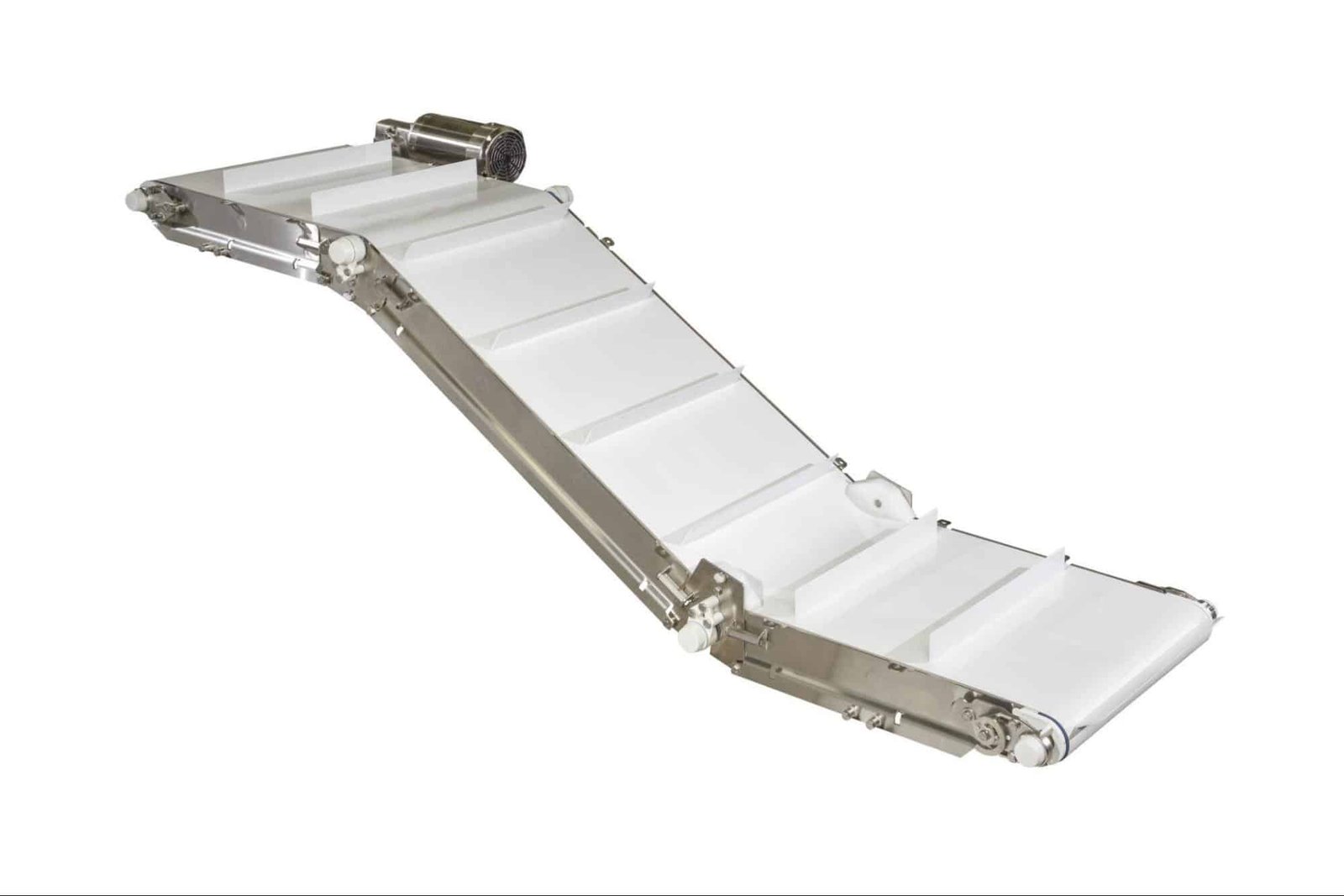
The LPZ Z-Frame conveyor adds elevation, taking advantage of floor space and improving efficiency, with a wide range of applications including raw food processing. Cleats improve product stability on the way down the line.
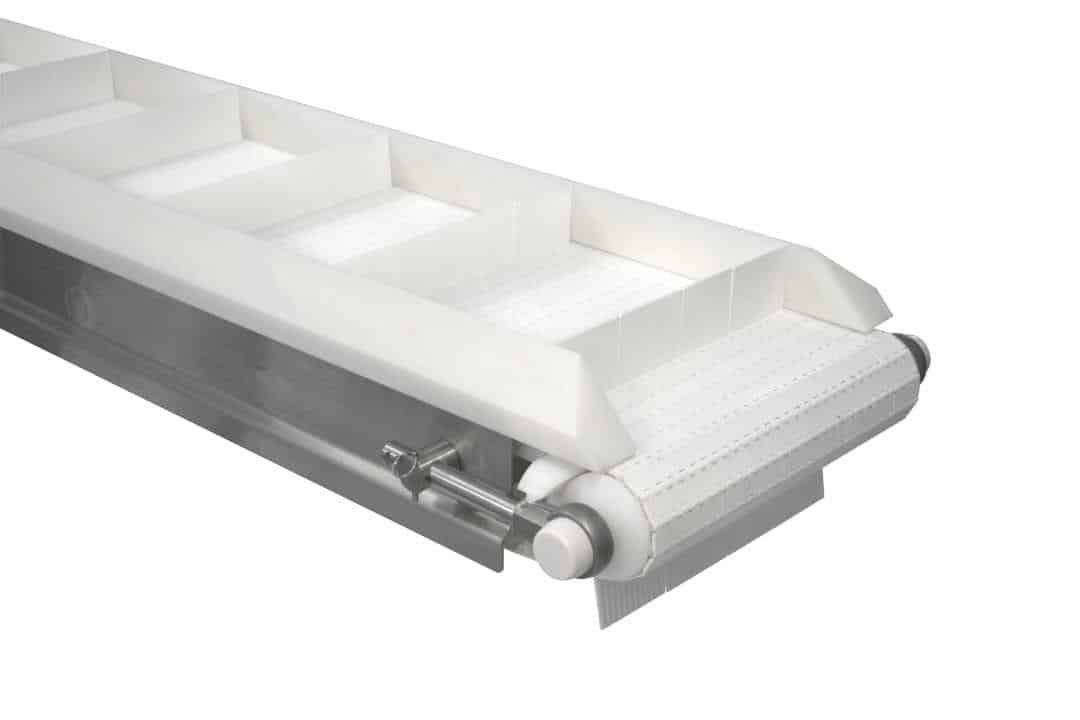
Built for durability, safety and accessibility, the AquaPruf 7400 and AquaGard 7350 cleated belt conveyors keep food products separate and sanitary, preventing spillage, contamination and damage. The AquaGard LP is a low-profile option that fits small spaces for dry and wipe-down applications, meeting BISSC certification standards for food processing.
20Applications of cleated conveyors
Cleated conveyors generally offer enhanced stability and precision, reducing the margin of error and promoting efficiency.
A cleated belt allows incline and decline angles up to 60 degrees, compared to under 20 degrees for a traditional flat belt — saving floor space while keeping products in position without sacrificing speed or precision.
Cleated belts space products, provide operator placement locations, and can even hold products tightly for interface with robotics or other automation — high-precision, cost-effective conveying that keeps separate products in the right position.
A common use in food processing is elevating bulk food products to a volumetric feeder. A sanitary cleated belt with a food-safe design can gently and cost-effectively elevate bulk food product.
21Industries that benefit
The varied applications of cleated belt conveyors make them suitable across a number of industries.
Sanitary conveying options safely separate and protect prepared food items during handling, accumulation and merging, including baked goods and confectionery.
Cleated conveyors meeting USDA sanitary standards support raw meat and poultry handling, from vertical space-saving solutions to product-security during movement.
Precision conveying with cleated belts improves efficiency, accuracy and productivity.
As with food and pharmaceutical applications, cleated belts are well suited to general material handling.
22Frequently asked questions
What they are, what they're used for, and how modular belts differ.
A cleated belt conveyor operates much like other conveying systems, but features cleats that help separate products and prevent them from shifting out of place during motion.
Applications in baking and confectionery, food handling, meat and poultry handling, pharmaceuticals and packaging — especially assembly, packaging, accumulation, elevation, depositing, rejection and inspection.
Modular belts feature interlocking segments that can be individually replaced or repaired if damaged, unlike a flat belt. Often made from plastic, they're a popular choice for sanitary applications because they're easy to clean, and can be equipped in-house with cleats for specific applications and functions.
24Application gallery
Six photographs from the archived source gallery are retained locally in the Roarer project.
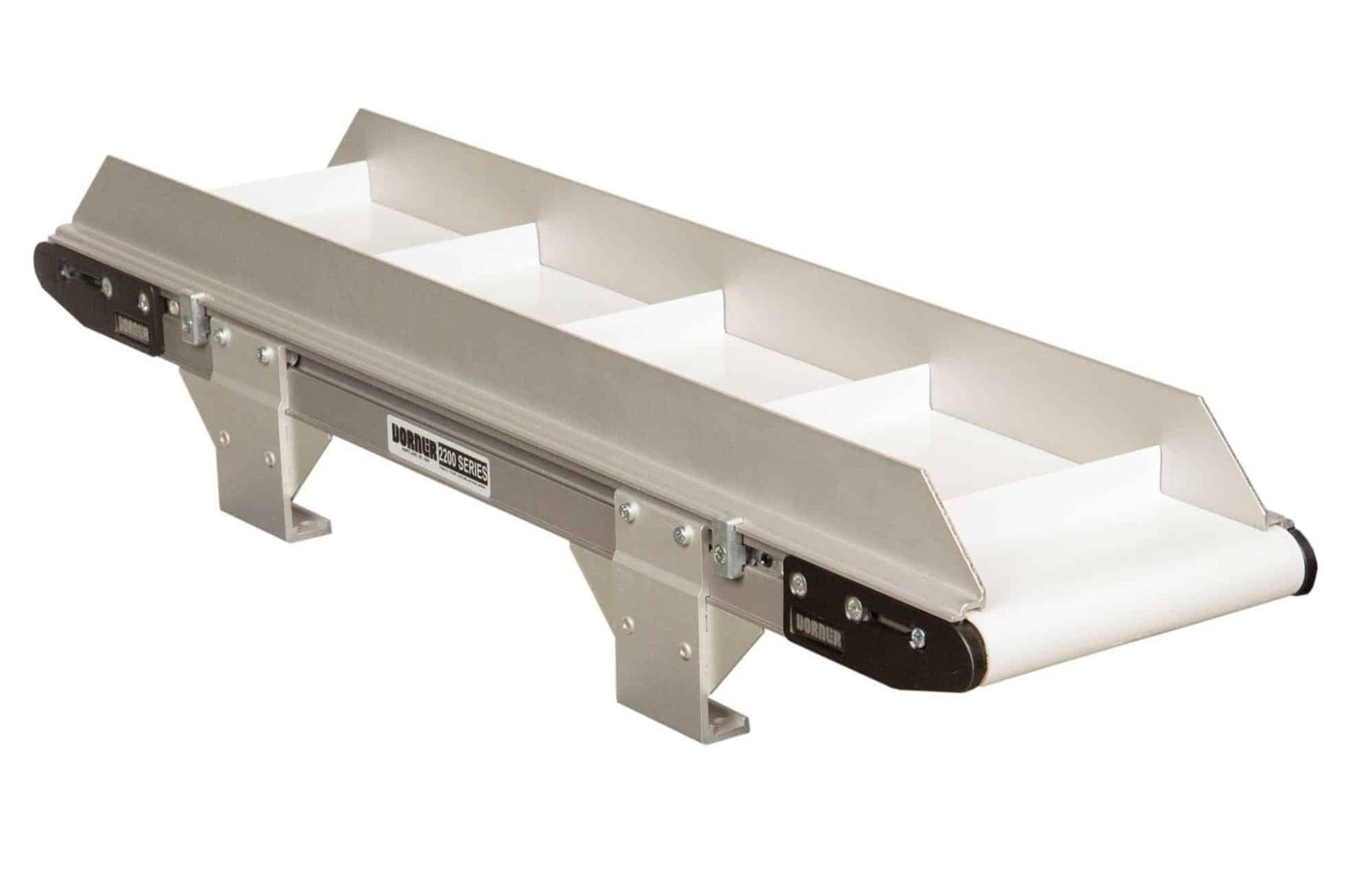
Share the product, cleat spacing needs and incline. Roarer can help configure the right cleated belt.
Discuss your application