Hole pattern
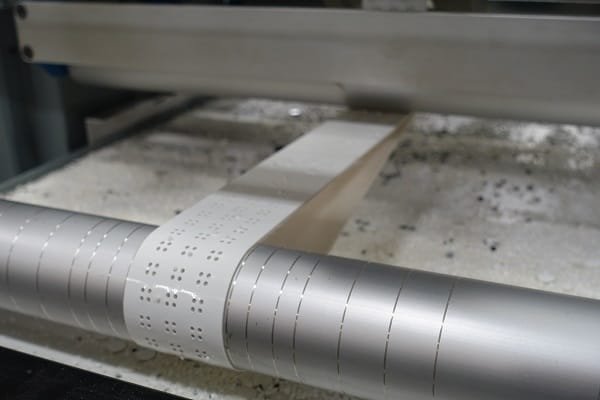
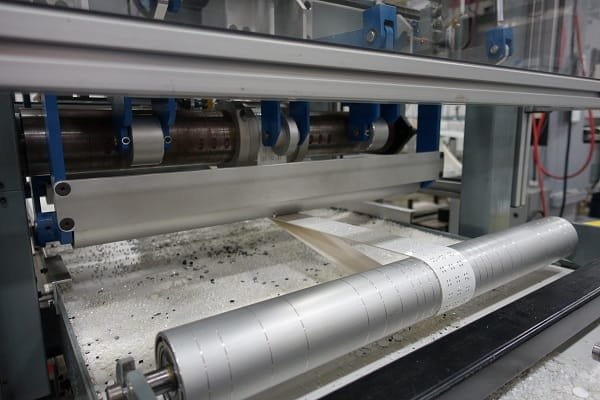
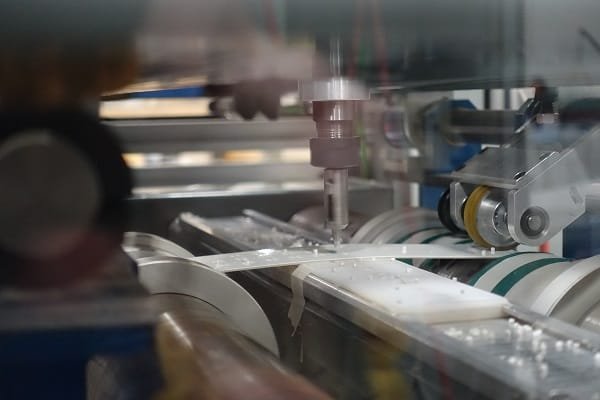
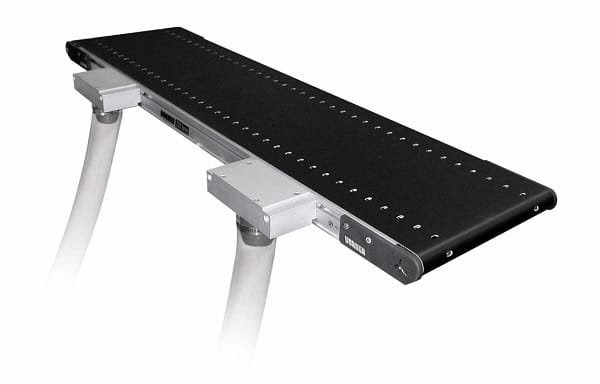
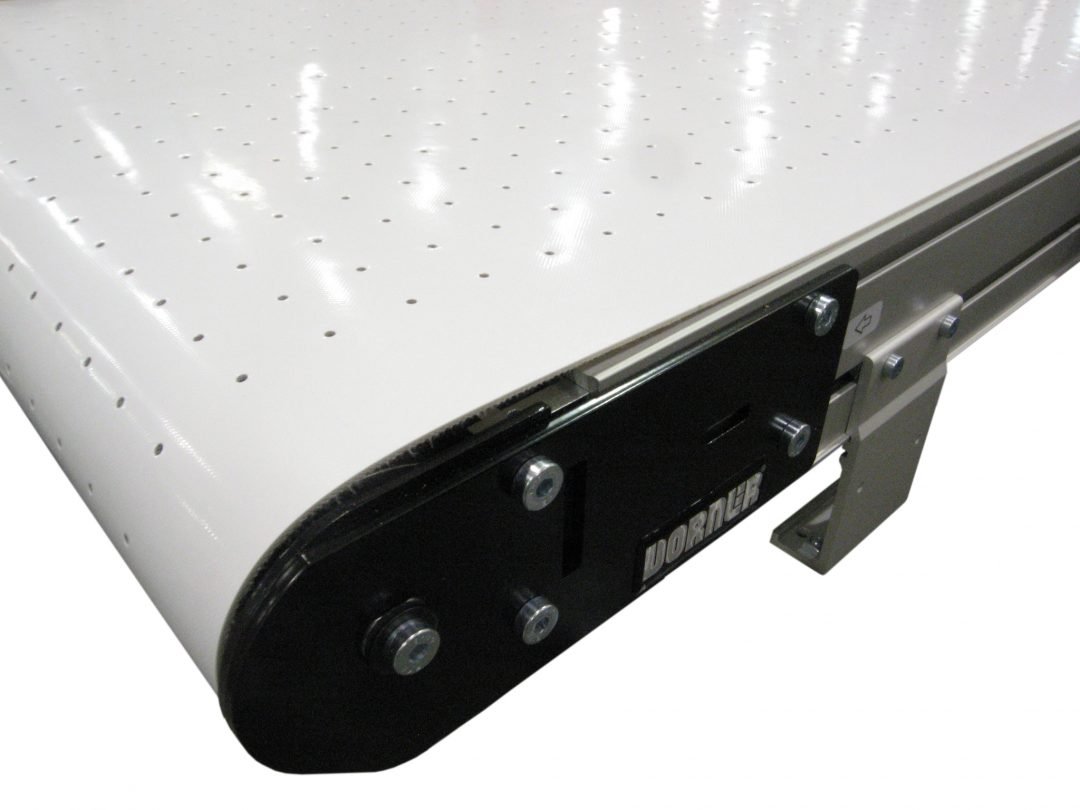
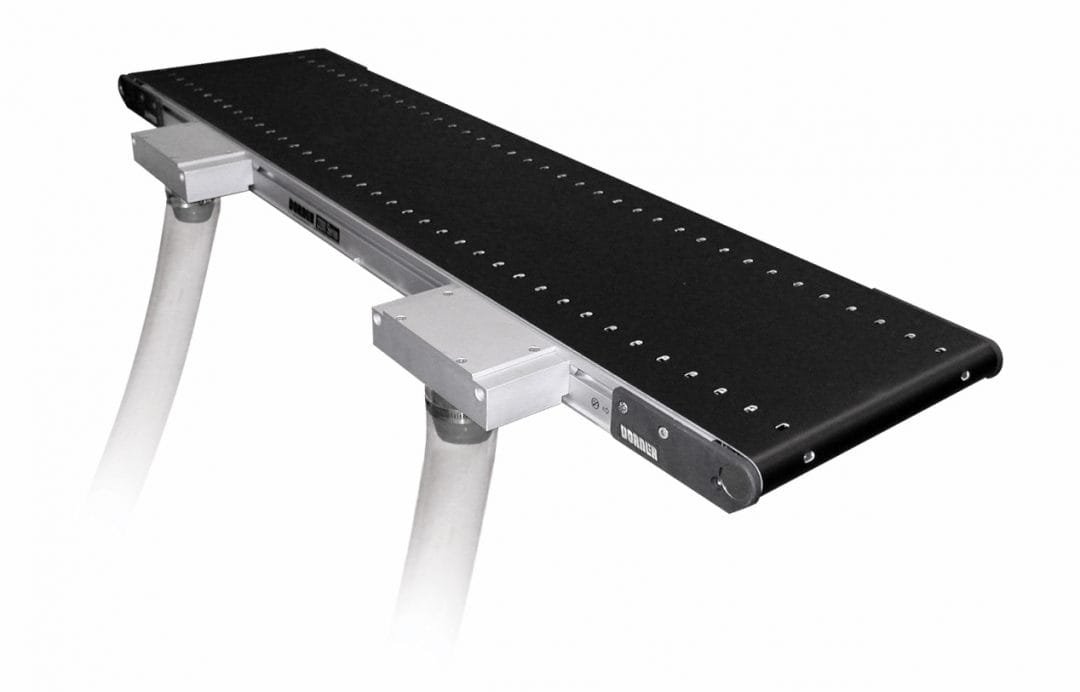
Belt perforation spacing, pattern and hole size are worked out for the product, so the suction sits under the part rather than around it.
01Engineered solution
Light, flat product blows off a belt, slides on it and will not stay where it was placed. Drawing air through perforations in the belt holds it down, which makes inclines, inverted runs and accurate placement possible.
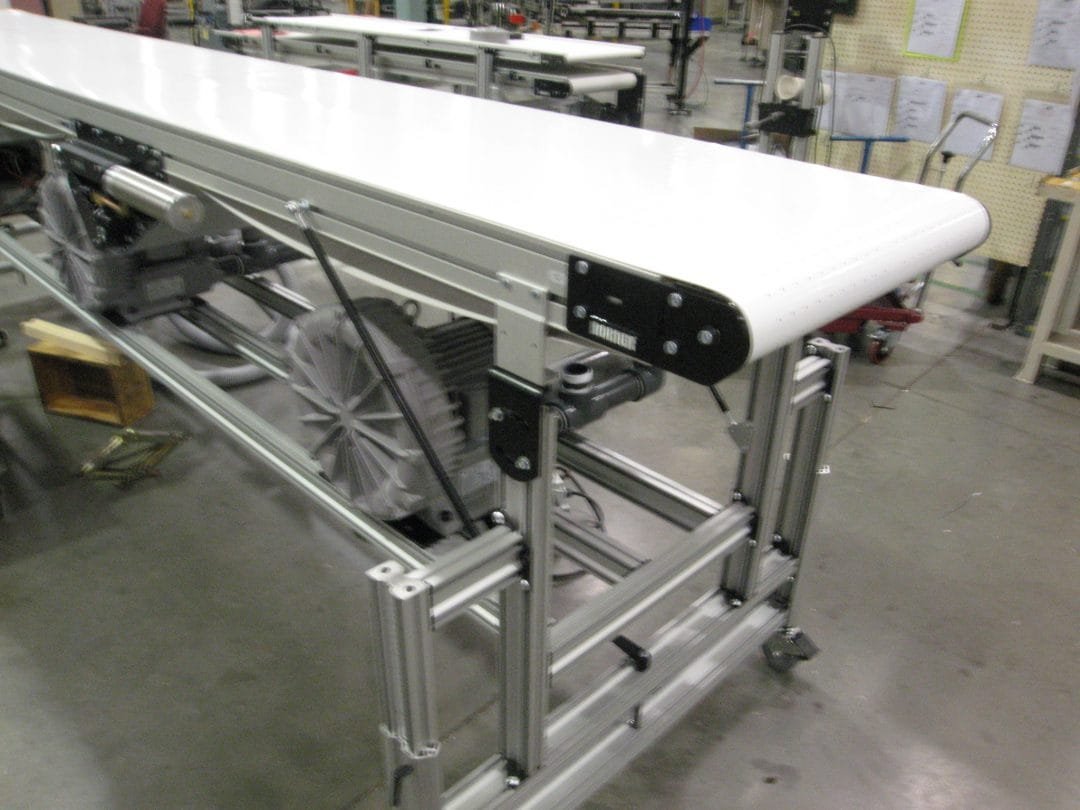
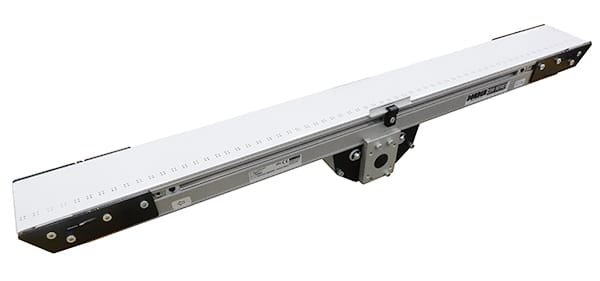 Perforated belt
02Principle
A vacuum conveyor creates suction that keeps product flat against the belt surface. A vacuum source pulls air through perforations in the belt, which forms a seal between the product and the belt and stops it moving independently of it.
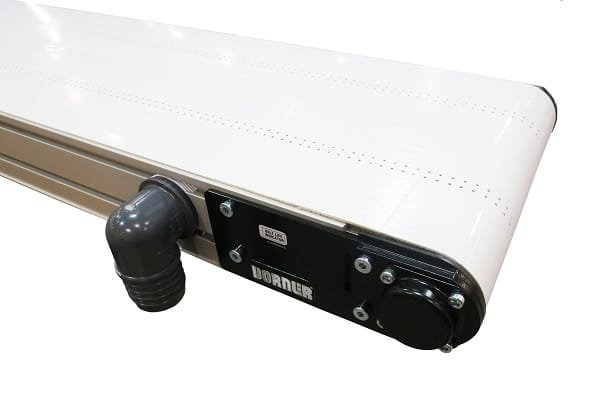
The suction is focused by a custom bed plate containing a vacuum chamber, and ports are drilled into the conveyor frame to connect it. How many ports are drilled depends on the application rather than being fixed.
Suction acts over the bed, not the whole conveyor. That stops product slipping or sliding during the run while still letting it be lifted off the belt easily at the end, without fighting the vacuum to release it.
03Specified per application
A vacuum conveyor is not selected from a range. The holding pattern is built for the part it has to hold.
Belt perforation spacing, pattern and hole size are worked out for the product, so the suction sits under the part rather than around it.
The bed plate and its vacuum chamber are shaped so the holding force is applied where the product actually travels.
Ports are custom-drilled into the frame, and how many are needed follows the holding force and belt area rather than a standard.
A regenerative vacuum blower provides the vacuum. Roarer can supply the blower assembly, or you can connect your own.
04Platforms
The vacuum arrangement is built into a standard industrial frame, so the platform decides the load and speed envelope.
Suited to small and medium part handling. The published envelope fits the pharmaceutical and medical work that vacuum holding is often specified for.
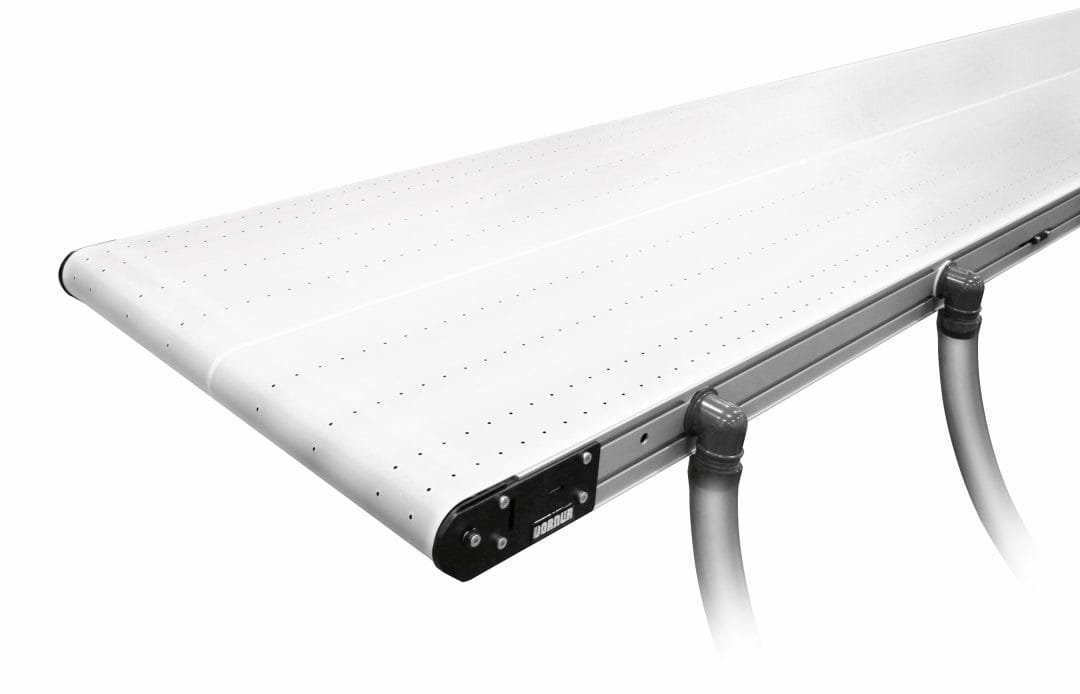
For long runs, higher speeds and heavier loads, with flexible layout options including inclines and declines. Used for part handling and accumulation, processing and packaging, automation and assembly.
Published figures for the low-profile platform.
Sealed ball bearings throughout. Reference the platform specification sheet for the remaining detail.
05Belting
Standard belting is the recommended starting point. Two specials exist for cases where suction alone is not the whole answer.
Standard belting is recommended for most vacuum applications, and is compatible with both V-guided and non-V-guided arrangements.
Friction belting is available for rigid items where suction alone will not stop them sliding.
Electrically conductive belting is available for thin products that would otherwise hold a static charge.
06Applications
Used across health care, pharmaceuticals, manufacturing and metalworking, wherever product is light, thin or flat enough to move on its own.
Holding product still and flat so it can be seen or measured consistently.
Moving a part without letting it rotate or drift from where it was placed.
Keeping small items in position between operations.
Holding product against the belt while something is done to it.
Presenting parts and packages to the next machine and taking them away again.
Holding sheet, leaflet or film flat and square while it is printed.
Keeping the part located so a machine can act on it repeatably.
Holding the work for an operator so they do not have to.
07Gallery
Flat product, sheet handling and inclined runs.
08Frequently asked questions
What they hold, what provides the vacuum and what is designed per application.
Small, flat parts and other lightweight, thin materials: sheets of paper, plastic parts, cardboard, leaflets, small pouches and empty plastic packaging. Anything light enough to blow off a belt or slide on it.
A regenerative vacuum blower. Roarer can supply the blower assembly, or you can connect an existing one.
No. There is no vacuum on the conveyor tails. Suction holds product through the run but releases it at the end, so it can be lifted away without resistance.
Yes. Holding the product to the belt is what makes elevation changes and inverted runs possible; the 3200 platform in particular offers inclines and declines.
Standard belting is recommended in most cases. Friction belting suits rigid items such as plastic caps, bottles, ceramic wafers and glassware. Electrically conductive belting suits thin products such as paper, light cardboard, cloth and plastic film.
09Related solutions
Vacuum holding usually serves positioning, inspection or an elevation change.
Give us the product size, weight and material, the run profile and the holding you need, and Roarer can specify the belt perforation and vacuum area.
Discuss your application