Two or more belts
Parallel conveying surfaces create the circulation path.
19Engineered solution
Manufacturing lines need consistent product flow to maximize throughput. Recirculating conveyors move products quickly and reliably while helping avoid backups, redirections and shutdowns.
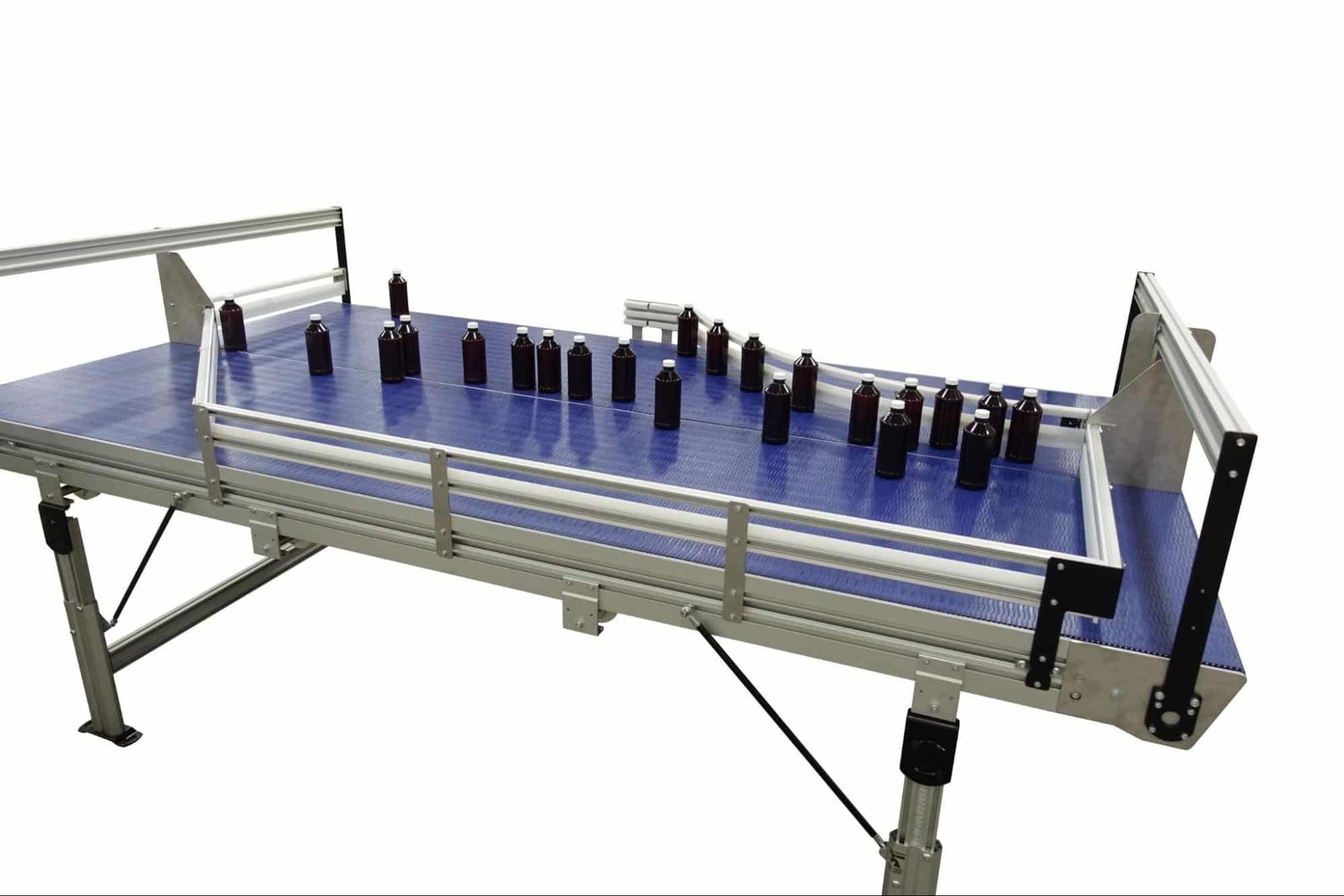
20What is a recirculating conveyor?
A recirculating conveyor is machinery that helps products move through a manufacturing line. It creates an organized buffer so production can continue when upstream and downstream processes run at different rates.
Parallel conveying surfaces create the circulation path.
A motor drives the belts at the required line rate.
Side guides and dividers control how parts circulate and exit.
21System types
Both manage uneven line rates, but the required buffer, outfeed and product determine the configuration.
Create space for product to accumulate and control its flow into the next manufacturing process.
Contain overflow and buffer items until a downstream machine or operator is ready, providing automated control along the line.
Multiple belts can be arranged within one frame to provide more accumulation space than a traditional inline conveyor.
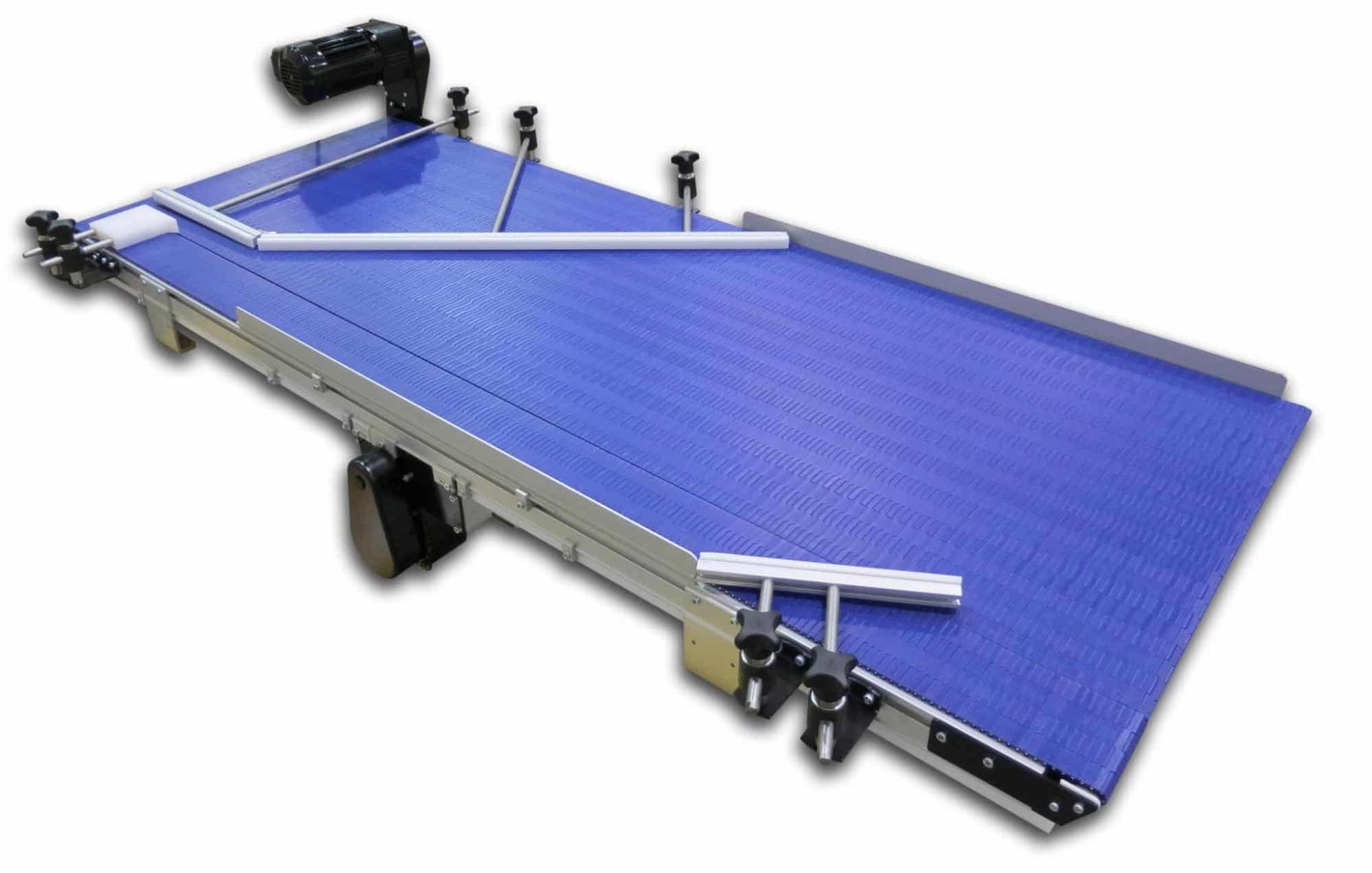
22How recirculating tables work
Two or more belts move in opposite directions. Products can circulate continuously until they are released in a single line to the next process, or accumulate until an employee is ready to handle them.
A basic recirculating table can operate unattended without electronic controls.
23Problems solved
When one point backs up, a recirculating table creates controlled accumulation instead of forcing upstream production to stop or redirect product.
Buffer product when a downstream process slows or pauses.
Continue producing without immediately stopping or rerouting product.
Minimize back pressure to reduce the likelihood of damage and loss.
Organize accumulated parts for a predictable single-file outfeed.
24How to use a recirculating table
Custom features vary, but the core process stays consistent: parts enter, organize into one line and leave on a controlled conveyor path.
An employee manually dumps parts onto a two-belt recirculating conveyor. A guide gathers them and directs them toward an opening.
A UHMW block ensures the parts enter single-file in the correct orientation, knocking over any parts standing on their side.
A pneumatic V-block moves each part into position so it can transfer to the next machine.
This three-step workflow is retained as a historical source example, not represented as a Roarer project.
25Advantages
26Custom engineering
Custom recirculating systems can be developed from concept through installation, training and maintenance planning. Scope and commercial terms are confirmed in the Roarer proposal.
Needs analysis, system concept, layout development and 2D or 3D CAD modelling.
Product-specific belt, guide, frame, accumulation and outfeed configuration.
Phased engineering and project-specific HMI, PLC and servo-panel builds.
FAT, SAT, replacement and spare-parts planning, installation and training.
27Frequently asked questions
Selection, belt materials, integration and project coverage.
Every conveyor type has a practical use. Recirculating conveyors are especially useful where automation is needed to move parts smoothly through a manufacturing line while creating controlled buffer space.
Yes. A custom table can be sized and configured to handle large parts, subject to product dimensions, weight, stability and the required buffer capacity.
Use low-friction conveying surfaces so products move as intended. Typical options are low-friction fabric or modular belts and plastic chain; accumulation conveyors may also use urethane.
Yes. Recirculating conveyors can operate as one part of an integrated manufacturing line, receiving product from upstream equipment and feeding downstream machinery at a controlled rate.
Warranty coverage depends on the selected components, operating conditions and agreed project scope. Roarer documents the applicable coverage in the project proposal rather than applying a universal term.
The process can include concept and needs analysis, layout and CAD modelling, mechanical design, controls engineering, factory and site acceptance testing, installation, training, maintenance planning, and replacement or spare-parts support.
28Applications
Recirculation often works alongside accumulation, routing, merging and custom handling.
29Application gallery
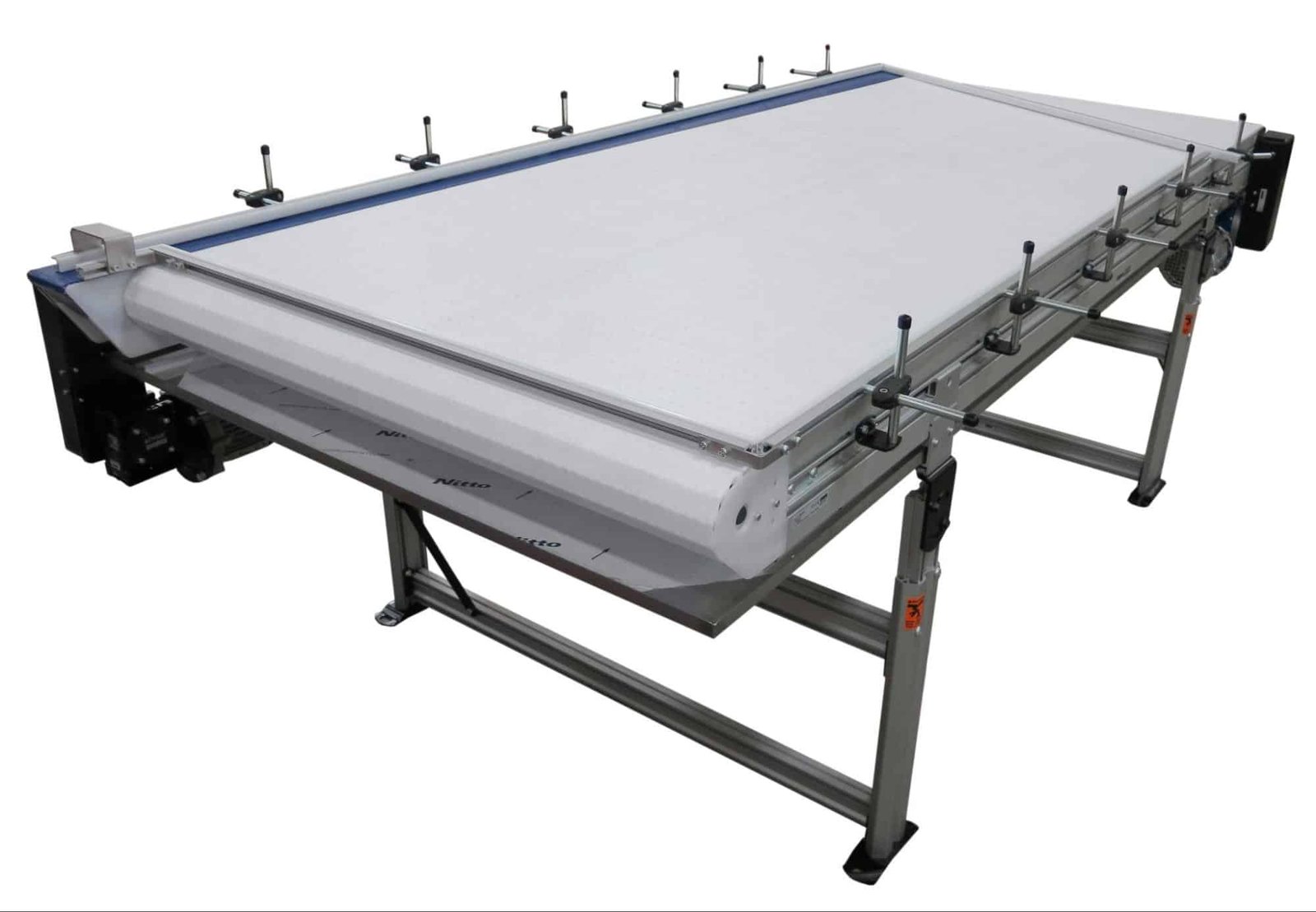
The complete page-specific equipment gallery is preserved in the Roarer project at full archived resolution.
Share your product, rate, available footprint and downstream process. Roarer can help define the right recirculation and accumulation layout.
Discuss your application


