Your process needs a lot of human interaction
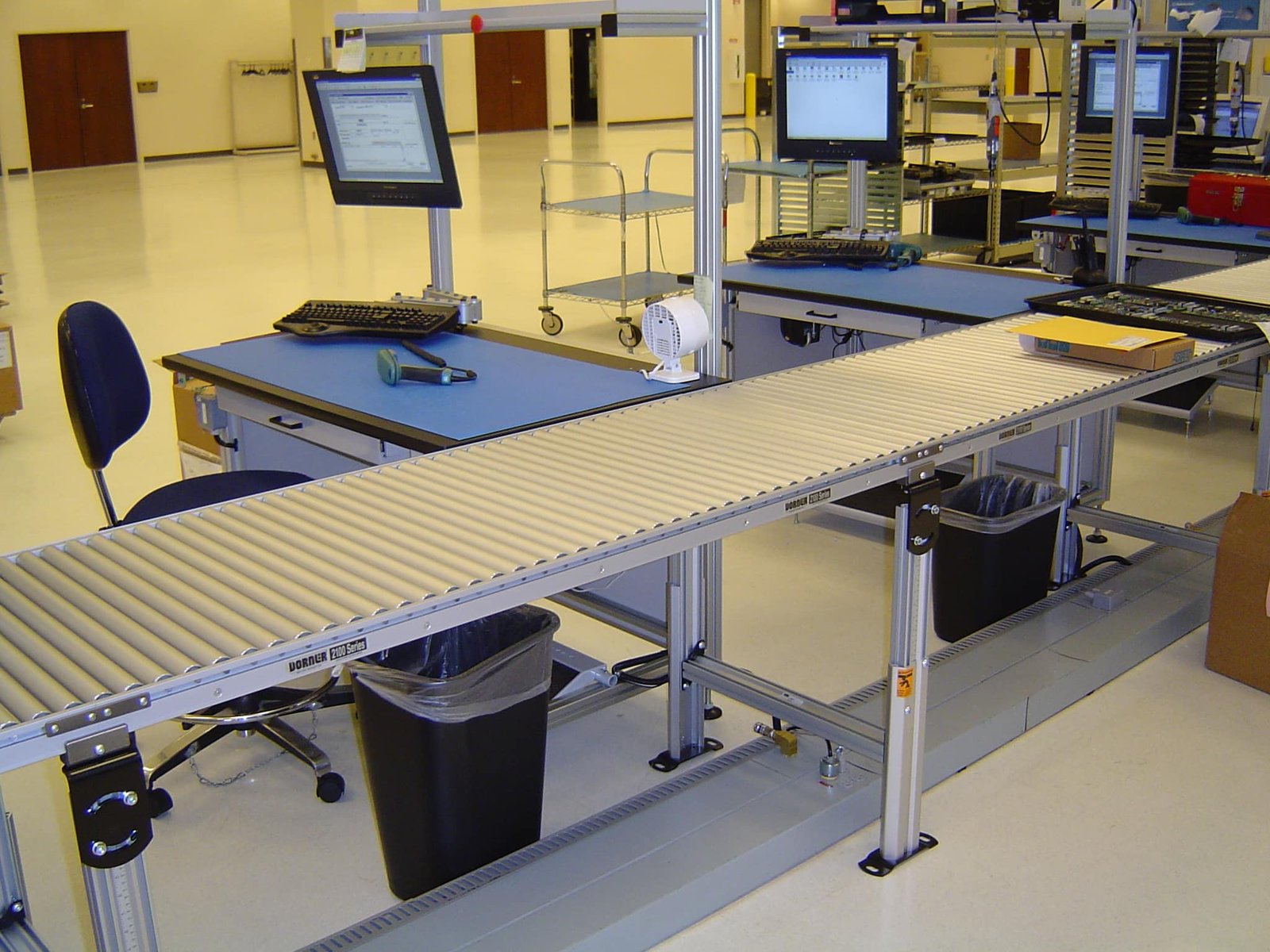
Lower friction than belted conveyors makes it suited to processes where operators shift, rotate and position product in motion, without needing to halt or delay the line.
14Application solution
Some of the most commonly used conveyors in factories and industrial settings, offering a simple, reliable and inexpensive solution for transporting parts, products and packages. A roller conveyor is not the ideal solution for every application, but many situations benefit from integrating one.
15How gravity conveyors work
A gravity conveyor moves product by taking advantage of the natural force of gravity. Product sits on rollers mounted on a slight decline, using gravity to assist forward motion and minimize frictional resistance. This system uses less energy than other conveyor types, making it an ideal choice for certain labor-intensive applications.
16When to use a roller conveyor
Powered conveyors offer speed and precision, but plenty of applications are better served by a simple gravity system.
Lower friction than belted conveyors makes it suited to processes where operators shift, rotate and position product in motion, without needing to halt or delay the line.
Gets product from one point to another without the risk of damaging items that have already been through the production process, in an energy-efficient manner.
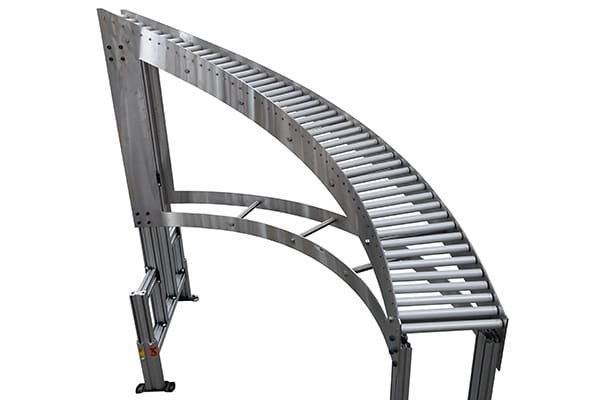
No moving parts or motors means lower maintenance costs, making it a more economical solution than powered conveyors for shorter runs and turns.
17Applications
Certain situations are especially well-suited to a gravity roller conveyor.
Gathers product on the conveyor before the next production stage, commonly needed for quality control and inspection.
Moves product into the appropriate area by size, shape or color, often aided by an operator or powered conveyor.
Moves product in small increments at a pace operators can easily keep up with in lower-speed applications.
Safely and efficiently conveys heavy or awkwardly-shaped items, with stops, diverts or other controls to position product on the pallet.
The 2200 gravity conveyor withstands loads of up to 80 lbs/ft, a versatile and durable solution for demanding conveying needs.
Moves product over short distances, often alongside belt or chain conveyors to build a complete facility-wide system.
18Choosing a system
The best way to combine roller and powered conveyors is to weigh the specific needs of the application.
Smaller, fragile items may be better suited to a belt conveyor to reduce the risk of loss or damage; bulkier, less delicate items can move on a roller conveyor.
Some processes need speed and precision, favoring a powered conveyor; others prioritize human interaction and flexibility, favoring a gravity roller.
Accumulating finished products for palletizing suits a gravity conveyor; inspecting product in motion is often better managed on a powered belt.
19Roller & material handling platforms
Each platform below is available through the Roarer product range.
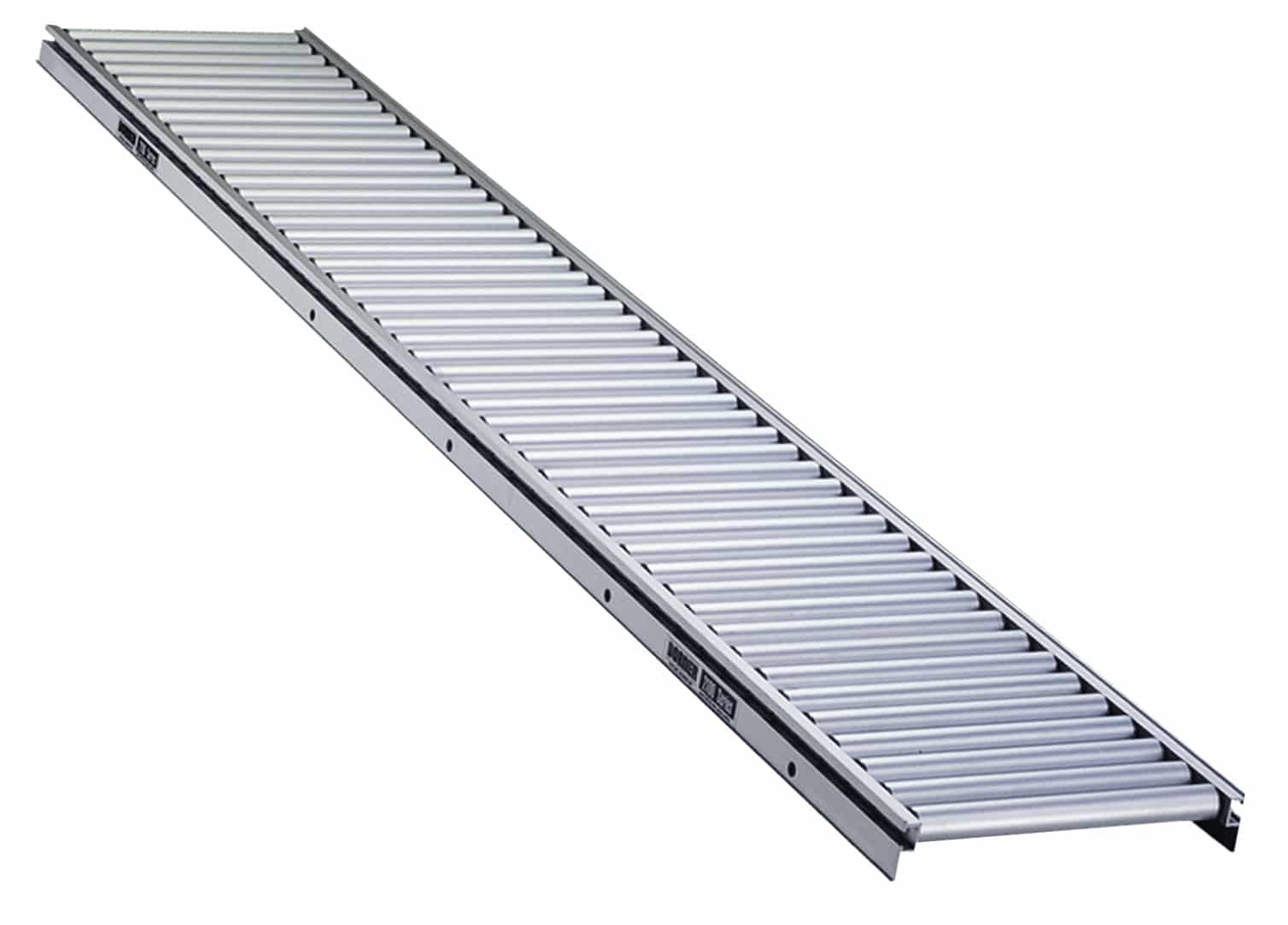
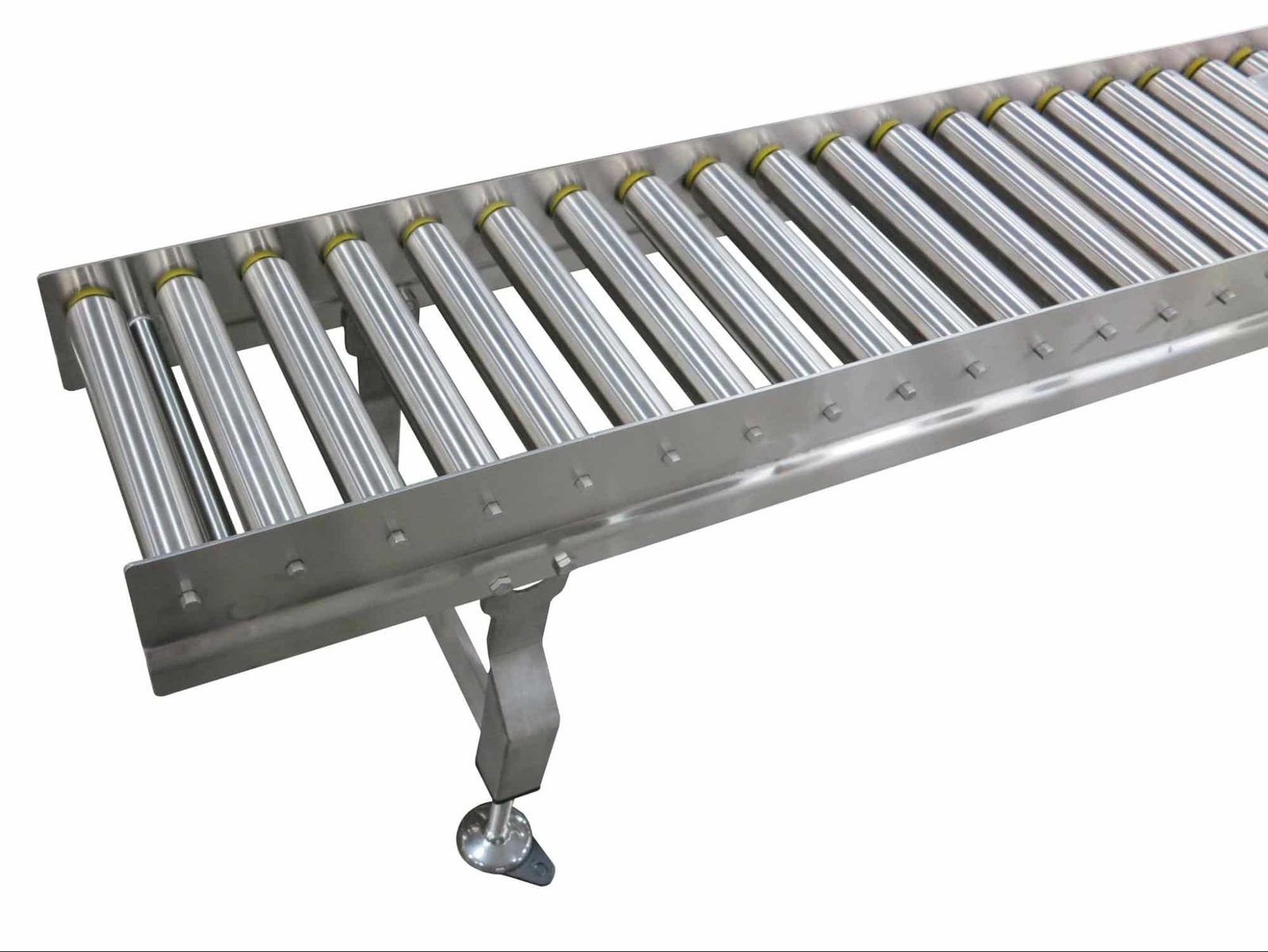
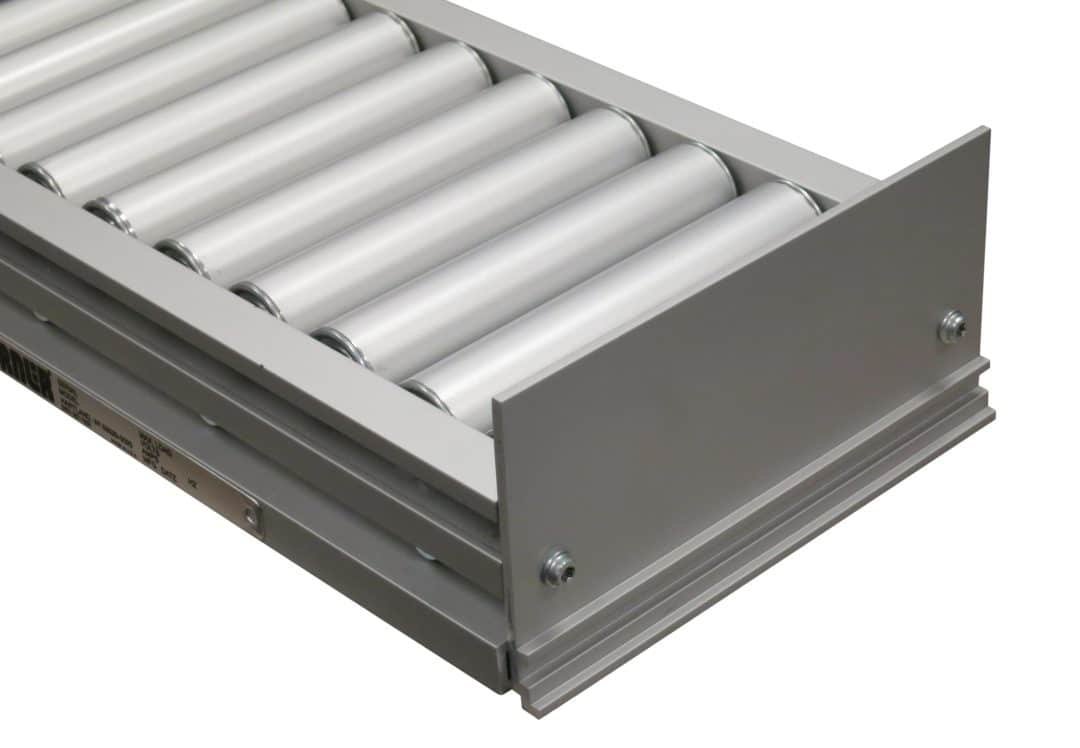
Customizable widths up to 24" and lengths up to 12', with accessories like fixed end stops, guides, wipers and motion control for a range of applications and environments.
View the product rangeA low-profile, lightweight option with a wider maximum width, built to withstand higher payloads, with precision belt tracking and v-guiding for material handling and e-commerce applications.
View the product rangePrecision conveyance with a wide load capacity range and a reduced footprint, suited to packaging, palletizing and material handling applications.
View the product range20Frequently asked questions
What they are, how they differ from powered conveyors, and how to keep product in place.
A gravity conveyor uses gravity to move materials from one point to another. It can transport a variety of products, including packages, boxes and loose materials, and is often used in warehouse and storage applications, though it can be productively integrated in other settings too.
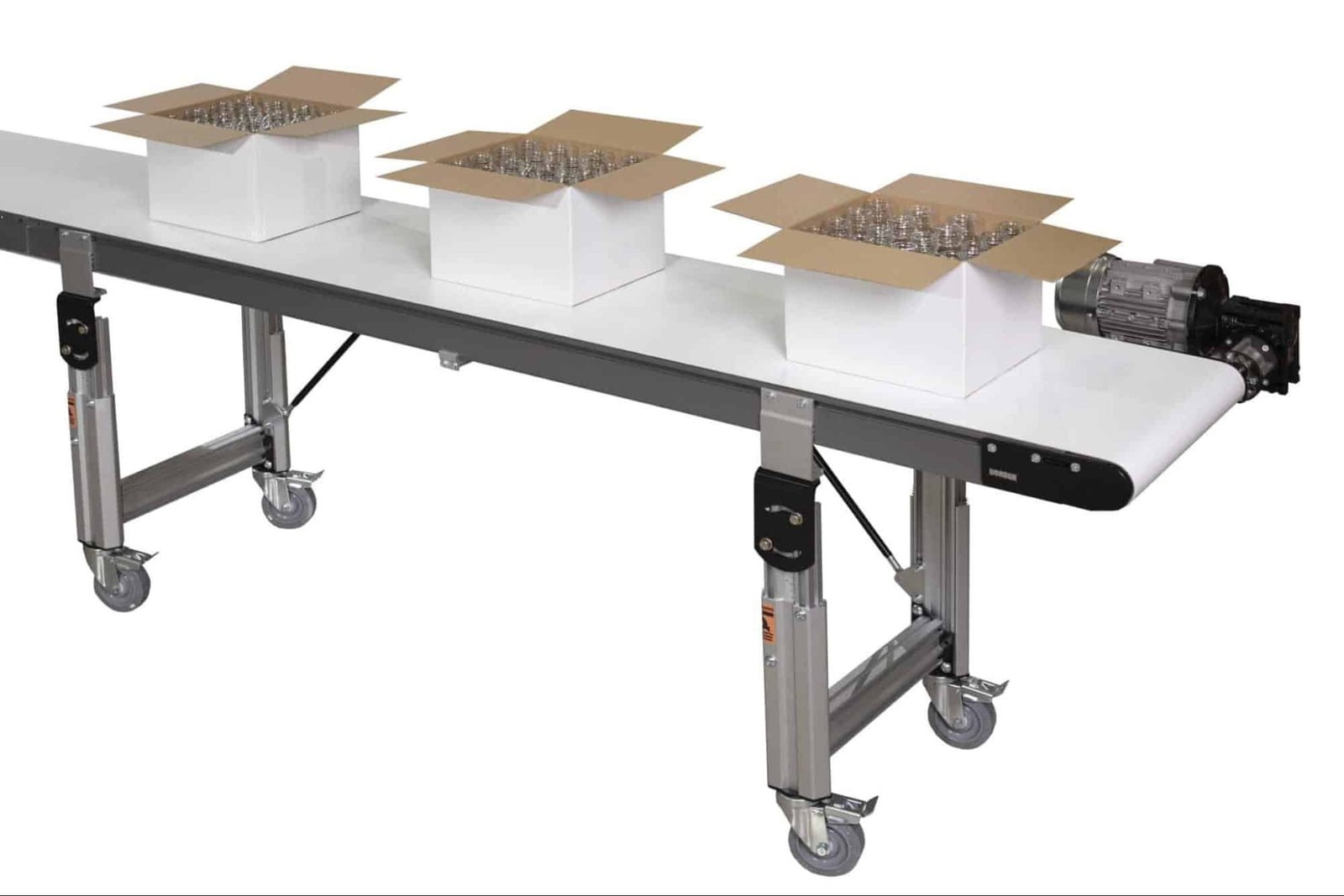
Gravity conveyors rely on gravity to move materials, while powered conveyors use an electric motor to move a chain, fabric or rubber belt to transport them.
No. Gravity conveyors rely on the force of gravity to move materials, so they can be used in a variety of settings and applications without power.
Side rails placed on either side of the conveyor keep pallets from shifting, or load stop devices attached to the conveyor frame prevent pallets from rolling off.
22Application gallery
Six photographs from the archived source gallery are retained locally in the Roarer project.
Share the product, process step and layout. Roarer can help decide where a gravity conveyor fits your line.
Discuss your application