90-degree rotators
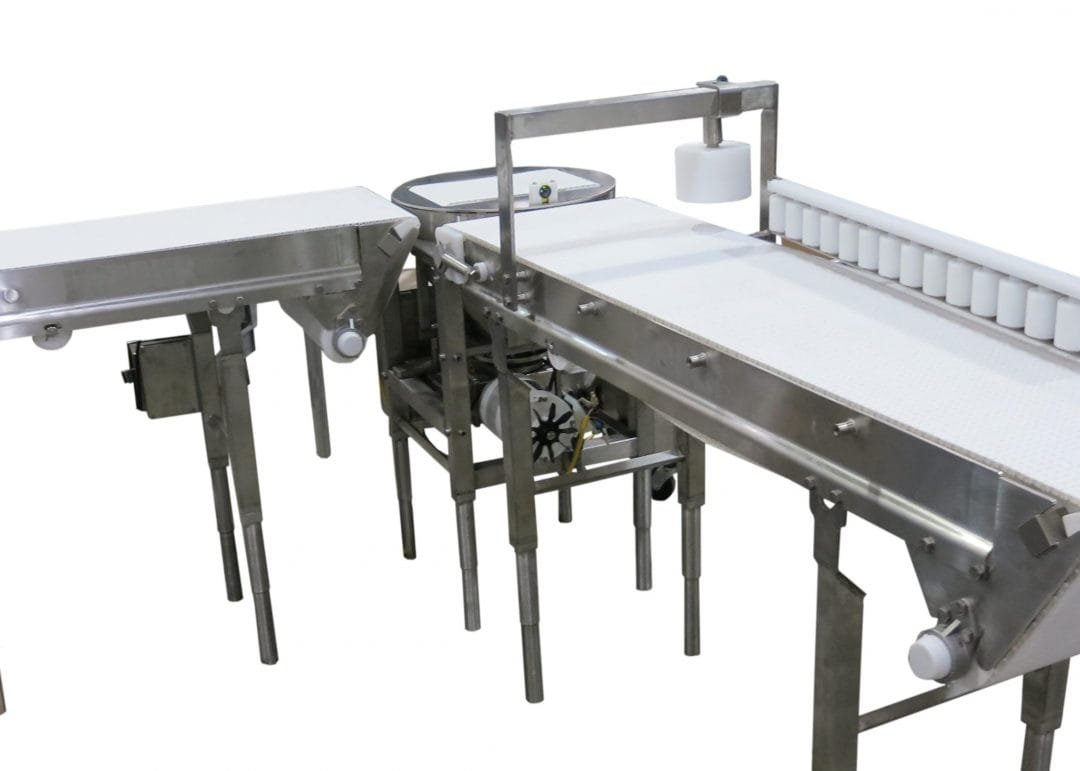
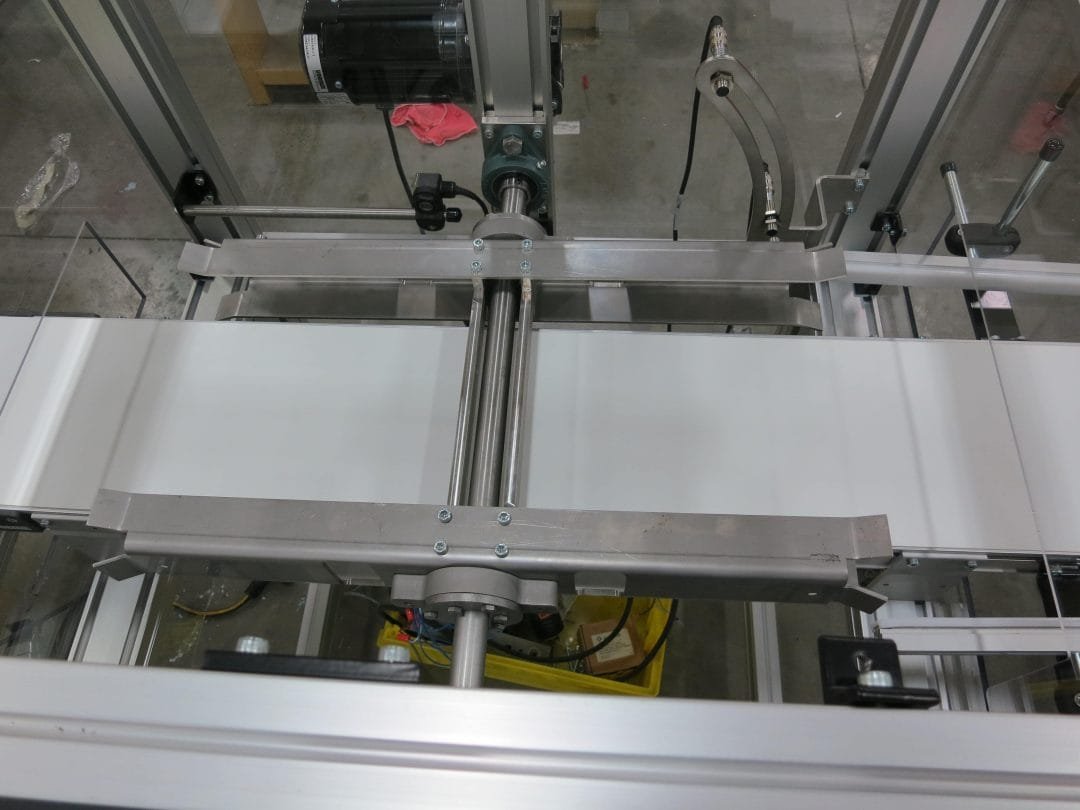
Receive product from the infeed conveyor, rotate it 90 degrees, offload it onto the outfeed conveyor, then return to the starting position for the next item.
21Engineered solution
Change product orientation without the footprint of a large curve. Compact mechanisms rotate or flip items in-line for the next process.
22Orientation methods
Rotators and flippers provide flexible orientation control where space is limited or a product face must change.
Receive product from the infeed conveyor, rotate it 90 degrees, offload it onto the outfeed conveyor, then return to the starting position for the next item.
The same application principle can be engineered for 180- or 270-degree rotation when the next operation needs a different product face or direction.
Turn an incoming product upside down on the line for sealing, labeling or preparation for packaging.
23Rotation sequence
24Platform flexibility
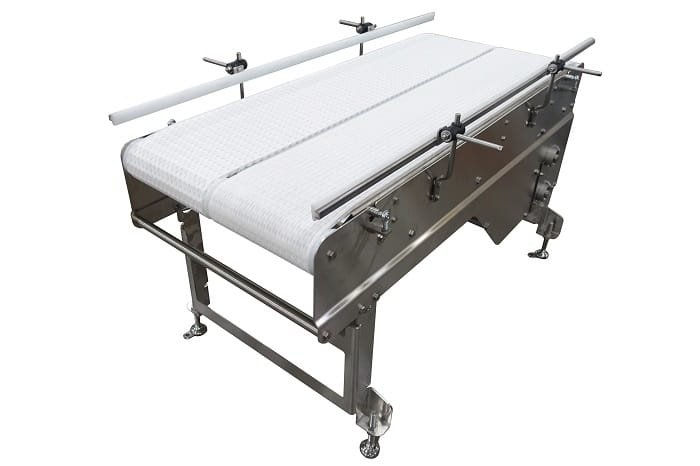
Rotators and flippers can be applied to industrial and sanitary conveyor platforms. Product geometry, surface, hygiene needs, rate and available space determine the mechanism and materials.
View the Roarer product range →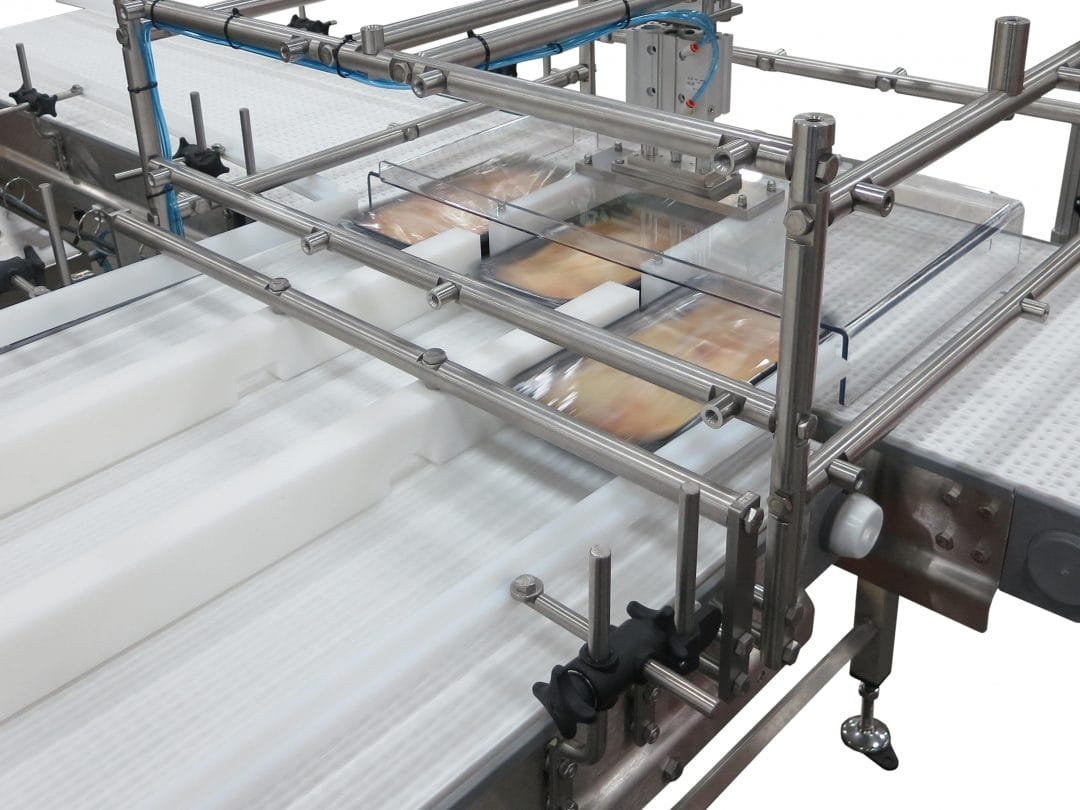
25Applications
Orientation changes commonly work beside accumulation, routing and custom handling.
26Application gallery
The complete archived gallery shows transfer, flipping, mechanism and dual-belt configurations.
Share the product dimensions, required angle, line rate and available footprint.
Discuss your application


