Random input
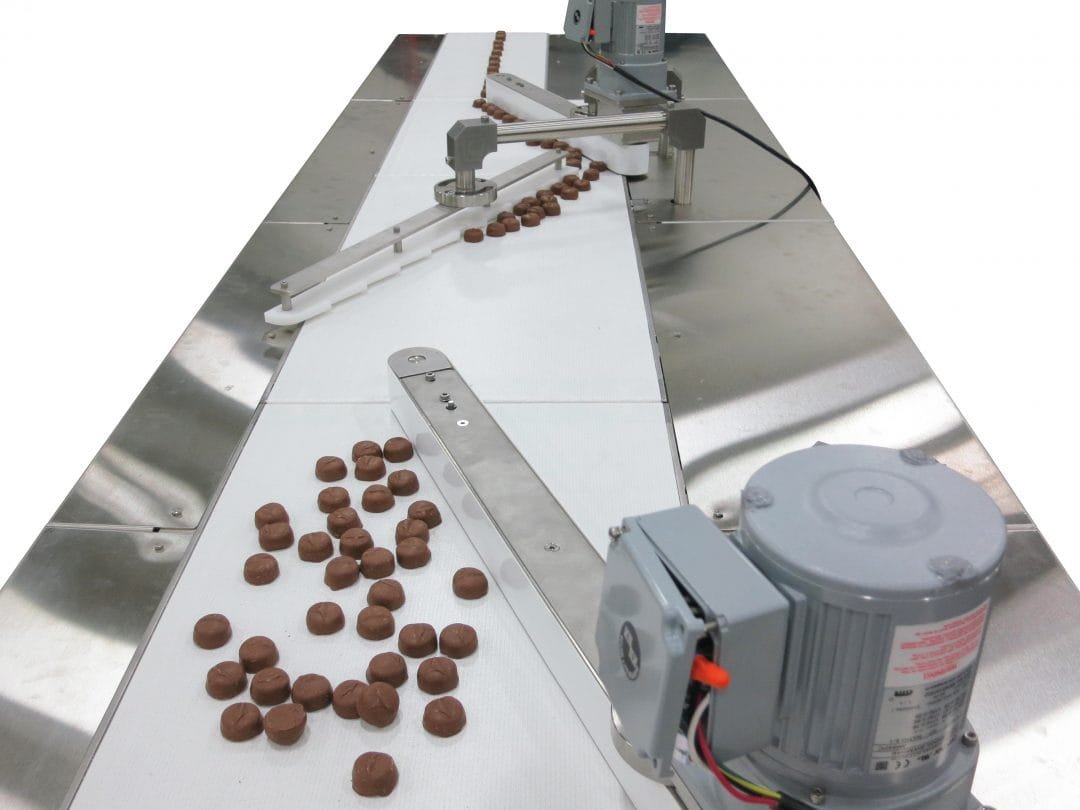
Misaligned or clustered items arrive across a wide belt.
22Engineered solution
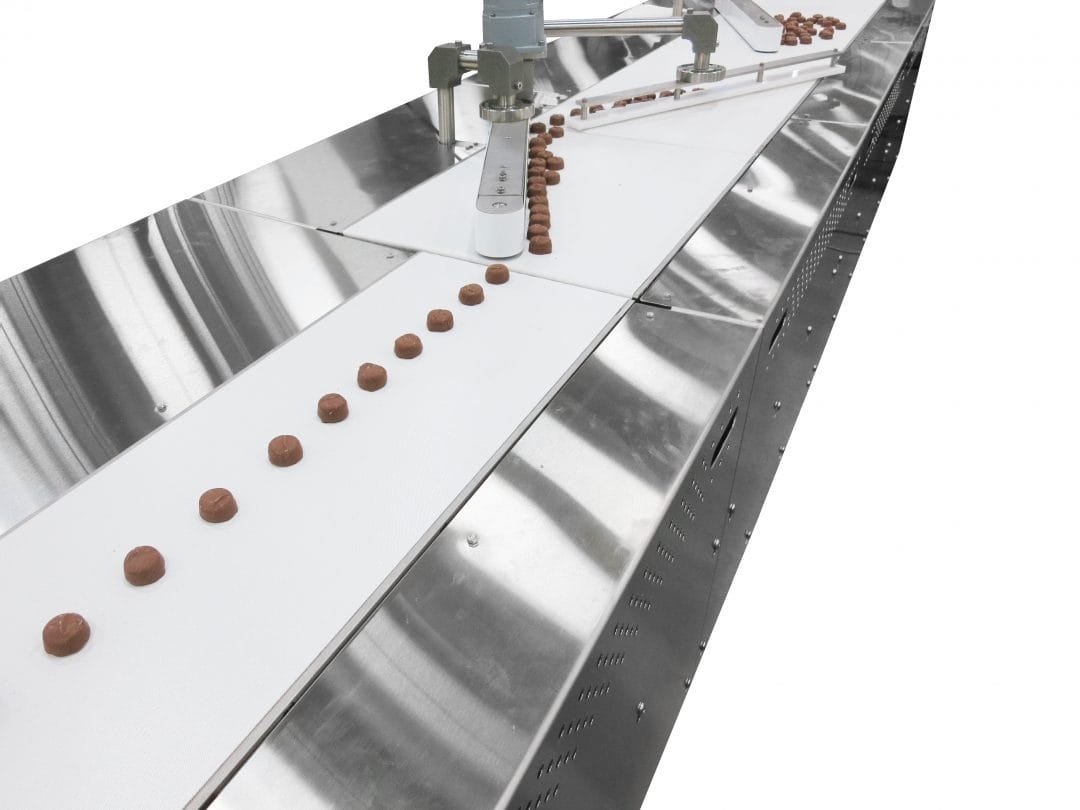
Transform random, misaligned or grouped products into a controlled single-file line with consistent rows and spacing.
23The production challenge
Some processes intentionally group products; others create random spread as a natural result. An oven, for example, may need pieces spread for even baking, while a later operation needs precise rows and spacing.
Misaligned or clustered items arrive across a wide belt.
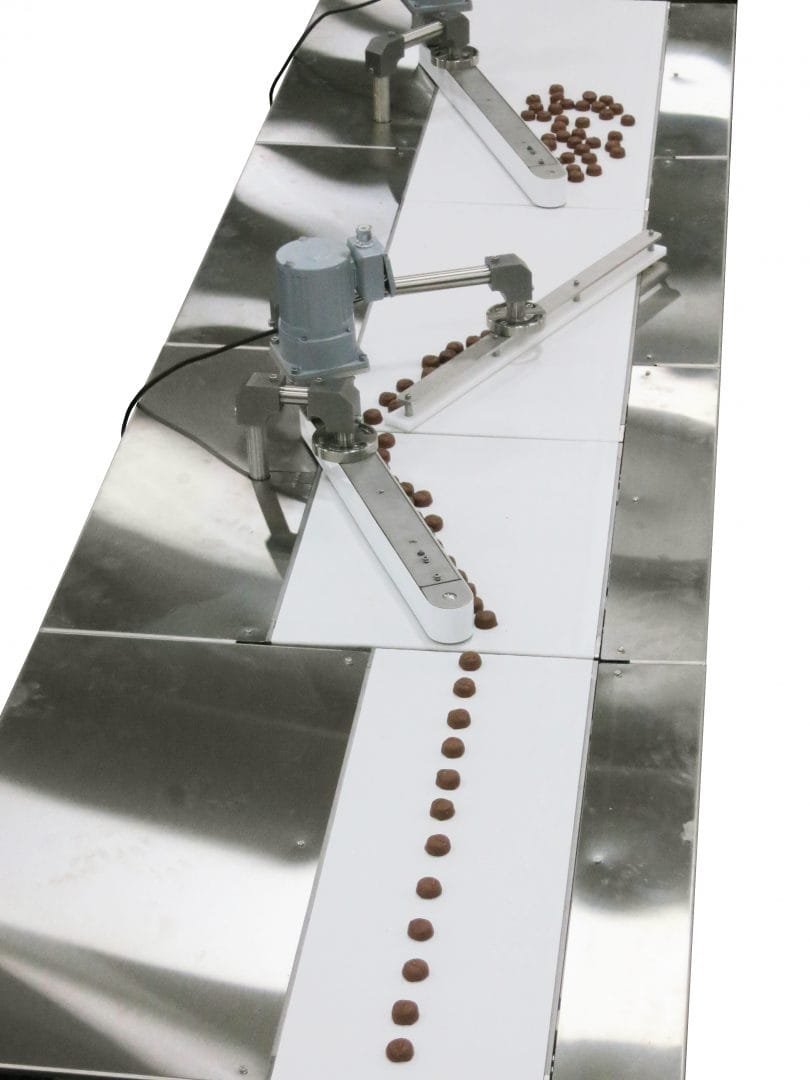
Successive stages pull products apart and guide their lateral position.
Products leave in orderly rows with controlled spacing.
24How it works
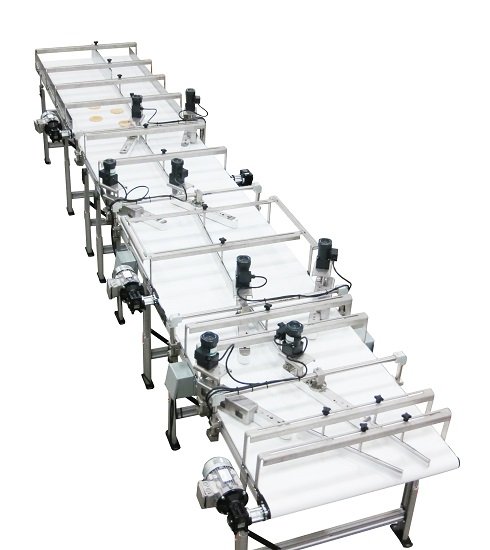
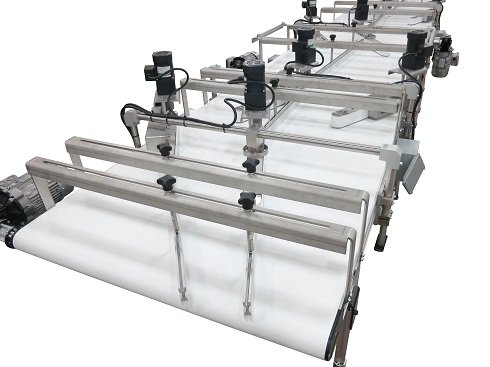
A chicane uses several conveyors in a line. Each consecutive conveyor runs slightly faster than the previous one, pulling products farther apart as they travel toward single-file flow.
Powered conveyors mounted above the horizontal belts sit at calculated angles. Across several sections, these angled surfaces guide, separate and singulate the product.
25Construction choices
Chicaning systems can use aluminium conveyor construction for industrial applications or stainless-steel conveyors where sanitary construction is required.
View the Roarer product range →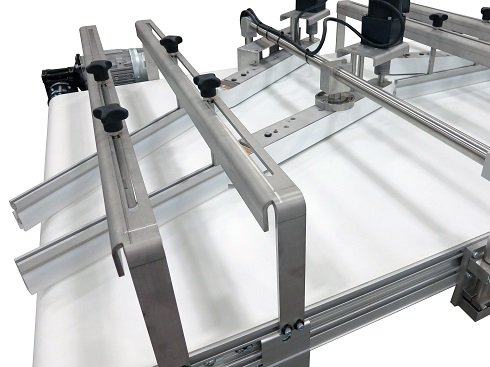
26Applications
Chicaning supports the flow-control functions before and after singulation.
27Application gallery
Full-line, close-up and before/after views are preserved locally.
Share the product, incoming pattern, target rows, spacing and throughput.
Discuss your application


