Set the width
Preset the opening or adjust it to the product.
23Engineered solution
Access the underside of boxes, bottles, pouches and flexible packages without interrupting their movement—for inspection, printing, labeling, edge sealing and controlled transfer.
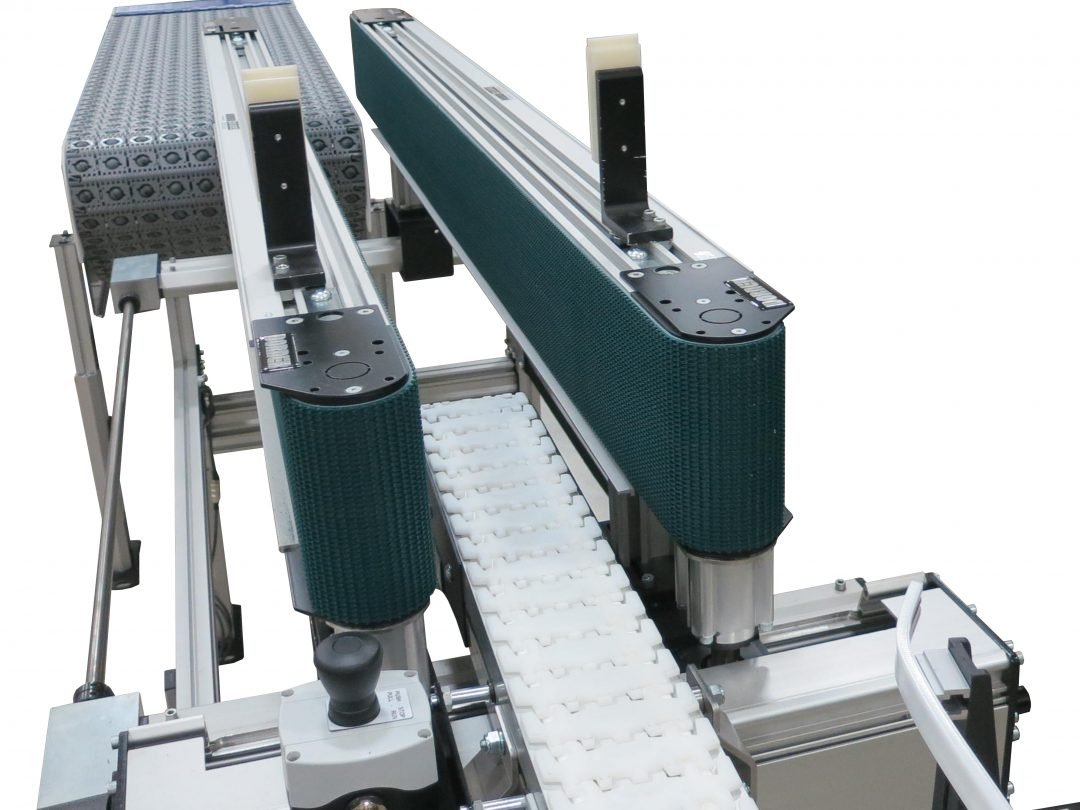
24How bottomless conveyors work
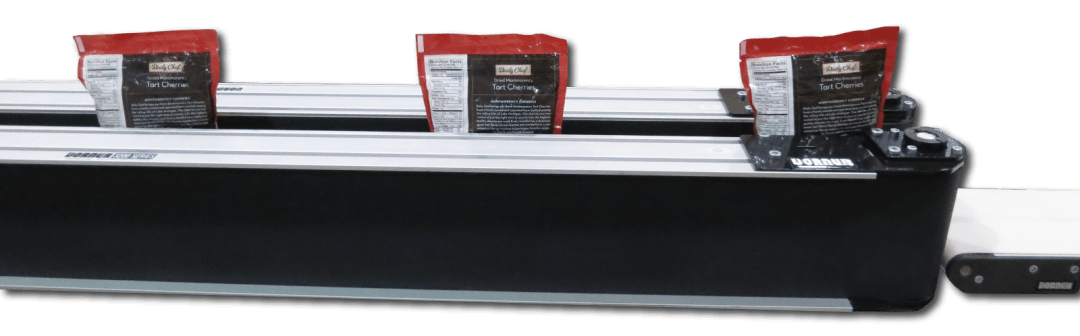
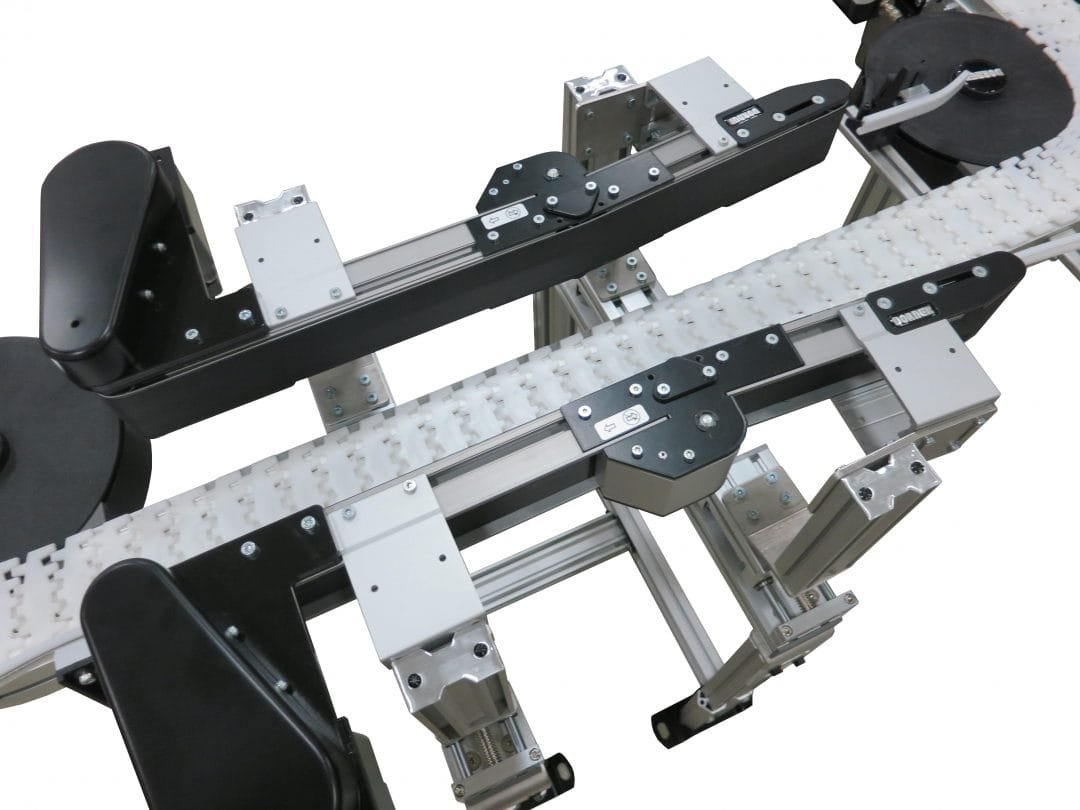
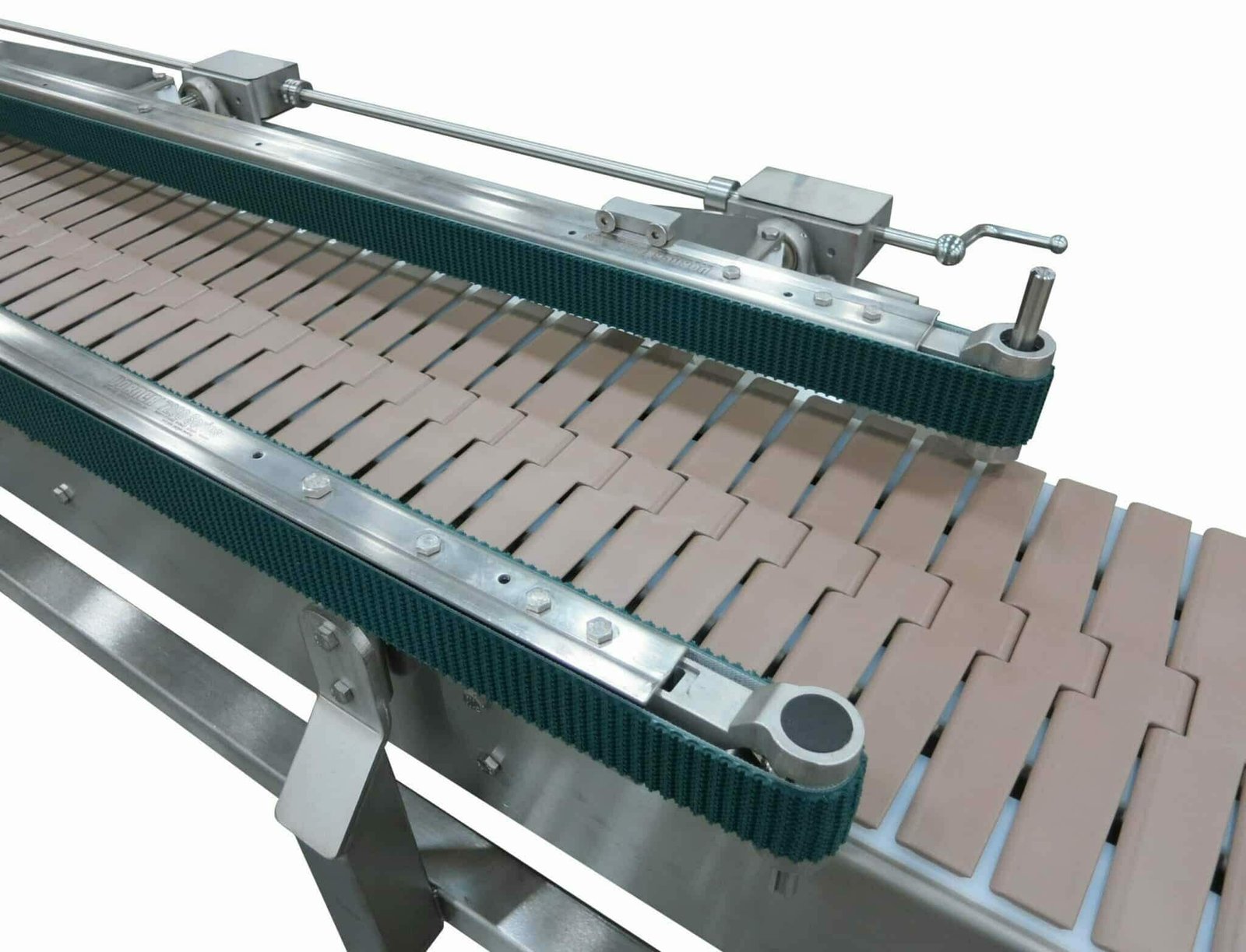
Two conveyors are mounted on edge, either at a preset width or with manual or motorized adjustment for different product sizes. Once set to the correct width, the parallel belts hold the product securely and move it into the next production phase.
A bottomless pair can also run above another conveyor to stabilize or pace product while the main belt carries the load.
Preset the opening or adjust it to the product.
Parallel belts hold the product without blocking its underside.
Inspect, label, print, code, seal, stabilize or transfer.
Return the product to a horizontal conveyor or the next operation.
25Where underside access helps
Bottomless conveying solves access and stability problems across packaging, inspection and coding.
A historical source case used a side-mounted conveyor parallel to the main chain line. A high-friction belt spun each wine bottle through one complete revolution inside a heat tunnel so heat reached the entire top seal evenly.
Boxes remain controlled while labels are applied to their tops and bottoms, making both surfaces accessible within one moving process.
Cameras and other inspection devices can verify labeling or product condition on the bottom of bottles, containers and boxes before the item drops back onto a horizontal conveyor.
Sealing tape can be applied to the top and bottom of a box while side belts maintain its position and the line keeps moving.
Expose the underside of bottles and containers for lot codes, date codes and freshness information used on food, beverage and pharmaceutical products.
Side-grip modules can create controlled gaps, stabilize packages or coordinate products with accumulation, packing and robotic operations.
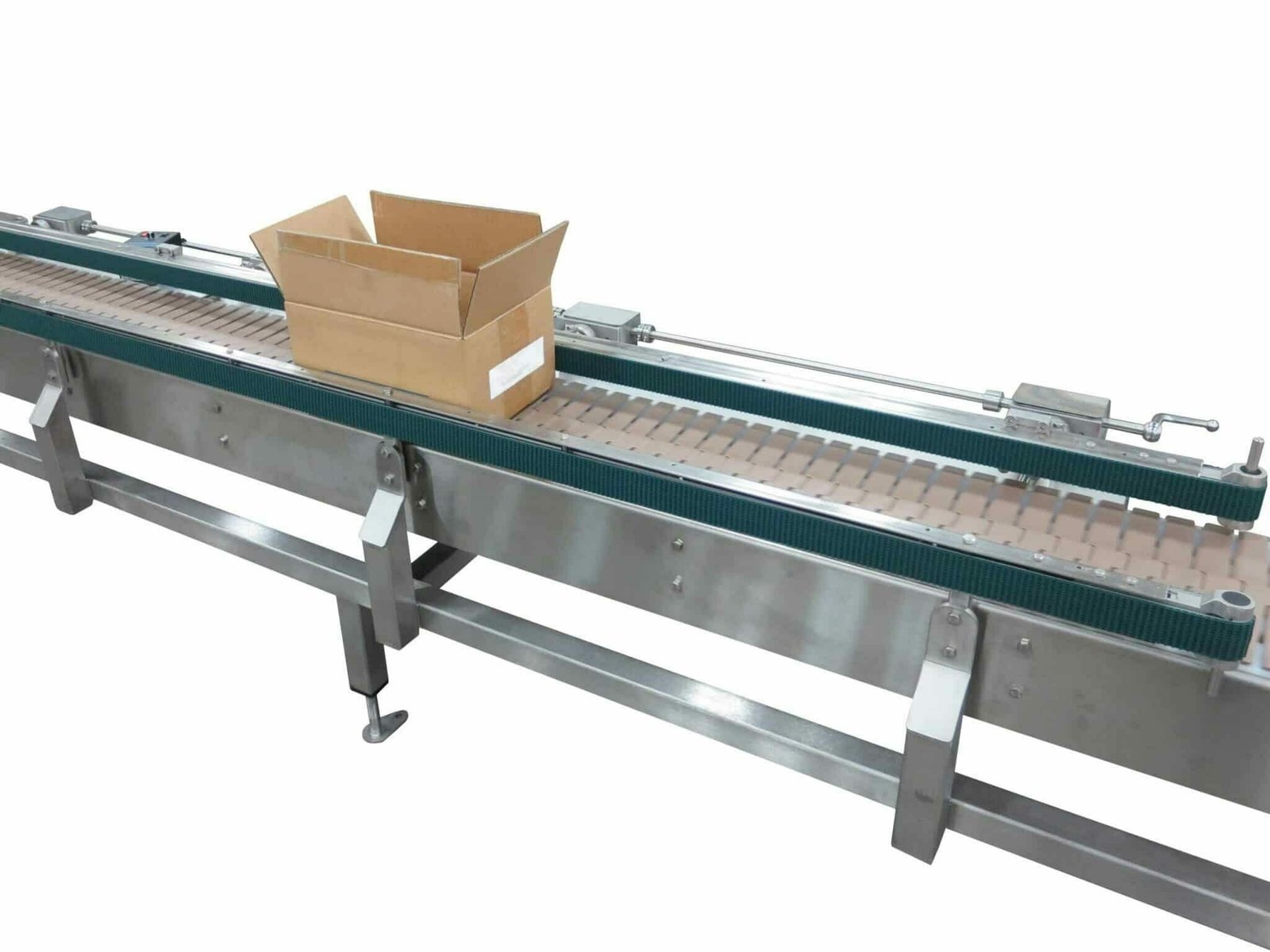
26Pacing & stabilization
A clamping module can pace totes, boxes, bottles and round, square or rectangular containers. Pre-programmed photo sensors trigger pneumatic clamping actuators on both sides, producing a gap of approximately one product length.
The product must tolerate minimal back pressure and squeezing force. In a related sanitary-box application, two overhead or side “squeezer” conveyors keep different box sizes in a known position while a picking robot loads them.
27Features & benefits
The grip must be firm enough for control while protecting the product surface.
Hold product for inspection, printing or labeling without damaging it.
Expose both faces for cameras, coders, labelers and sealing equipment.
Choose manual or motorized width adjustment for changing production needs.
Mount above or between conveyors to transfer, pace and stabilize product.
28Other names
Bottomless conveyors are also called bottle-grip, gap-transfer, hugger-belt, side-belt, side-grip or horizontally mounted conveyors.
Moves filled or empty containers between conveyors by gripping the sides through the transfer gap.
Controls transfer and prevents tipping while a lot or date code is applied to the exposed bottom.
Parallel belts hold a product securely by its sides, leaving top and bottom accessible and maintaining control even across steep inclines.
Side-grip systems serve packaged-food, pharmaceutical and many other product-handling operations.
29Applications
Bottomless conveyors commonly integrate with these already-built solution areas.
30Application gallery
Three gallery views and two supporting application photographs are preserved locally.
Share the product dimensions, surface, required process, speed and adjustment range.
Discuss your application


