13Application solution

AMR conveyors

Automated material handling solutions for facilities that want to increase efficiency and productivity. AMR conveyors are an ideal choice for applications requiring flexibility, precision control and accuracy — from sorting packages and shipping pallets to tracking inventory and controlling product flow in warehouses.

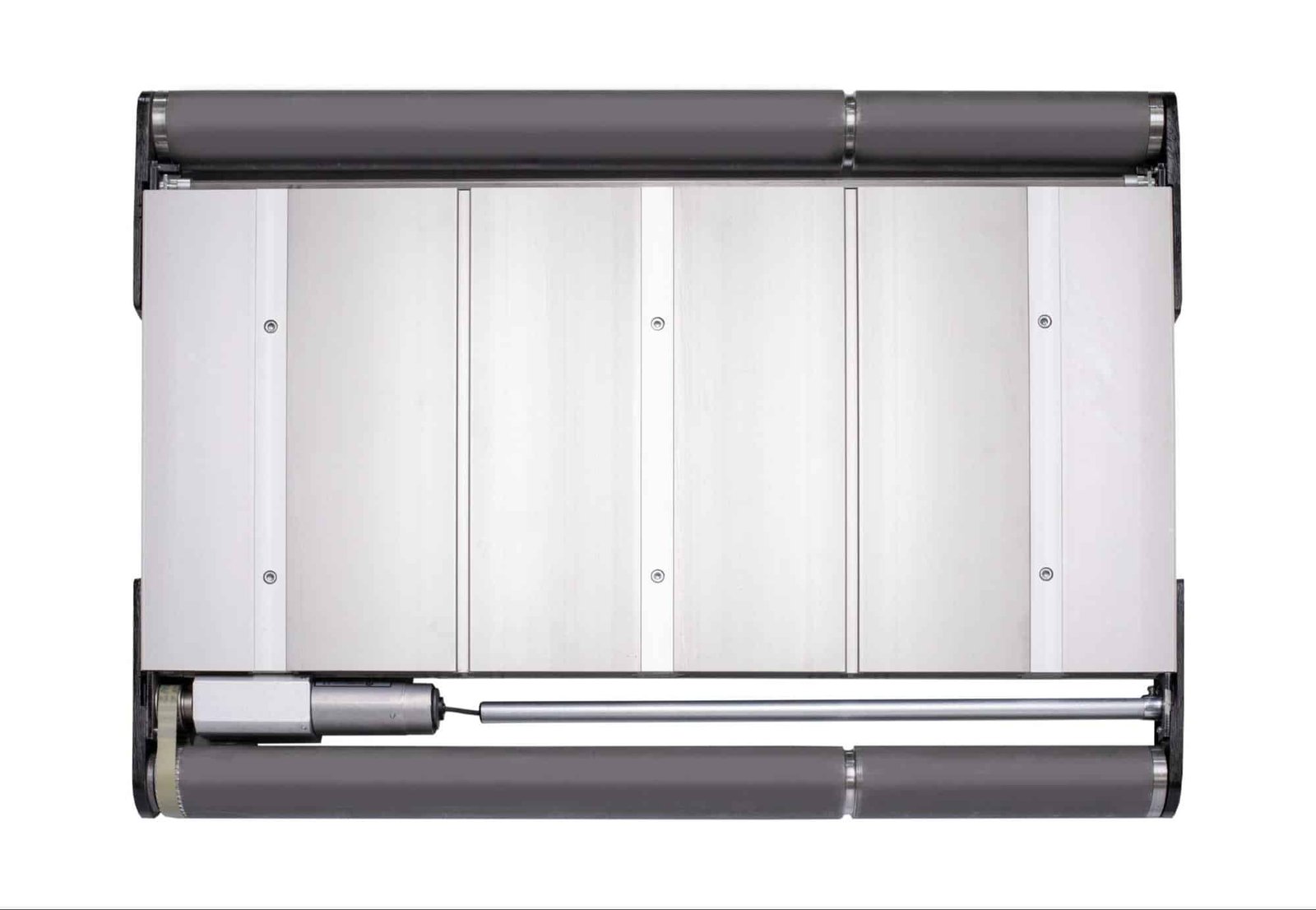
Detail view of an AGV/AMR-compatible conveyor deck
AMR-compatible deckBuilt for integration with mobile robots

14What is an AMR?

Two ways to move material autonomously.

AMRs and AGVs both transport goods around a facility, but navigate very differently.

AMR — Autonomous Mobile Robot

Learns the space

Robotic vehicles that use sensors and processors to navigate a facility, transporting materials without pre-programmed paths or physical guides. AMRs learn and adapt to their surroundings, providing a flexible material handling solution.

AGV — Automated Guided Vehicle

Follows a fixed path

Performs a similar function, but requires pre-programmed instructions and physical guides, such as magnetic tape, to operate. AGVs remain a viable option depending on the environment and application.

15What is an AGV/AMR conveyor?

Where the robot hands off to the line.

An AGV or AMR conveyor is a conveyor system that works in tandem with autonomous vehicles to transport goods across a facility. A robot can load materials, products or pallets onto the conveyor, which then moves them to their destination — offering increased efficiency, reduced operating costs, improved safety and flexibility that adapts to changing needs.

High-throughput transportWarehouses & distribution centersNo manual product movement
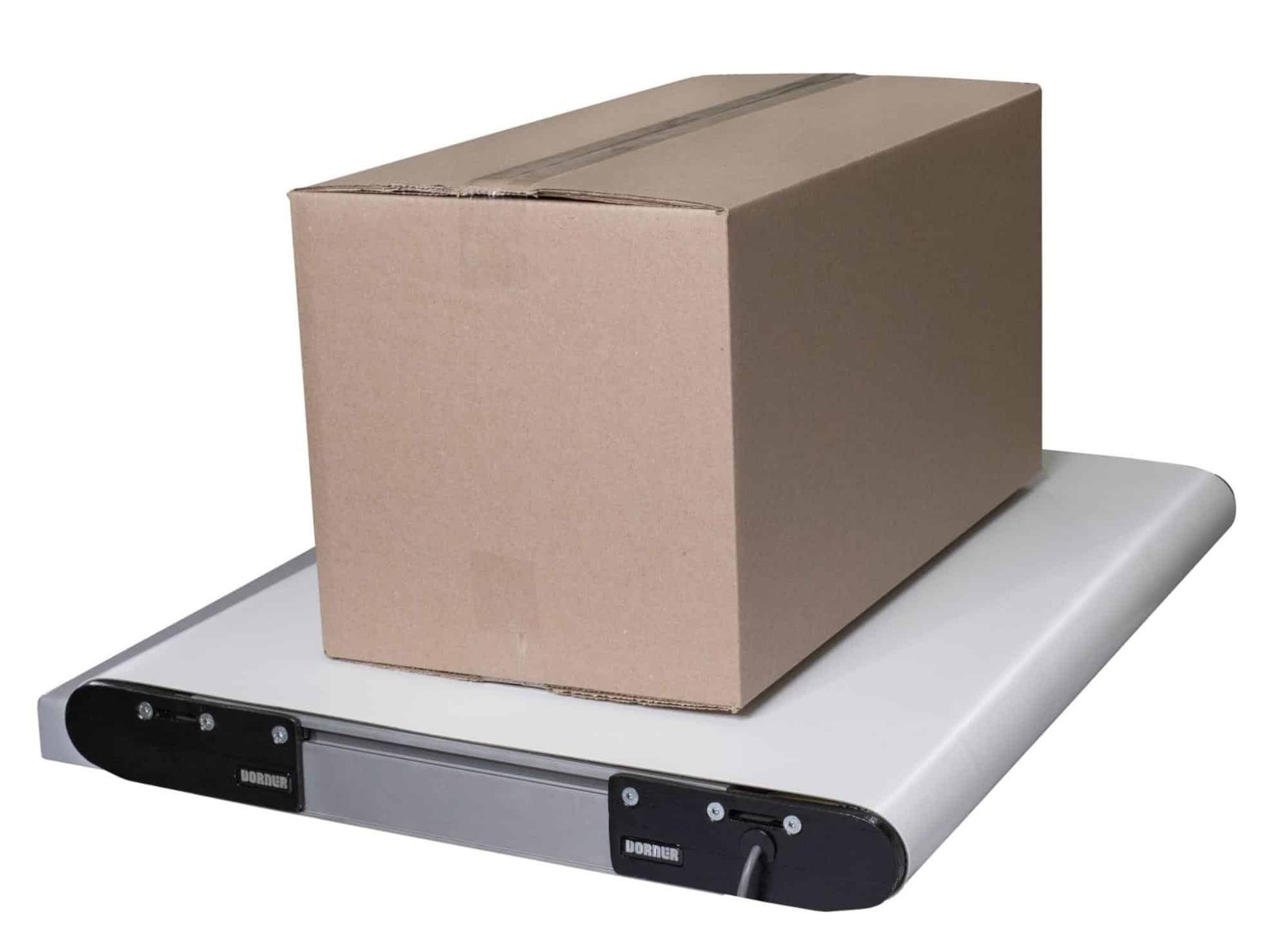
Box positioned on a conveyor ready for robot pickup

16The 2700 Medium Duty platform

Built for AGV/AMR compatibility.

The 2700 Medium Duty series is designed for AGV/AMR compatibility, allowing quick, easy integration into existing conveyor systems. A robust design, increased weight rating, extended widths and a low-profile aluminum frame make it suited to applications that need both speed and precision. Its lightweight design integrates with robots, AMRs and AGVs for smooth product flow between processes, with a wide range of profile configurations for different product-handling needs.

View the Roarer product range
Low-profile AGV/AMR-compatible conveyor deck

17Warehouse applications

Six jobs an AMR conveyor takes on.

In a warehouse setting, AMR conveyors increase operational efficiency and reduce the need for manual labor.

Material handling

Increases throughput, reduces product damage and improves overall facility efficiency, handling items of any size and shape with ease.

Pick-and-place

Moves products quickly and accurately from station to station, ensuring materials are transported safely through the facility.

Line-to-line transport

Moves materials between production lines, reducing the risk of product damage while improving operational efficiency and safety.

Palletizing & depalletizing

Precisely palletizes or depalletizes products, eliminating manual labor and improving accuracy by reducing human error.

AS/RS integration

Works with automated storage and retrieval systems to deliver items to the correct station, reducing time spent on loading and unloading.

Inventory tracking

Equipped with RFID readers or other tracking devices for greater accuracy in inventory management and real-time product movement updates.

18Advantages of upgrading

What automation changes on the floor.

Automation is increasingly important across logistics, warehousing and production.

Higher productivity

Enables higher throughput and faster delivery times, moving products and materials quickly and accurately whether handling small or larger loads.

Greater efficiency

Significantly reduces manual labor, eliminating the need for human intervention and reducing employee fatigue.

Enhanced flexibility

Makes it easy to adjust production lines and move products to different locations with minimal disruption as needs change.

Increased safety

Eliminates the need for manual handling, reducing injury risk while enabling higher accuracy and less product damage or loss.

Reduced downtime

Drastically reduces machine downtime, improving the efficiency and consistency of the operation.

Improved workflow

Integrates with inventory tracking and monitoring solutions for more accurate data collection and better operational decisions.

19Planning the integration

Four steps before you automate.

AMR conveyors are flexible and scalable, but proper planning ensures optimal performance.

01

Analyze the facility's layout

Assess the current design for areas where automation could improve efficiency, accuracy and safety. A layout that changes frequently, or has obstacles, favors an AMR over an AGV.

02

Identify areas for improvement

Plan the changes needed to accommodate an automated system, weighing both short-term and long-term goals against existing operations.

03

Establish safety protocols

Train employees on the operation of automated conveyors and put proper safety measures in place to protect personnel, equipment and materials.

04

Monitor performance after integration

Keep an eye on performance data once the system is running, and look for areas to adjust or improve.

Connect your robots to the line.

Share the facility layout, product and required throughput. Roarer can help plan the right AMR conveyor integration.

Discuss your application