01
Practical overview
Responsible for supplying essential medications when patients need them, the pharmaceutical industry is increasingly susceptible to challenges that affect the supply chain, from labor shortages to regulation compliance. These challenges can impact the accessibility of prescription and OTC medications, ultimately affecting patient care.
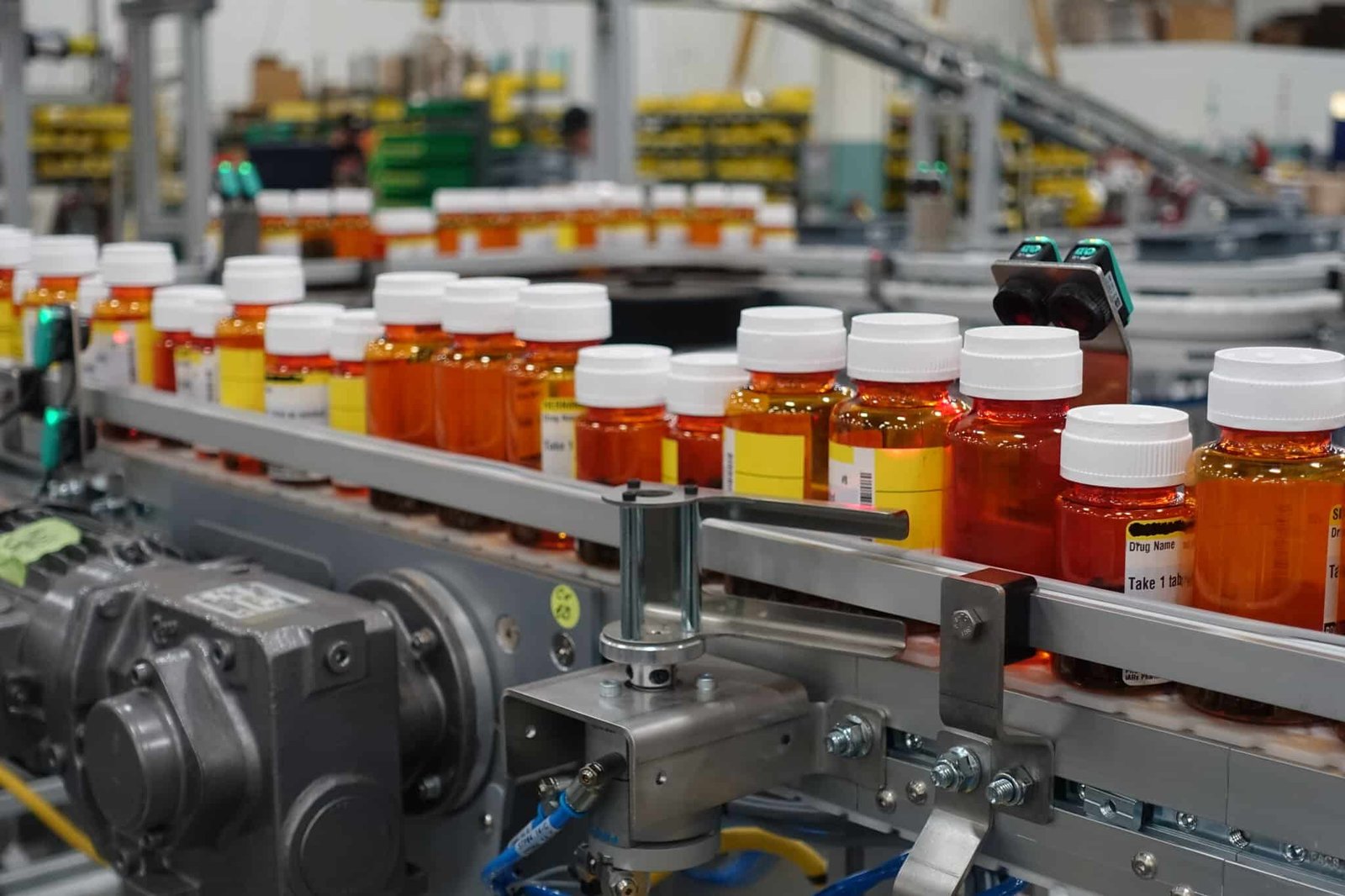
By integrating automation in the form of conveyors, pharmaceutical companies can address and alleviate many of these issues during production, packaging, and distribution.
02
Challenges Impacting the Pharmaceutical Supply Chain and How Automation Can Help
The pharmacy supply chain is a complex network that involves drug manufacturers, wholesalers, pharmacies, and healthcare providers. This complexity is compounded by the stringent regulations and quality standards that govern the industry.
Issues can arise at various stages of the pharma supply chain, affecting the availability and timely delivery of medications to medical facilities, pharmacies, and patients. Common challenges include the following:
The demand for prescription medications continues to rise, driven by an aging population and the need for more personalized treatments. However, attracting and retaining enough skilled workers to meet this demand has been a persistent challenge.
Labor shortages can lead to bottlenecks in production and distribution processes, causing delays and inefficiencies in the supply chain. Automation can help reduce dependence on manual labor, allowing pharmaceutical companies to focus on higher-value tasks and ultimately improving patient care.
03
Regulatory Compliance and Quality Control
Strict regulatory requirements and quality control standards are integral to the pharmaceutical industry. Medications must undergo rigorous testing and adhere to Good Manufacturing Practices (GMP) to ensure their safety, efficacy, and quality.
Human error, such as incorrect labeling or packaging, can compromise patient safety and result in costly product recalls. Automating processes such as labeling and inspection can enhance accuracy, efficiency, and consistency, minimizing the risk of errors and ensuring compliance.
Balancing supply and demand can be a challenge for pharmaceutical companies, resulting in stockouts or excess inventory, both of which can be disruptive and costly.
Integrating automated systems can improve production efficiency and accuracy, reducing delivery times and minimizing the risk of stockouts and delays. By leveraging predictive analytics, companies can anticipate customer needs and optimize their inventory levels accordingly.
04
Integrate Automated Conveyor Systems to Enhance Your Prescription Handling Processes in the Supply Chain
With automated conveyor systems, your facility can streamline prescription medication handling and increase efficiency across processes like packaging and inspection. Uphold the highest standards of safety, efficiency, and accuracy by adopting automated conveyor systems into your existing facility.
Automated conveyor systems can help reduce labor costs by reallocating labor-intensive tasks such as sorting and labeling. Automating these processes allows pharmaceutical companies to focus on higher-value tasks, such as product development and customer service.
With conveyors, medications can be transported from one area in production to another efficiently, minimizing bottlenecks and optimizing workflow within your facility. Conveyors can allow you to increase production in ways that wouldn’t be possible with traditionally manual processes and ongoing labor shortages.
Manual production processes are prone to human error, which can lead to medication mix-ups, incorrect labeling, or packaging errors.