01
Practical overview
The pharmaceutical industry constantly evolves to meet new demands and patient needs while striving to operate as safely and efficiently as possible. However, pharmaceutical manufacturing and distribution have fundamentally changed with recent challenges posed by supply chain issues, changes in demand, and COVID-19.
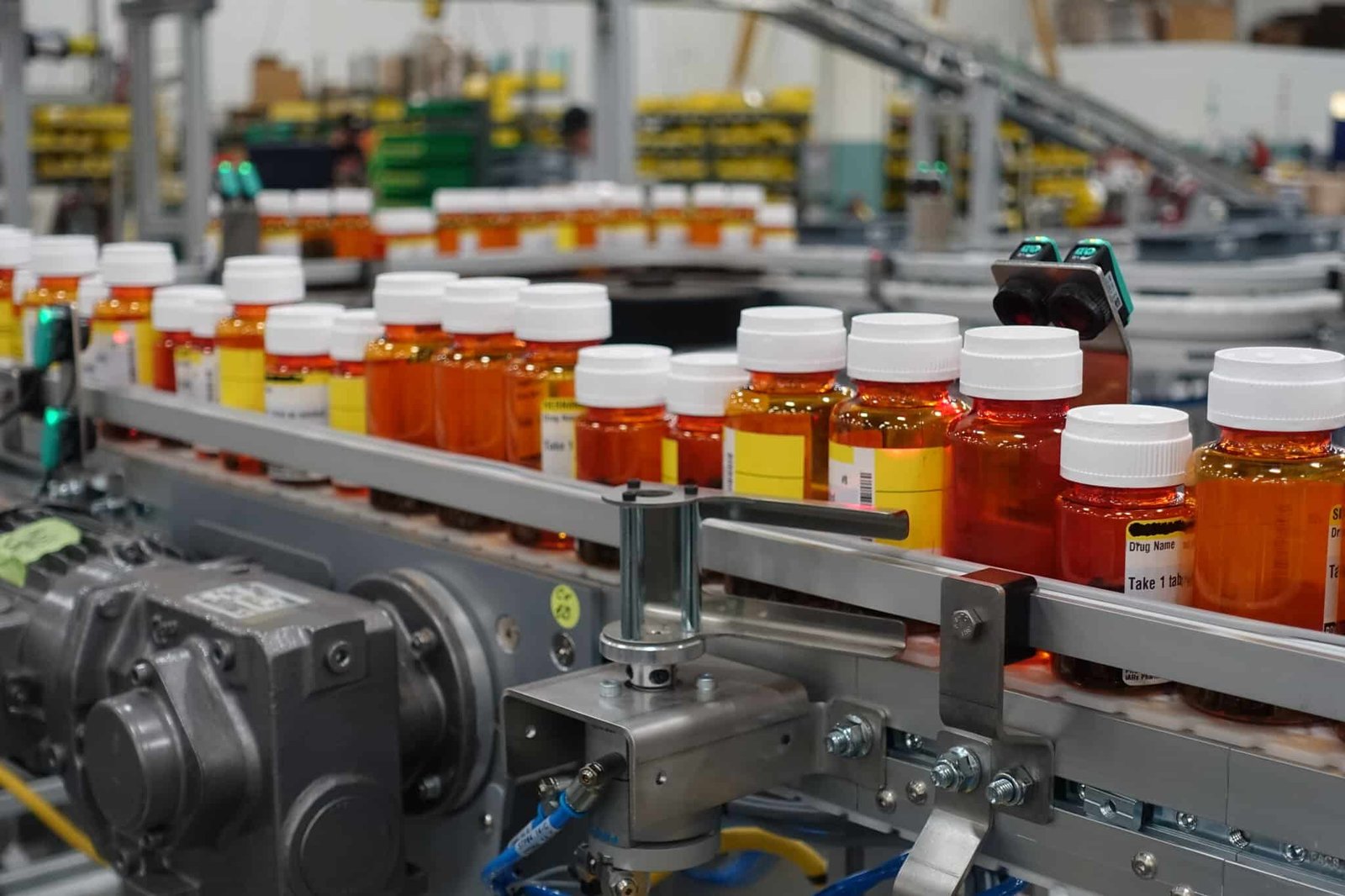
PMMI has published a report on the shift the pharmaceutical industry is experiencing and how industry partners can make changes to meet these needs as they fluctuate and change. In particular, the e-commerce pharmaceuticals and mail-order prescriptions boom have spurred a greater need for increased automation tools, efficient packaging lines, robotics, and AI to improve accuracy and quality.
02
How can automation improve pharmaceutical production?
Technological improvements and significantly increased demand for pharmaceuticals have necessitated automated processes within pharmaceutical manufacturing and packaging. Implementing automated material handling, inspection, and packaging allows manufacturers to increase production speed and efficiency. Utilizing intelligent motion technology throughout a manufacturing line also transfers repetitive or strenuous tasks from staff to the conveyor system, giving employees more time to focus on more complex tasks.
Not only do automation capabilities increase efficiency, but they also help to improve accuracy and quality. Human error is one of the leading causes of manufacturing mistakes that lead to product loss or defects. In the pharmaceutical industry, a product defect or accidental mix-up can be highly costly for the manufacturer and even life-threatening for consumers.
03
How will changes in pharmaceutical demand affect manufacturing equipment?
In recent years, PMMI has reported increased demand for injectable pharmaceuticals, putting more pressure on pharmaceutical companies to produce a broader range of products to meet consumer needs. Additionally, the higher rate of injectables and companies producing different effects on the same manufacturing line pose a greater risk for contamination.
Moreover, manufacturing pharmaceuticals requires machinery that does not produce particulate matter or contribute to airborne contamination. OEMs and equipment suppliers must carefully design pharmaceutical processing machinery to meet these stringent sanitary requirements.
Conveyors are the foundation of any automated pharmaceutical production line, so they must be adaptable to different product sizes, materials, and production and sanitary needs.
04
FlexMove Plastic Chain Conveyors – Flexible Filling, Indexing, & Sorting
With the industry’s most flexible plastic chain belt and a large selection of modules to customize your system, FlexMove conveyors are easily adaptable to almost any product line.
Features of FlexMove Pharmaceutical Conveyors
- Ideally suited for tight spaces, elevation changes, and long lengths
- Powered transfers for smooth end transfers of product as small as 3 inches
- Numerous belt and module options for added customization
- Sleek, compact design maximizes horizontal and vertical space of facility
05
ERT150 – Pallet Conveyors for Injectable Pharmaceuticals
Products are carried on static conductive pallets and precisely positioned products for the highest accuracy and safety during production. By eliminating the belt, this conveyor drastically reduces the risk of particle buildup caused by friction and wear that would show in a traditional belted conveyor.
The ERT150 lends itself perfectly to vial filling and injectable pharmaceutical processing. With customizable pallets and an advanced, gearbox that makes reconfiguring the field a breeze, this conveyor can be easily designed and integrated into many pharmaceutical production and packaging applications.
In injectable and liquid pharmaceutical production, many products are temperature sensitive and must be kept in a highly controlled environment throughout production and storage. However, there are stages in processing and packaging that cannot be as easily temperature-controlled, and often products spend 24-48 hours out of the cold chain during the packaging process. While these processes are necessary for packaging, they greatly risk a reduction in the potency and efficacy of vital medications.
06
AquaGard LP – Sanitary Packaging Conveyors
With a tip-up-tail roller design and stainless-steel frame, this conveyor system is quick and easy to clean, allowing for line changeovers as short as 5 minutes.
With quickly shifting consumer demands and production space becoming more limited, modern pharmaceutical producers face the challenge of maintaining production for numerous product lines while keeping their facilities streamlined and efficient. This significantly strains equipment and machinery to run different product types and sizes while also being cleaned between each product line.
- Quick five-minute belt change for increased uptime
- Compact and enclosed tensioning system providing smooth and snag-free cleaning
- V-groove frame with a guided belt for accurate tracking
- Low-profile, operator-safe design with no pinch points