01
Practical overview
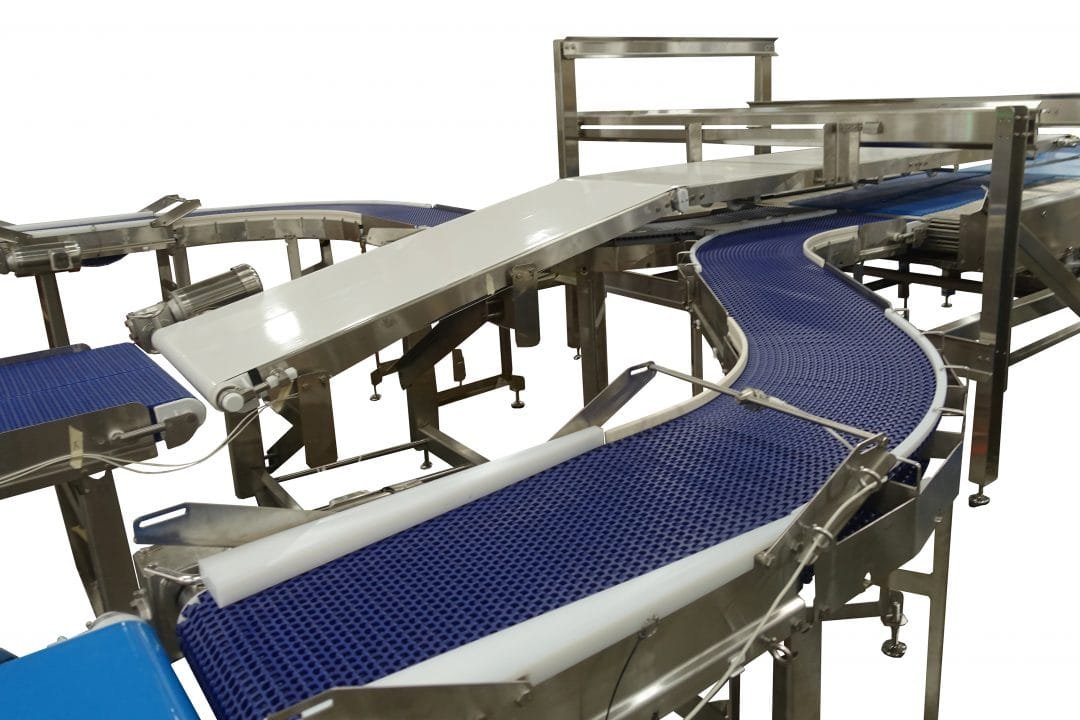
Industrial and automation conveyors are a crucial part of any production facility. They move parts and product from one place to another during specific steps in the production process. Industrial conveyors are also widely known as industrial conveyor belts, industrial conveyor systems and industrial conveyor belt systems.
Conveyor systems will improve efficiency, boost accuracy and cut costs. They will also increase workplaces’ safety by reducing the need for lift trucks and other potentially dangerous equipment.
Often more standard than automation conveyors, industrial conveyors are behind every stage of the manufacturing process, from production and assembly to inspection and packing. They normally come in two varieties, fabric belted and modular belted. These conveyors help increase efficiency, reduce costs and keep all operations running smoothly.
Automation conveyors are a type of conveyor that offers even more precision, especially when moving pallets or larger products. They are typically involved in more automated solutions. Conveyor automation can also be integrated with robots, equipment and workers.
02
Types of Industrial and Automation Conveyors
They are used to transport items in conveyor configurations such as straight, curves, and LPZ (Z-Frame).
FlexMove Conveyors are available as completed conveyor systems for fast and simple, installation, or as parts for flexibility in design.
They also offer a variety of options with unique features, such as flexible chain with cleats, rollers, friction pads, steel top, anti-static and fabric belts.