01
Practical overview
The food production industry has always had to grapple with line changeovers, whether it’s switching to different flavors or a different type of product altogether. Now with modern consumer’s ever-changing demands, food producers must be more innovative than ever and offer a wider variety of products just to keep up.
One of the most important and time-consuming aspects of food production line changeovers is proper sanitation, especially when it comes to working with allergen-free foods. Shortcuts cannot be taken in sanitizing equipment, so having machinery that is designed with the cleaning process in mind can make a huge difference in reducing changeover time.
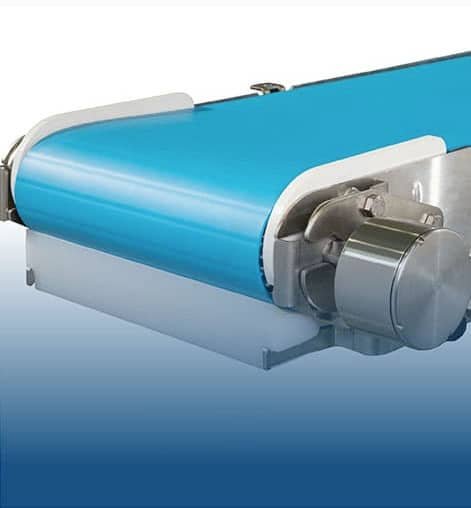
The tip-up tail belt tensioning system offers an easy way to prep the conveyor system for cleaning in less than one minute. With no need for tools, the conveyor tail can be tipped up, releasing the belt tension and allowing operators to clean the underside of the belt and the entire conveyor frame. Additionally, this system helps make belt changing fast and easy, while also ensuring that re-tensioning of the belt is done correctly to maintain accurate belt tracking while the conveyor is in use.
02
Frame Cutouts & Minimized Surface Area
The open frame design allows for quick belt changes in as little as 15 minutes!
With frame cutouts and easily removable belt supports or bed plates, conveyors can be effectively disassembled, cleaned and sanitized, then reassembled quickly and without the need for tools.
The optional clean in place module cleans inner and outer surfaces of the belt.
Belt lifters, for example, offer a simple way to quickly lift the belt off the bedplate so everything can be cleaned without the need for another operator to hold up the belt. Cleaning modules, such as belt scrapers or clean-in-place water jets, can also be added to keep belts free of debris and reduce the time it takes to clean the belt during line changeover.
03
Combining Advanced Technology with Practical Methods
Even the most advanced production lines can still experience long changeover times, so it’s important for manufacturers to analyze every aspect of their production for better optimization and efficient changeovers.
One method many companies are finding useful is implementing regular training with staff and utilizing electronic work checklists.
Standard work checklists provide employees with a step-by-step process to follow for line changeovers, helping to reduce errors and missed steps which can, in turn, cause product damage when the lines are started back up. Electronic checklists can also include verification procedures to ensure each step is completed and checked off before employees move on to the next.
Proper training is paramount in reducing changeover time, especially when machinery is updated, and new employees are hired.