Equipment and operating figures
Figures describe the configuration and operating conditions in this case.
- Processing conveyors
- 2 × 7600 Series sanitary conveyors
- Dimensions of each
- 16 feet long × 2 feet wide
- Previous cleaning
- At least 90 minutes; 2–3 times per shift
- Reported replacement cleaning
- Both conveyors cleaned and ready in under 10 minutes
- Reported disassembly
- About 5 minutes
- Containment
- Washable, integral flexible belt sidewalls
- Additional equipment
- 2 more 7600 Series units on a packaging line
The process sequence
- Receive nuts from a chute
- Apply honey-roast coating
- Move through processing
- Stop and restart between runs
- Open belt access for washdown
When a short break caused a long stoppage
The producer roasted and seasoned more than 75,000 pounds of nuts and seeds daily and blended between 40,000 and 60,000 pounds of mixes. Products included peanuts, almonds, cashews, Brazil nuts, pecans, walnuts, sunflower seeds and pepitas.
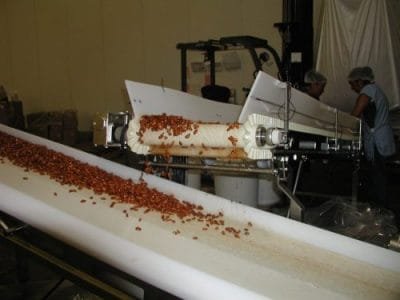
On the honey-roast line, nuts dropped from a chute onto the conveyor and received a coating while travelling downstream. The formulation became sticky within minutes. If the conveyor stopped for a ten- or fifteen-minute staff break, the coating could set between belt and spindle so firmly that the belt would not restart.
Keeping the old equipment running meant cleaning it two or three times a shift. Preparing and cleaning a conveyor could take at least ninety minutes, turning repeated short process pauses into hours of lost availability.
Washdown construction and belt access
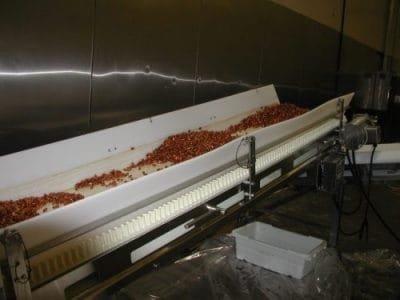
Two 7600 Series sanitary conveyors replaced the troublesome processing units. Each was sixteen feet long and two feet wide. Two additional conveyors from the same series were used on a separate packaging line.
With the earlier equipment, staff wrapped the motor and control box in plastic and tape and still had to avoid water ingress during washing. The replacement construction allowed the conveyor to be washed down and opened for direct access.
Lifting a nose section released belt tension. Belt lifters then held the belt clear so staff could wash both its upper and lower surfaces and reach the metalwork inside the frame. The maintenance account describes complete belt-and-conveyor disassembly in about five minutes.
Keeping falling nuts on the belt
Cleaning was not the only problem. Nuts falling from the overhead chute could roll off the receiving conveyor, wasting product before the next operation.
Integral washable sidewalls were added to that belt. Their flexible, S-shaped form allowed them to travel around the conveyor spindles while containing the falling nuts. The operator reported that the earlier rolling-off losses were eliminated in this application.
Reported cleaning and production benefit
The maintenance manager reported that both replacement processing conveyors could be fully cleaned and returned ready for use in less than ten minutes. That contrasts with at least ninety minutes to prepare and clean the former equipment.
The account reports a major reduction in the time lost to cleaning and satisfactory operation on the honey-roast process. These are observations from this specific product, coating and cleaning routine. They are not a universal cleaning-time guarantee for every sanitary conveyor configuration.
Application photographs