Equipment and operating figures
Figures describe the configuration and operating conditions in this case.
- Conveyor installation
- Nearly 30 AquaPruf and AquaGard units
- Packing arrangement
- 4 lanes, each about 50 feet long
- Working day
- Up to 16 hours picking and packing
- Growing environment
- 47 rooms, about 90 × 30 feet; 6 tray levels
- Growing cycle
- About 7–8 weeks
- Sanitary access
- Belt lifters and tip-up noses
- Published disassembly time
- Under 90 seconds by one person for the described platforms
The process sequence
- Grow and hand-sort mushrooms
- Fill and weigh containers
- Move unpackaged product through washdown areas
- Wrap the packs
- Transfer wrapped product
- Clean after the production shift
The product journey before packing
The operation grew white, portabella, organic and speciality mushrooms indoors. It controlled the product journey from growing medium to packed mushrooms, handling thousands of pounds for daily dispatch.
Forty-seven growing rooms, roughly ninety feet by thirty feet, held trays on six levels. Compost preparation combined straw bedding, protein supplements, gypsum and water outdoors for six days. Vegetable oil and more water were added before the material moved into wooden trays for a further six-day pasteurisation and preparation stage.
After cooling, mushroom spawn was added and allowed around thirteen days to cover the compost. A covering mixture of peat moss, limestone and water was applied, followed by controlled conditions to bring the mushrooms to maturity. They were hand-picked by size and maturity and sorted into baskets.
The overall growing process took about seven to eight weeks. Compost served three growing cycles before being sold for other local uses. This production background explains the volume, perishability and cleanliness requirements encountered at packing.
Four lanes integrated into a wider renovation
The conveyor project accompanied new dry storage, additional cooling space and more loading docks. Planning and design work extended over about a year.
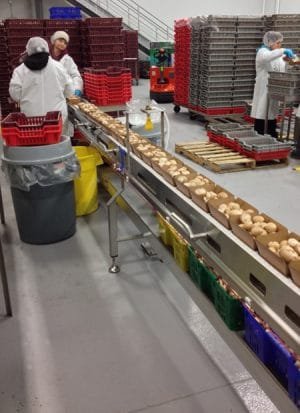
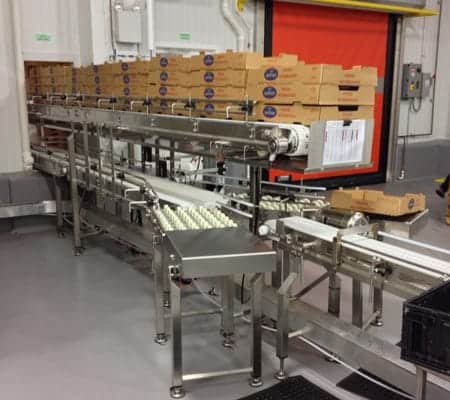
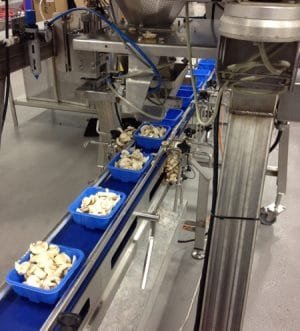
Nearly thirty sanitary conveyors formed four packing lanes, each about fifty feet long. Weighing stations beside the belts allowed people to fill and weigh mushroom containers while maintaining a continuous route toward packaging.
The conveyors did not all perform the same sanitary duty. Where mushrooms were still unpackaged, the equipment required full daily washing and sanitising. Where the product was already wrapped, stainless conveyor arrangements could use less intensive wipe-down methods appropriate to that enclosed product stage.
Cleaning access matched to the exposed product
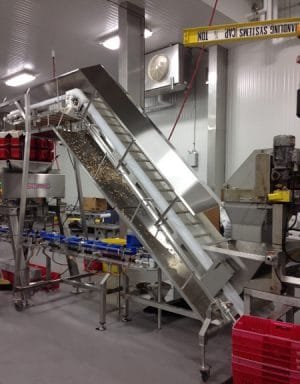
Washdown platforms were selected for the higher-sanitation sections and stainless platforms for the other transfers. Belt lifters and tip-up noses were fitted to make both sides of the belt and the internal frame accessible.
The source describes one-person disassembly of the relevant platforms without tools in under ninety seconds and cleaning in a few minutes. Those times relate to the configurations described; the complete facility sanitation routine involved more than opening the conveyors.
Picking and packing could continue for sixteen hours in a day. Once production ended, the sanitation crew cleaned and sterilised the conveyors alongside the rest of the facility. Matching cleaning access to that daily cycle was central to the design.
Operating experience
The customer reported a positive experience with the installation. The case documents the multi-lane arrangement, accessible cleaning features and deliberate distinction between exposed-food and wrapped-product areas.
The four-lane layout, product weighing positions and equipment access addressed the practical needs of this packing operation.
Application photographs