Equipment and operating figures
Figures describe the configuration and operating conditions in this case.
- Platform
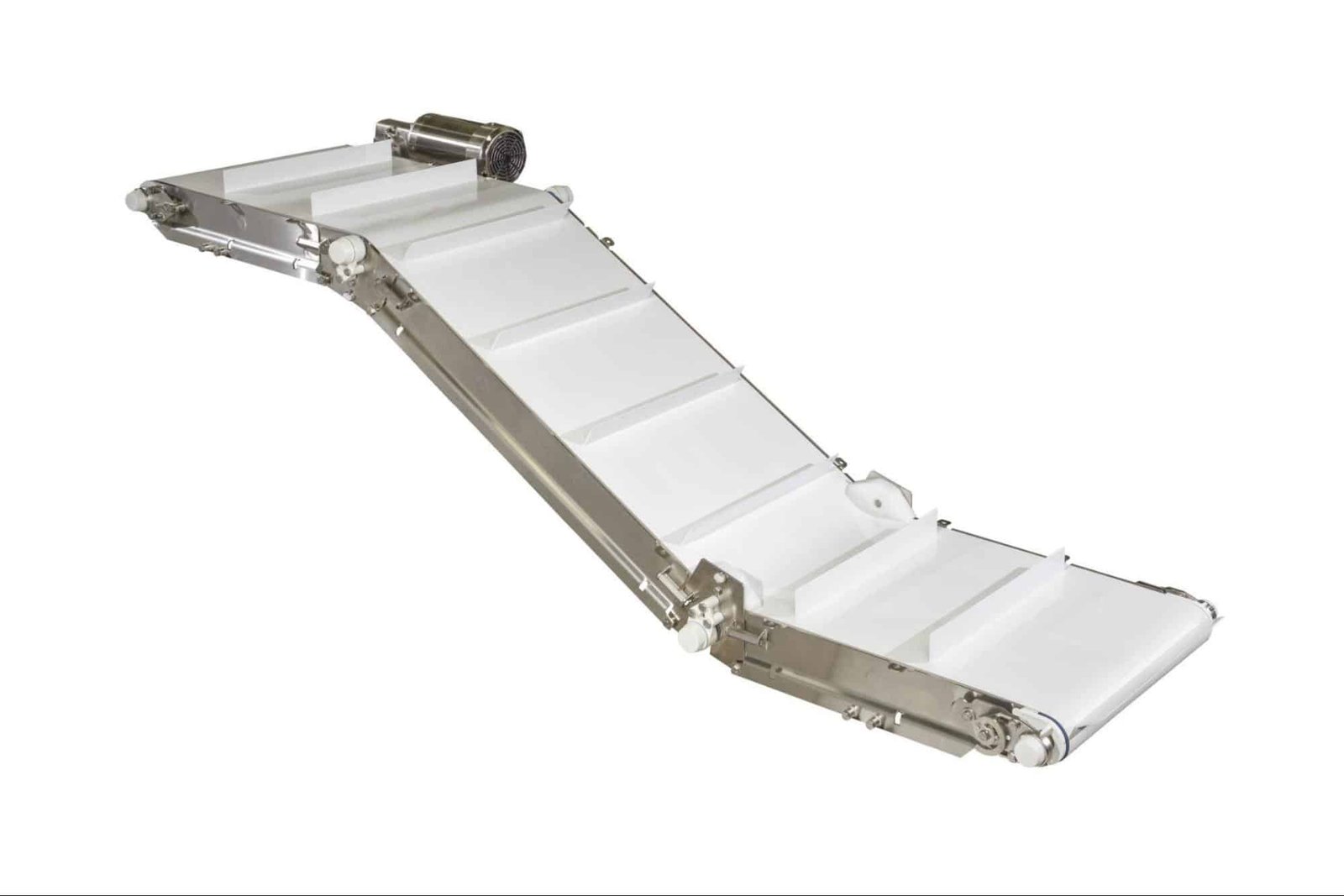
- 7400 Series sanitary cleated conveyor
- Dimensions
- 15 feet long × 18 inches wide
- Incline
- 45 degrees
- Duty
- 8–9 hours daily, 7 days weekly
- Cleaning
- At least once each day
- Frame
- Continuously TIG-welded 304 stainless steel
- Bearings described
- 400-series stainless steel with H1 food-grade lubricant
The process sequence
- Collect discarded leaves
- Transfer onto the cleated conveyor
- Elevate at 45 degrees
- Discharge into the waste bin
- Wash down the equipment
Waste movement is a demanding conveyor duty
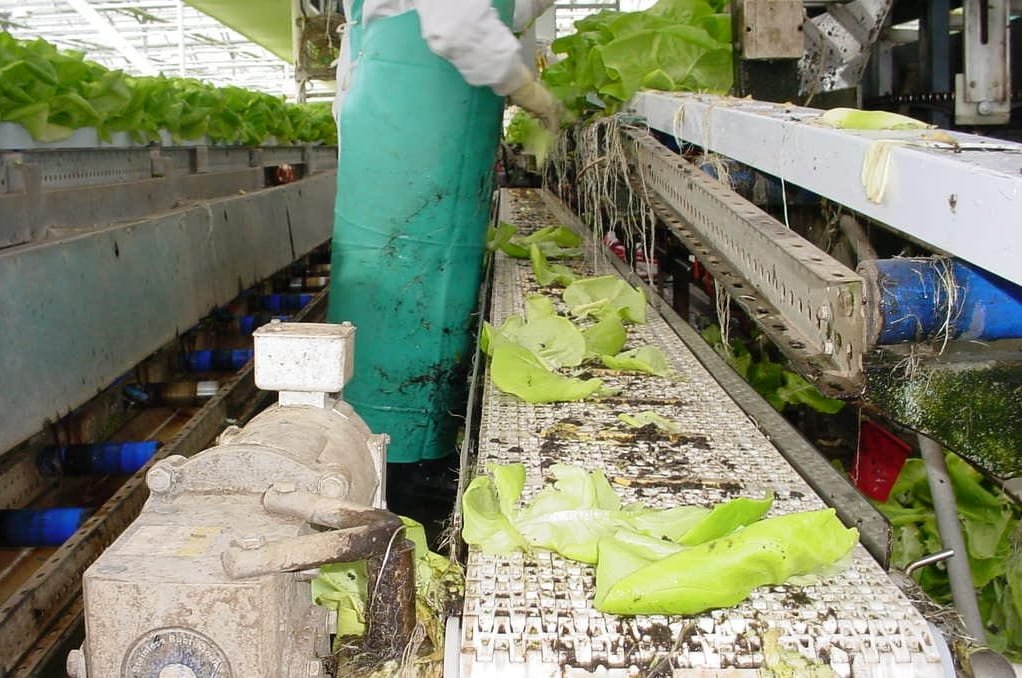
A produce operation handling several hundred thousand pounds of lettuce annually generated a continual flow of rejected leaves and scraps. Individual leaves contributed little debris, but the accumulated material created a challenging cleaning environment.
The requirement was not simply to bridge a distance. The conveyor had to remain durable during continuous waste handling while allowing repeated removal of leaf residue during sanitation.
The transfer and incline arrangement
Discarded lettuce first fell onto a collection conveyor, which delivered it to an eighteen-inch-wide, fifteen-foot-long cleated sanitary conveyor. That second conveyor rose at forty-five degrees and discharged the leaves into a waste bin.
Cleats supported the leaf waste on the incline. The conveyor operated for eight to nine hours each day, seven days a week, and was washed at least daily. Those figures describe this installation's actual duty rather than a maximum operating limit for the platform.
Construction intended to reduce debris traps
The frame used 304 stainless steel and continuous TIG welding. Its form avoided flat collection surfaces and fasteners in the food zone, reducing places where loose leaf material could remain.
The bearing specification described 400-series stainless components filled with H1 food-grade lubricant. Together with washdown construction, those details addressed both the wet environment and the build-up associated with handling scraps.
The sanitary incline arrangement addressed both waste removal and the daily cleaning duty under that operating schedule.
Application photographs