Equipment and operating figures
Figures describe the configuration and operating conditions in this case.
- Platform
- Repurposed 2200 Series centre-drive conveyor
- Conveyor dimensions
- 3 feet long × 6 inches wide
- Previous clearance
- About 8 inches from the demagnetiser
- Required clearance
- About 3 feet
- Guiding
- 2 tall guide strips at the inspection table
- Belt change
- High-friction type 64
- Reported supplied quantity
- More than 350,000 demagnetised housings; no period specified
The process sequence
- Weld the stamped housing
- Pass through the demagnetiser
- Convey clear of the magnetic field
- Accumulate for individual inspection
- Proceed to coating
Why the housings had to be demagnetised
Welding the stamped airbag housing caused enough residual magnetism to attract small metal particles. Those particles affected the smoothness and appearance of an e-coating applied later in the process.
The issue was not described as a failure of the weld itself. It was a finishing-quality problem caused by the part carrying magnetic residue into the coating operation. A demagnetiser was therefore added before inspection and further processing.
A flush conveyor in the inspection table
Previously, housings slid down a chute and collected on a table for individual inspection. After the demagnetiser was added, the parts were stopping only about eight inches away from it. They needed to move roughly three feet clear to avoid interfering with its operation.
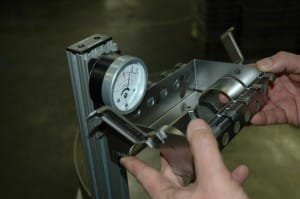
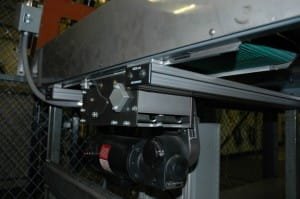
A spare centre-drive 2200 Series conveyor was fitted into a cut-out in the table so the belt sat flush with the work surface. The conveyor was three feet long and six inches wide. Tall guides on either side kept the housings straight while entering, travelling and discharging.
Reusing that conveyor provided the required mechanical route without building an entirely new table arrangement.
Why the first belt surface did not work
The reused conveyor had a smooth belt chosen for its previous duty. In the new process, parts could queue together with some already resting on the inspection table. Three or four touching housings increased the resistance the belt had to overcome.
The belt slipped beneath the backed-up parts, leaving them too close to the demagnetiser even though the conveyor itself was in the right position. Belt swatches were evaluated and a higher-friction type 64 belt was selected. The replacement arrived in three days in this historical example, after which the conveyor returned to service.
The reported outcome
The operator reported satisfactory movement on the revised processing line and the supply of more than 350,000 demagnetised housings to its customer. The account gives no time period for that quantity, so it is not presented as a daily or annual production rate.
The case illustrates a complete transfer check: route, clearance, guiding and belt friction all had to suit the actual queued load. A conveyor that worked in an earlier application still needed its belt surface reassessed for the new product and accumulation conditions.
Application photographs