Equipment and operating figures
Figures describe the configuration and operating conditions in this case.
- Product
- Refrigerated potato salad and related prepared foods
- Containers
- 1, 3 and 5 pounds; up to 5 formats across 2 shapes
- Inspection conveyor
- 7400 Series sanitary plastic chain
- Inspection conveyor dimensions
- 6 feet long × 12 inches wide
- Busy-season operation
- About 18 hours daily
- Changeover cleaning
- 4–5 times daily
- Additional soup-line conveyor
- 7600 Series with a 180-degree turn
The process sequence
- Mix and fill food
- Cap two lanes of containers
- Merge and space into one lane
- Pass through metal detector
- Reject non-conforming packs
- Print lid information
Integrating a new packaging area
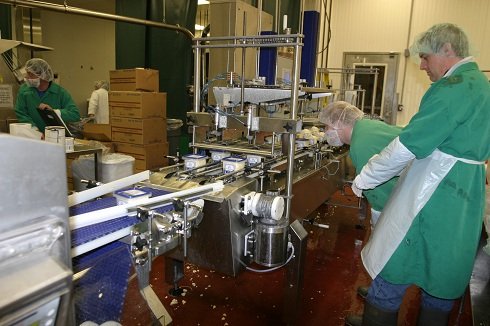
The producer made fresh refrigerated foods including soups, salads, pasta salads and potato salad. Previously, mixed product was moved to a separate packaging area. The new layout took product directly from the mixers into a machine filling side-by-side containers.
Filled and capped packs weighed one, three or five pounds. Two basic container shapes created as many as five format combinations. Before inspection, the twin lanes had to become one line, with containers staggered and spaced so each could pass through the detector correctly.
Retaining the detector instead of replacing it
The existing metal detector was usable, but its conveyor did not suit the new handling route. Buying a replacement detector-and-conveyor package would have cost more and taken longer. Modifying the existing conveyor internally also required engineering time that was not readily available.
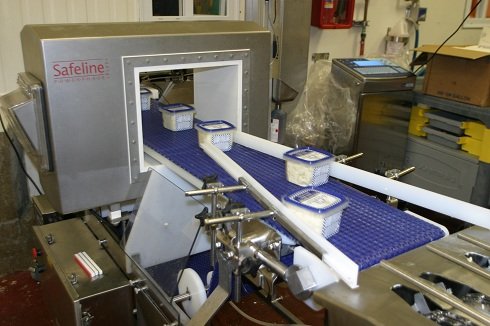
A sanitary plastic-chain conveyor was therefore configured around the existing detector aperture. The arrangement used an appropriate metal-free section so the conveyor could pass through the inspection zone without requiring replacement of the complete detector.
This illustrates an equipment-integration choice: retain a serviceable inspection unit and specify a conveyor around its geometry and detection requirements. It also retains the option of suitable sanitary belt or plastic-chain construction where the application requires it.
Merging, rejection and date coding
The inspection conveyor was six feet long and twelve inches wide. Its guides brought the two incoming product lanes into one line for passage through the aperture. Immediately after the detector, an automatic pusher removed containers that failed inspection.
An inkjet marking system printed dates and other information on container lids as they passed. During the busy spring and summer production period, the conveyor operated for approximately eighteen hours each day.
Access for cleaning throughout the shift
Product changes required cleaning four or five times daily. Access to the underside of the belt and to the conveyor frame was therefore a practical operating requirement, not an occasional maintenance convenience.
The operator valued the sanitary arrangement because difficult-to-reach bearing and grease-fitting areas were avoided in the product zone. The conveyor could be opened for cleaning in a matter of minutes, supporting a process with repeated interruptions for sanitation.
Related processing and operating feedback
A separate packaged-soup line also used a 7600 Series sanitary conveyor with a 180-degree turn. It addressed a different route within the same food-processing operation.
The inspection-conveyor account records follow-up checks after installation and positive operator feedback on its quality and cleanability.
Application photographs