Equipment and operating figures
Figures describe the configuration and operating conditions in this case.
- Conveyor platform
- 2200 Series with a plastic detector bedplate
- Batch control
- Operator-selected product count
- Accumulation
- Two rotary tables with automatic diversion
- Small-product discharge
- Removable diverting arm and chute
- Mobility
- Casters and a separating latch
The process sequence
- Product wrapper
- Metal detection
- Air-jet rejection
- Photo-eye counting
- Alternating accumulation tables
- Packing or direct-to-box discharge
Why the packing line had to change
The bakery had grown from a home-kitchen operation to a business employing around 130 people. Its earlier packing arrangement carried wrapped brownies through a metal detector and onto a rotary accumulation table, where staff counted and boxed them manually.
That arrangement became a constraint as volumes increased. Counting while packing was slow and exposed the operation to mistakes in the number of products placed in each box. A replacement needed to work with the existing wrapper, preserve metal detection and handle several sizes of brownies and cookies.
Inspection and rejection before counting
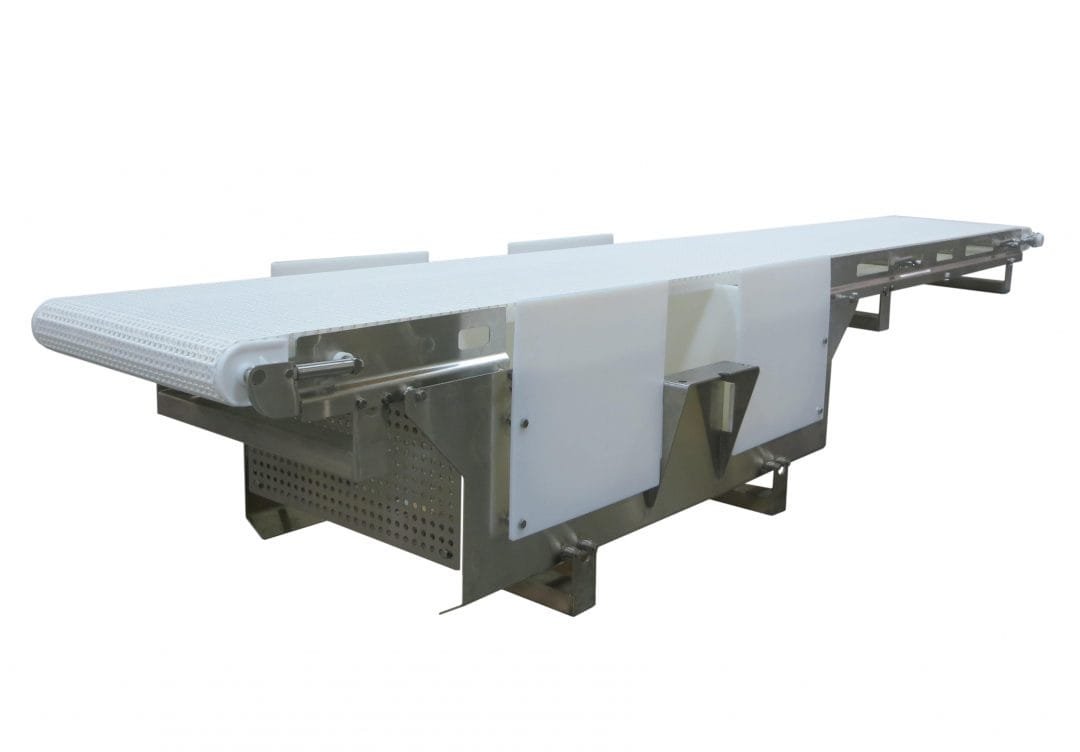
Wrapped products enter a 2200 Series conveyor at position A in the original system layout. A special plastic bedplate creates the appropriate conveyor section for the detector at B, preventing the conveyor frame from registering as product contamination.
When the detector identifies metal, it signals a solenoid valve. The valve supplies an air nozzle that removes the suspect product into a reject bin at C. Accepted products continue past the nozzle toward the counter, so the packing count is taken after the rejection point.
How counted batches reach the packing tables
A photo-eye at D detects each accepted product and sends a signal to the control panel to increment the count. Operators select the number required in a batch. Once that number has passed, the diverter at E changes position and directs the next batch to the other rotary table.
Alternating tables separates the incoming batches while giving operators access for packing. For the smallest brownies, a second diverting arm at F can send products down a chute at G directly into a box or bin, avoiding manual removal from the table. The arm can be removed for larger brownies and cookies, which continue around the rotary table until packed.
Changeover, testing and the documented outcome
Both the conveyor and the tables are mounted on casters. A latch allows the conveyor and the two tables to separate so each can be moved independently when the layout needs to change.
The main engineering challenge was accurate diversion of different product sizes at higher operating speeds. The diverter was tested at a range of speeds to check that the selected number reached the correct table.
The case describes an arrangement intended to accommodate growth and accelerate packing.