Equipment and operating figures
Figures describe the configuration and operating conditions in this case.
- Facility equipment
- About 20 conveyors for infeed and outfeed
- Long-serving tumbler conveyor
- 8 feet long × 2 inches wide
- Key elevator
- 3200 Series cleated belt; 8 feet × 6 inches
- Dial finishing conveyor
- 2200 Series; 8 feet × 12 inches
- Shackle outfeed
- Modular plastic belt; 10 feet long, about 6 feet above floor
- Working pattern
- 3 shifts, 6–7 days each week
The process sequence
- Meter uncut keys from a bin
- Elevate into a feeder bowl
- Cut and process components
- Inspect painted dials
- Transfer shackles toward heat treatment
Small components in a demanding production environment
The factory produced combination and keyed locks, moving shackles, plugs, tumblers and keys through several operations. Although the individual pieces were lightweight, their steel construction and repeated handling required robust equipment.
Around twenty conveyors performed infeed and outfeed duties. The fleet included older 2100 and 4100 Series equipment as well as newer 3200 Series and modular plastic-belt units.
One particularly long-serving narrow conveyor, eight feet long and two inches wide, continued moving tumblers decades after installation. Its original low-profile concept had been developed for taking small parts from tight spaces such as beneath stamping presses. The case describes this longevity as operating history, not as a lifetime guarantee for new equipment.
Cleated elevation for uncut brass keys
An almost-upright 3200 Series conveyor lifted keys into a vibratory feeder bowl for separation and positioning before cutting. A bin holding thousands of blanks released a small number at timed intervals onto the cleated belt.
The conveyor measured eight feet by six inches and had a clear plastic shield along its length to prevent dirt and debris reaching the keys. Its construction included sealed bearings, an anodised aluminium frame, V-guided tracking and rack-and-pinion tensioning.
The source-era 3200 platform range was 3.75–48 inches wide and 4–99 feet long. Those published limits are platform context rather than the dimensions of this particular elevator.
Dial inspection and painted-part handling
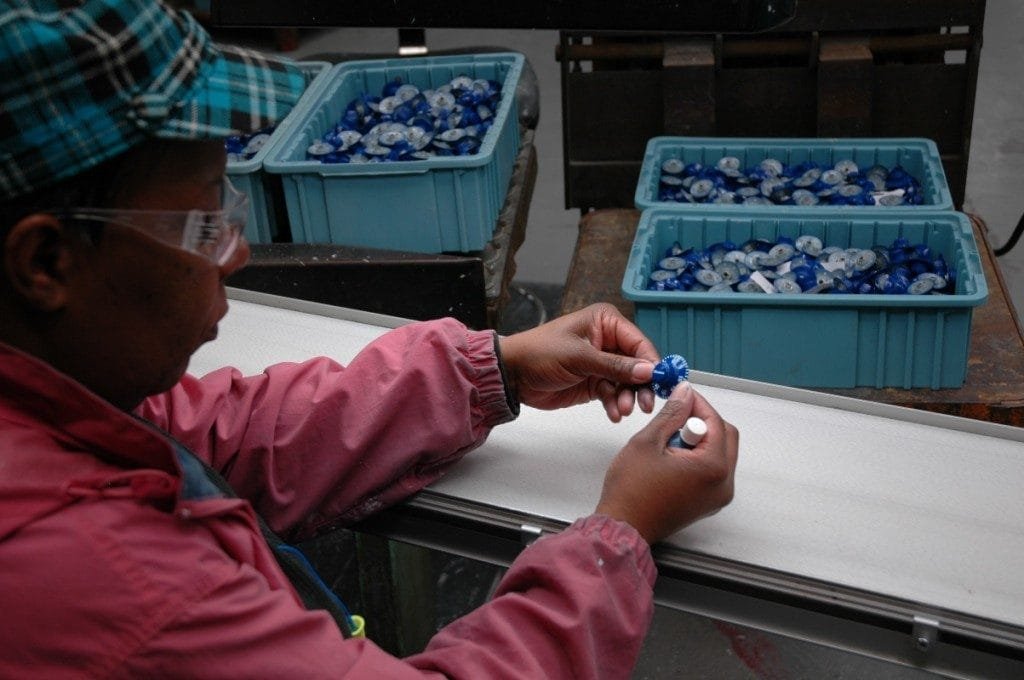
In the finishing area, an eight-foot-long, twelve-inch-wide 2200 Series conveyor carried newly painted padlock dials toward stacking and drying. An operator inspected each dial alongside the belt and touched up the paint where necessary. Equipment safety and staff training were important because people worked close to the transfer.
The historical 2200 description included end-drive flat and cleated belts, centre-drive and gravity-roller variants; profiles down to 1.25 inches; V-guided tracking; loads up to 120 pounds; widths up to two feet and lengths up to eighteen feet. These are figures from the case's platform description, not an assertion that its finishing belt carried the maximum load.
Elevated shackle outfeed
A ten-foot modular plastic-belt conveyor moved U-shaped shackles toward heat treatment. Positioned about six feet above the floor, it transferred the parts roughly seven feet between process locations.
A floor-supported stand held the conveyor in an arrangement intended to keep people out of the transfer route. The modular belt was selected for its resistance to cutting and its suitability for tougher industrial handling.
Service under a multi-shift schedule
The facility ran three shifts on six or seven days each week. It kept common replacement parts available to reduce interruption when service was required.
The operating account reports reliable service with belt changes and periodic bearing replacement. Those maintenance activities remain part of the story; the equipment is not presented as requiring no maintenance merely because its operator described a generally low-maintenance experience.